Relic point Vietnam
Việt Nam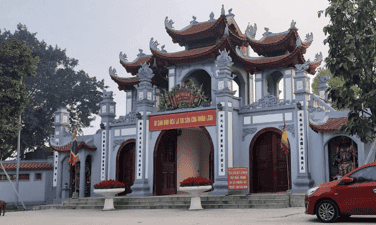
Tam Giang Temple relic cluster - Dai Bi Pagoda
Tam Giang Temple - Dai Bi Pagoda is located in Bach Hac ward, Viet Tri city, Phu Tho province. The temple is located on the left bank of the confluence of three rivers: the Red River, the Lo River, and the Da River, which people have long known as the Hac junction. This is a complete and unified cluster of relics, including: Tam Giang temple, Mau temple, Dai Bi pagoda, footprints of Cao Quan Bach Hac Dai Vuong, swimming wharf, statue of Chieu Van Vuong Left Grand Master Tran Nhat Duat and reliefs of 18 typical pagodas of Vietnamese Buddhism. Tam Giang Temple worships the god Tho Lenh. Legend has it that he was the village god - the god of the Bach Hac River, who had the merit of traveling the world to find precious medicines to cure diseases for all people. When he died, he had the inspiration to help generals fight foreign invaders and preserve the country. The temple also worships the Holy Mother Quach A Nuong - a talented female general of Hai Ba Trung and worships Chieu Van Vuong Tran Nhat Duat, the 6th son of Tran Thai Tong who had the merit of conquering Da Giang Catholicism to guard the Northwest region. , established the Bach Hac defense line for 30 years. Dai Bi Pagoda is an ancient pagoda built by King Chieu Van Tran Nhat Duat and his niece Princess Thien Thuy during the Tran dynasty (1328), and is now nearly 700 years old. Tam Giang Temple and Dai Bi Pagoda have become an attractive tourist destination welcoming thousands of tourists each year. Especially associated with the relic here is the traditional swimming festival held on the 9th day of the third lunar month on the occasion of the Hung King's Anniversary - Hung Temple Festival. Besides the traditional swimming festival, visitors coming here can also enjoy folk performances with music, singing, dancing, and rich and attractive decorative forms of Mother Goddess worship. . Source: Phu Tho Tourism Promotion Information Center
Phu Tho
4699 view
Rating : National monument
Lai Len Temple
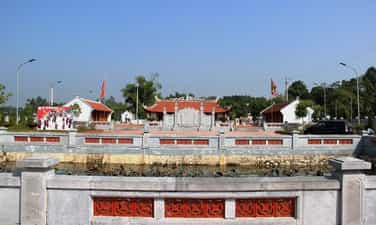
Lai Len Temple is an ancient temple located in Phu Duc village, Kim Duc commune, Viet Tri city. According to legend, Lai Len temple is where King Hung taught Xoan singing to the people. Lai Len Temple is a relative synthesis of a relic that is both related to the worship of Hung Kings and is also an original relic related to the origin of an intangible cultural heritage of humanity. Sing Xoan Phu Tho. Through the ups and downs of history, the ancient temple was ruined. In 2011, Phu Tho province decided to restore Lai Len temple on the old foundation with a total area of nearly 3,000 square meters, creating the landscape to become a tourist destination for tourists and to enjoy non-traditional cultural heritage. Objects of humanity are Phu Tho Xoan Singing and Hung Vuong Worship. The architecture of Lai Len temple is made according to the traditional architectural structure of the Dinh (丁) letter, including a front altar and a harem, looking to the Southeast, with a funny-nosed tiled roof. The two buildings Ta Vu and Huu Vu are built in the traditional 5-compartment house style. In front of the temple is a monolithic stone screen with a length of 7.6m, both sides decorated with letters and tiger talismans. In the spacious campus of the relic, there is a fairly modern Xoan Singing Art Gallery with full amenities and scientific displays, considered the only museum of Phu Tho Xoan Singing. This is considered a place to both introduce and perform Xoan singing for tourists. Source: Phu Tho Tourism Promotion Information Center
Phu Tho
3857 view
Rating : Provincial level relics
Tien Temple
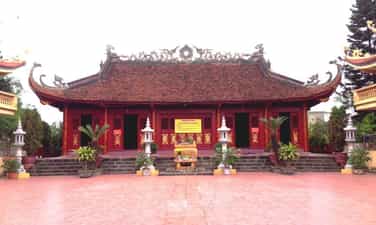
Tien Temple is a sacred temple, located in Tien Cat ward, Viet Tri city. This is the temple worshiping the Mother Goddess, also known as the Mother Goddess, the first mother of the Vietnamese people. Mother is the Queen of King Kinh Duong Vuong, the mother who gave birth and raised King Lac Long Quan, and is the grandmother of the Hung Kings in a bag of hundreds of eggs. Tien Temple is an outstanding precious relic in the relic complex of the state capital of Van Lang. According to traditional genealogy, there used to be a 7,000m2 campus, looking to the southwest, in front of National Highway 2, outside the dyke was Thao River flowing to Bach Hac junction, the convergence of 3 large rivers: Red River. Ha, Da River, Lo River. The temple has a favorable geographical position in terms of feng shui, in front is a river, behind is a mountain, fully converging the atmosphere of rivers and mountains to bestow forever on the descendants of Vietnamese land. In July 2003, Tien Temple was recognized by the People's Committee of Phu Tho province as a provincial-level historical and cultural relic. Every year, on the occasion of the Mother's birthday, the 5th day of the 5th lunar month and the 10th day of the 10th lunar month, the Temple holds a solemn ceremony for people everywhere to worship and commemorate. As a temple, worshiping the first mother of the Vietnamese people, Tien Temple also symbolizes the eternal tradition of drinking water, remembering the source of the Vietnamese people. Source: Phu Tho Tourism Promotion Information Center
Phu Tho
3983 view
Rating : Provincial level relics

Red Areca Garden Memorial Area
Red Areca Garden is surrounded by Nhi Binh, Quoi Xuan, Thanh Loc, Tan Thoi Hiep and Dong Thanh communes. This is a place with many areca gardens and luxuriant fruit trees. In the past it was a swamp land, canals crisscrossed like spider webs, immense weeds, snakes, centipedes, mosquitoes, leeches, scorpions,... endlessly. The name Red Areca Garden was born a long time ago, no one knows its exact origin. According to veteran revolutionary comrades who once worked in this area, during the war, areca palms grew in clusters here, so they were called "Areca Garden", and the "red" color of the place name "Red Areca Garden" not only It simply means that the color of the areca trunk has discolored due to the fierce destruction of war, but also means the bloody sacrifices of generations of officers, soldiers, and people who have fallen on this land. The location of Red Areca Garden is next to and surrounded by occupied enemy military agencies. It is like a bag containing all connections from the outside, and is a base connecting the forest with the city. Losing the Red Areca Garden means losing contact with the city. Therefore, Red Areca Garden became a stepping stone between the city and the base. This place has favorable terrain in terms of visibility and maintains the element of secrecy to deploy combat formations. For us, Red Areca Garden holds an irreplaceable transit position in the northwest direction of Saigon. From an initially rudimentary "security belt", Red Areca Garden later developed into a "concave base", a revolutionary secret area, a place to stand and hide revolutionary forces. The base consists of many different "Cons" spread over a wide area, and was the starting point for resistance forces to attack Saigon in the war against the US. Since March 1945, our entire nation enthusiastically prepared for a General Uprising. Red Areca Garden became a place to gather the masses every night to practice martial arts to prepare for an uprising to seize power and expel the invaders. Not long after the success of the August Revolution, on September 23, 1945, France opened fire to attack the headquarters of revolutionary government agencies in Saigon. After 3 months, the Gia Dinh Provincial Party Committee decided to withdraw its forces to the suburbs to preserve the forces to continue fighting. On December 25, 1945, at the Red Cau Garden, comrade Pham Van Khuong - Secretary of the Gia Dinh Provincial Party Committee chaired the conference of key officials. The conference decided to choose 3 communes: An Phu Dong, Thanh Loc, Quoi Xuan to establish a resistance base with the stature of a war zone because this place is not far from the center of Saigon, although the area is small but very convenient. beneficial for the resistance, can hold on for a long time... Red Areca Garden was chosen as one of the gathering places for our officers and soldiers. Here, we have established a "Worker Reception Station" of the Southern General Trade Union to welcome technical workers from Saigon. On that basis, the War Zone Command established a military factory to produce weapons and equipment to equip the revolutionary forces. To implement the "quick fight, quick victory" strategy, the French colonialists organized many fierce raids into the Red Areca Garden, aiming to destroy the resistance headquarters of Saigon - Gia Dinh. On the full moon day of the 7th month, the year of the Dog, 1946, France sent Moroccan, Cambodian soldiers and Vietnamese traitors to surround it and suddenly attacked the Red Areca Garden. Due to the sudden attack, our forces did not have time to fight back. French soldiers brutally suppressed and killed many people, including the elderly and children. From the end of 1946, France established a dense system of blockhouses and watchtowers around and along the roads leading to the An Phu Dong war zone, organizing many raids and fierce bombardments. But our army and people still stubbornly hold on, the revolutionary forces have organized many battles against robberies, eliminated evildoers, and continued to develop the "Popular Education" movement. Thanks to the resilient will and loving support of the compatriots, the war zone still stood firm, contributing to defeating the strategy of "fighting quickly and winning quickly", causing the French colonialists to encounter many difficulties and losses. In January 1950, during the funeral procession for Tran Van On, Red Areca Garden became a transfer station for students entering the war zone. Under the US - Diem regime, Cau Do Garden was listed as a "White Area" that was free to be bombarded. They continuously organized sweeping operations to find and destroy our cadres. Go Mon District Party Committee still upholds its determination to continue fighting. Red Areca Garden was chosen to build a "concave" resistance base in Thanh Loc commune at that time. From these bases, we have built a continuous base area to house many battalion and regiment-level army units. To prepare for the general offensive and uprising during the Tet Offensive in 1968, the army forces returned to camp at Red Cau Garden. Local people provided about 2 tons of rice, more than 250 loaves of bread, and hundreds of cakes. tet... On March 10, 1968, local army forces led by comrade Sau Theo were stationed along the riverbank to ambush two companies of puppet soldiers preparing to sweep at Red Areca Garden. In this battle, our troops used B40, B41, and AK to continuously fire back, killing 26 Americans and puppets. During the period 1969 - 1973, the Nixon government advocated implementing the new strategy "Vietnamization of the war". They stepped up their raids, especially in our base areas. Our army and people stationed in Red Cau Garden fiercely resisted many of their raids, large and small. In 1971, here our soldiers destroyed the 11th parachute battalion of the Puppet. In 1973, a guerrilla squad in coordination with the Gia Dinh regiment intercepted a paratrooper squad and collected some trophies. During the Historical Ho Chi Minh campaign, Cau Do Garden was the place where units such as E115, Gia Dinh Regiment, Go Mon Soldiers... prepared to attack Saigon, liberating the South and reunifying the land. water. Although the enemy used artillery and bombers many times to sweep and fiercely attack to destroy the Red Areca Garden, the officers, soldiers and people of Thanh Loc - Thanh Xuan bravely accepted their sacrifices. arduously defend the base to the end. Source: District 12 website
Ho Chi Minh City
5612 view
Rating : City-level relics
Du Yen Temple
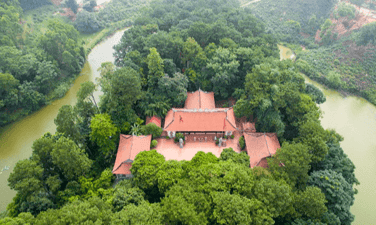
Du Yen Temple, Chi Tien commune is located in a spiritual land on a high hill, with lush green trees; At the foot is a clear blue lake all year round. The temple faces the Thao River, which is calm day and night, accumulating alluvium. This long dike strip is the provincial road, an important traffic artery of Thanh Ba district. In 1993, Du Yen Temple was recognized by the State as a national historical relic site. In 2003, Du Yen temple was restored to include a 5-compartment front hall and a 3-compartment harem like today. In the temple, there are still many precious artifacts such as: altars, palanquins, halberds, precious bowls, bronze plaques, written in Vietnamese on both sides... The statues are all carved from wood. In addition to the ordinations of the Dinh, Ly, Tran, and Le dynasties, this is the only temple that retains a genealogy recording two thousand years of development of a clan in Thanh Ba land. According to Ngoc Pha, in the past, in the Thao Giang area, at Bong Chau site, now Tien Chau village, Chi Tien commune, Thanh Ba district, Phu Tho province, there was a Nguyen family who lived a gentle and kind life and worked hard to do business. has great reputation in the region. Thanks to God's blessing, they gave birth to a daughter named Hanh Nuong. From a young age, Hanh Nuong was always well cared for and raised by her parents. She is a strangely intelligent girl, with stunning beauty, a gentle personality, eager to study literature, and passionate about martial arts. Many talented men in the village approached her, but she all refused, not wanting to get dusty to keep herself pure. She set up a flag to rally the righteous, practiced archery and sword day and night, and was known far and wide as the goddess who descended to earth. At that time, in the 40s AD, the Eastern Han invaders led by Governor To Dinh brazenly and brutally brought troops to occupy our country. When Hai Ba Trung raised the flag of insurrection in Me Linh, she chose 92 insurgents from Bong Chau to return with Hai Ba Trung. Seeing that Hanh Nuong was intelligent, talented in literature and martial arts, and was able to lead the army to win, Hai Ba Trung gave her the title of Princess Ngoc Loan and the title of Leader of the Front Army. After defeating the To Dinh enemy, female general Nguyen Thi Hanh returned to visit her hometown, where she held a banquet to welcome the army and reward the villagers. The merit festival was held on a promontory shaped like a white tiger lying drinking water on the banks of the Thao River. Here later, the villagers built a temple called Du Yen palace (today Du Yen temple, Chi Tien commune). Since then, every year on the full moon day of January, the villagers hold a prayer festival to remember her gratitude and pray for good weather and good weather for the family to be prosperous and happy. Du Yen Temple Festival is one of Thanh Ba's typical cultural events, attracting tens of thousands of domestic and foreign tourists each year. The festival opened with a ceremony and a festival held very solemnly. The offerings to the Mother Goddess are mainly vegetarian cakes and fruits... divided into 6 sections, each with 2 trays, carried by 2 young men and placed on the altar for the elders to pray for. During the prayers, there are fairy dances and money-making dances mixed in. Legend has it that on the day the Mother Goddess was born in the Thao Giang mulberry field, there were fairies descending to earth to dance and sing like a festival, so on the day of worshiping the Mother Goddesses, it is required to have a fairy dance team consisting of 4 unmarried girls under 16 years old, dancing the dances. Dancing beautifully like a fairy to serve the ceremony. This ritual has now been restored and has been slightly adjusted to suit the festival space. Then comes the palanquin procession, first is the flag team, followed by the eight-tone group, then the eight-symbol team, the lion dance, followed by the fairy dance and then the palanquin. Source: Phu Tho Tourism Promotion Information Center
Phu Tho
4601 view
Rating : National monument

Hung Temple
Hung Temple is the general name of the Hung Temple Historical Relic Area - a temple complex, The pagoda worships the Hung Kings and the king's royal family on Nghia Linh mountain, (Viet Tri, Phu Tho), associated with the Hung King's Anniversary - Hung Temple Festival is held at that location every year on March 10 lunar calendar. Currently, according to published scientific documents, most agree that the architectural foundation of Hung Temple began to be built during the reign of King Dinh Tien Hoang. By the Later Le Dynasty (15th century), it was completely built to the current scale. Going up from the foot of the mountain, through the temple gate, the tourist's stop is Ha Temple, which is said to be the place where Au Co gave birth to a sac of a hundred eggs. Those hundred eggs gave birth to a hundred children, fifty followed their father into the sea, forty-nine followed their mother up the mountain. The son who stayed behind became king, taking the name Hung Vuong (first). Past the Ha temple is the Trung temple, where the Hung kings used it as a meeting place to discuss with the Lac marquis and Lac generals. On the top of the mountain is the Thuong Temple and the sixth Hung Vuong mausoleum (known in folk as the tomb of the ancestors). From the Thuong temple to the southwest is the Well temple, where there is a stone well with clear water all year round. Legend has it that in the past, princesses Tien Dung and Ngoc Hoa, children of the eighteenth Hung King, often came to wash their hair there. Hung Temple Festival includes cultural and artistic activities of traditional ritual nature and other folk cultural activities... The remaining ritual cultural activities to this day are the palanquin procession. king and incense offering ceremony. According to Hung Vuong's Ngoc genealogy, recorded during Hong Duc's post-Le dynasty, from the Dinh dynasty, Le dynasty, Ly dynasty, Tran dynasty and then later Le, there was still the same incense and smoke in the temple, here people from all over the country came to worship to commemorate. The merits of the ancient Holy Patriarch... Vietnamese folk literature talks about the Hung Temple festival as follows: "No matter who goes back and forth, remember the death anniversary of the ancestors on the 10th of the third month". Source: Phu Tho Tourism Promotion Information Center
Phu Tho
4156 view
Rating : Special national monument

US Embassy building
The US Embassy relics, also known as the "White House of the East", are the origin of sinister military and political plots aimed at long-term annexation of Vietnam. The relic site is a 5-storey building built Built in modern architecture, located at the corner of Mac Dinh Chi - Le Duan Street, Ben Nghe Ward, District 1, Ho Chi Minh City, on a plot of land nearly 5,000 square meters. Previously, the US embassy was located at 39 Ham Nghi Street. At around 10:00 a.m. on March 30, 1963, the US embassy on Ham Nghi Street was hit with explosives by the F21 Commando team, collapsing three floors: 1, 2, 3, so the US decided to rebuild it. Construction began on the building in 1965, most of the materials and construction machinery were transported from the US, under the control of American engineers. According to the design, the building is surrounded by 7,800 Taredo stones that can withstand mines and artillery shells. The main door is equipped with thick steel, the other doors are blocked by a special thick bulletproof layer. All doors use automatic systems, including iron doors blocking the way to the upper floors. Inside the building there are 140 rooms with 200 staff serving day and night. In addition, next to the building is also built an additional row of houses called the "Norodom" area exclusively for C.I.A. employees. When inaugurated, the building had only 3 floors. At the end of 1966, two more floors and a terrace were built to serve as a landing place for helicopters. Surrounding the building is a 3m high wall, at both ends of the wall close to Le Duan Street, 2 high blockhouses are built, guarded day and night. The Embassy was completed in September 1967 with a defense system such as a fortress with 60 guards, a bomb shelter, and a radar screen system to control the facade. Immediately after the building was completed, on September 24, 1967, thousands of students flocked to the gate of the US Embassy to fight for "America to stop bombing the North", "America to go home" and issued a notice denouncing the US for "trampling and seriously violating the right to self-determination of the Southern people". But the outstanding event that happened at the US Embassy was the battle of the City Rangers during the General Offensive and Uprising in the Spring of 1968. The target of attacking the US Embassy was added on January 24, 1968 by Ngo Thanh. Van is in charge of general affairs. Ranger Team 11 took on this important mission, including captain Ut Nho (military region reconnaissance captain) and soldiers: Bay Truyen, Tuoc, Thanh, Chuc, Tran The Ninh, Chinh, Tai, Van, Duc, Cao Hoai Vinh, Mang, Sau and 2 drivers: Tran Si Hung and Ngo Van Thuan. Another equally humiliating event for the US Embassy was the chaotic escape that occurred on April 29 and 30, 1975 by the US and its accomplices. Faced with the rapid attack of the Vietnamese army and people in the historic Ho Chi Minh campaign, over 1,000 Americans and more than 5,000 pro-American Vietnamese jostled, pushed, and kicked each other to compete for a place on the terrace of the building. building to be rescued by helicopter. This relic was granted a certificate of recognition by the Ministry of Culture on June 25, 1976. Currently, the US Embassy building has been demolished and a new consulate in Ho Chi Minh City has been built, but next to it is a memorial stele forever remembering the achievements of the special forces soldiers who died in the battle. . Source: Ho Chi Minh City Youth Union
Ho Chi Minh City
12317 view
Rating : National monument
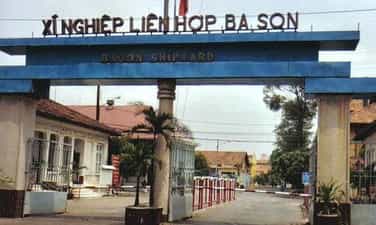
Memorial site for President Ton Duc Thang in Ba Son area
The memorial site for President Ton Duc Thang is located on the campus of Ba Son Enterprise Union, which today is a large shipbuilding and repair workshop, located at 2 Ton Duc Thang Street, Ben Nghe Ward, District 1, City. Ho Chi Minh. This is a historical site with many meanings. The mechanical workshop at number 323, Street 12 within the factory campus is where mechanic Ton Duc Thang (later President of Vietnam - from 1969 to August 30, 1980) worked and participated in revolutionary activities. in the years 1915 - 1928. In 1861, France defeated Chi Hoa Fort and occupied Saigon. On April 28, 1863, the French government signed a decree officially establishing the Ba Son Shipyard (Arsenal) under the French Ministry of the Navy. Because of that importance, in 1884 the French government built another large dry dock to serve as a ship repair base for the French fleet in the Far East. After the Geneva Agreement was signed, the French army withdrew from Indochina. On September 12, 1956, France transferred Ba Son to the Saigon government navy. Under the old Saigon regime, Ba Son Waterworks was renamed Navy Factory, placed directly under the Ministry of National Defense. After April 1975, the Navy factory was taken over by the Revolutionary government and was renamed Ba Son Enterprise Union, under the Ministry of National Defense to this day. Ba Son Waterworks is the largest factory in Saigon, one of the places with the largest concentration of workers in Vietnam in the early years of the century. In order to train native electricians and mechanics to supply French companies and factories in Saigon, on February 20, 1906, the French government signed a decision to establish the Asian mechanical school in Saigon (Eécole des mécaniciens). Asiatiques de SaiGon - today's Cao Thang Technical School). Ba Son ship repair workshop is a workshop that uses the school's students to practice at the workshop and directly recruits students who have completed their studies at the school. The Saigon Asian Mechanical School and the mechanical workshop of Ba Son Water Factory at that time were associated with the first revolutionary activities of revolutionary Ton Duc Thang. After finishing primary school in his hometown: An Hoa village, My Hoa Hung commune, Dinh Thanh district, Long Xuyen province (now My Hoa Hung commune, Long Xuyen town, An Giang province), young man Ton Duc Thang decided to intending to go to Saigon to find a job and orient his life to the working class. Uncle Ton took the entrance exam to the Asian Mechanical School for the course 1915 - 1917. Currently, at the Ho Chi Minh City Museum, there is still an original book registering students enrolled in courses at this school from 1906 to 1966. . In August 1920, he returned from France to Saigon to work as a worker for KROFF and CIE. Influenced by the Russian October Revolution and learning a lot from the struggle experiences of French workers, Uncle Ton campaigned to establish the first Red Union in the city. The secret union developed among workers of Ba Son factory, Faci company, Cho Quan lighting house... From 1920 to 1925, the number of members increased to 300 people with Uncle Ton as president. This is the first Trade Union organization in Vietnam with the purpose of supporting and fighting to defend the rights of workers and fight against capitalist imperialism. Under the leadership of the Red Congress, the struggle movement of city workers during this period exploded strongly. Typically, the strike demanding increased wages and half-day off on payday of Ba Son Waterworks workers broke out on August 4, 1925 and lasted until August 12, 1925. The strike was successful, but in order to support the struggle movement of Chinese workers and working people by "holding back" the battleship J. Mi-S-Le under orders from the French government, it needed urgent repairs to bring went to China to suppress the revolutionary movement. The strike of Ba Son workers continued in the form of a walkout, prolonging the repair of the warship for up to 4 months. Thus, this struggle, in addition to demanding economic rights and improving working conditions, also has a political nature, especially activating the sense of international solidarity of the Vietnamese working class. The strike of Ba Son workers under the leadership of the Red Trade Union organization opened a new period of struggle for the Vietnamese working class. The period of struggle was organized, led and supported by all workers and working people. The struggle movement has gone from spontaneity to a level of self-awareness, which is a good basis for accepting Marxism-Leninism. On November 19, 1975, as President, Uncle Ton visited Ba Son factory and recorded it in the factory's souvenir book. On August 12, 1993, the Ministry of Culture issued a decision to recognize Ba Son as a historical relic. Source: Ho Chi Minh City Youth Union
Ho Chi Minh City
5958 view
Rating : National monument
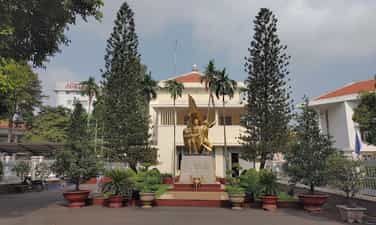
Hoc Mon District Palace
Hoc Mon District Palace is located at No. 1, Ly Nam De Street, Hoc Mon Town, (next to the District People's Committee headquarters) and is the place where many outstanding fighting events have been recorded throughout the long history from 1885 to the Southern days. Complete liberation of the People of 18 Betel Garden Villages. After defeating Chi Hoa Fort, the French colonialists built a 3-storey wooden house here to use as a military post. When Tran Tu Ca took office as Governor of the Palace, he used the Station as the Palace of Binh Long district. Originally a cunning drunkard of the French colonialists, Tran Tu Ca was led by a group led by Mr. Phan Van Hon (Quan Hon) and Nguyen Van Qua (Chanh Lanh Binh) of nearly 1,000 insurgents who came to burn the District Palace, captured and head cut off in the middle of the market. That was February 8, 1885, At Dau Tet. Afterwards, Hoc Mon District Palace was rebuilt with a blue stone foundation, brick walls, and a defense system from the upper floors to the fence. The architecture is similar to the Military Fort, so the locals call it Hoc Mon Fort. Tran took over from Tran Tu Ca as Governor of Ngon district, moving to Tra District and then Tho District. This was a long period of time when the people of the Hoc Mon region suffered from many cruel and despicable scenes from the French colonialists and their oligarchic henchmen mentioned above. With the indomitable tradition of Hoc Mon people. On June 4, 1930, around 6 a.m. in front of the District Palace, hundreds of Hoc Mon people protested demanding "abolition of poll tax, reduction of license and market taxes, and granting land to poor farmers." Tra District invited the leaders into the Palace to negotiate, but they cunningly arrested them, including Mr. Le Van Uoi (Secretary of Tan Thoi Nhi Commune), who was the leader of the protest. People were undaunted and fiercely demanded that Tea District release those detained. The protest group became more and more crowded, the fighting spirit spread somewhat, causing Tra District to give in. On the one hand, they released the detained people, on the other hand, they called the officials in Saigon for help. 2 hours later, the struggle was led by two men, Blachole and Nobbot, who opened fire on the protest group, causing many casualties. But the most impressive historical event at Hoc Mon District Palace was the Southern Uprising on November 23, 1940. Hoc Mon Fort is very solid, built of green stone like a fortress, about 15 meters high, has a gun emplacement and a defense system with battlements guarded by a platoon of green soldiers. On November 22, 1940, France reinforced one more platoon to deal with the situation. On the afternoon of November 22, 1940, Mr. Do Van Coi's army broke into the town, disguised as civilians, ambushed behind the Station waiting for orders to rob the Station. Another army wing has the task of destroying bridges, cutting down trees blocking roads, and occupying offices and houses... The army wing from Phuoc Vinh An, Tan Thong, Tan An Hoi, Tan Phu Trung is led by Mr. Pham Van Sang and Dang Cong Binh commanded, started from Ben Do hamlet, attacked the house, killed 1 person, collected 4 guns, and took control of the situation here (Tan Phu Trung). Immediately this army was ordered to pull back to Hoc Mon. The Long Tuy Thuong army was commanded by Mr. Bui Van Hoat. The army of General Long Tuy Trung was commanded by Mr. Do Van Day and Le Binh Dang. At around 24:00 on the night of November 22, 1940, the sound of artillery fire had not yet been heard in Saigon. After consulting, the army commanders united to attack the enemy's post. Immediately the troops headed straight to Fort Hoc Mon, where District Chief Bui Ngoc Tho resided. Two insurgents named Nghe and Kinh volunteered to enter the front gate and sacrificed their lives. Insurgents from all directions rushed into the Fort like water bursting its banks. Faced with the power of the insurgents and the masses, the soldiers in the Station no longer had the spirit to resist and fled in disarray. The insurgents completely occupied the inside of the station, but upstairs, the enemy still stubbornly used guns to shoot sporadically, at the same time calling Saigon and Thu Dau Mot for emergency help. Because he was eager to capture the name of Tho District, comrade Do Van Day climbed up to the upper floor of the Station by clinging to the gutter. Halfway up, he was hit by bullets, the comrade fell and died later. The battle was at a standstill when enemy reinforcements arrived. Unable to hold out, the insurgents withdrew from the town, dispersed to the villages, the armed forces withdrew to Ben Do hamlet (Tan Phu Trung) and then moved to My Hanh hamlet (Duc Hoa). Although the attack on Hoc Mon Fort (later called Hoc Mon District Palace) failed, it left a deep impression in the hearts of all civilians admiring the courage of revolutionary soldiers in the fight against colonialism. steal the country. During the historic Ho Chi Minh campaign, at 7:00 a.m. on April 30, 1975, Hoc Mon town was completely liberated, the National flag fluttered above the District Palace, where District Chief Nguyen Nhu Sang and his gang sai has been running away since last night. Today, Hoc Mon District Palace is chosen as the District Museum, where many documents are displayed, illustrating the ups and downs of historical periods as well as the revolutionary fighting spirit of the army and people in Hoc Mon district over the past two years. resistance war against French colonialism and American imperialism. A monument placed in front of the Hoc Mon District Palace relic represents the indomitable sacrifice of the army and people of 18 Betel Garden Villages, recognized as a national historical and cultural relic. Source: Hoc Mon District People's Committee
Ho Chi Minh City
12445 view
Rating : National monument
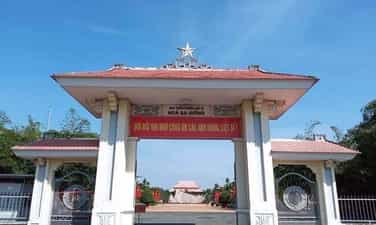
WARRIORS' MEMORIAL AREA AT THREE GIONG FORCES, NATIONAL HISTORICAL MONITOR
Nga Ba Giong relic is a revolutionary historical relic located in Hamlet 5, Xuan Thoi Thuong commune, Hoc Mon district. Surrounded by three roads: Phan Van Hon, Nguyen Van Bua and Provincial Road 19. Nga Ba Giong relic site is a memorial site for historical events in two wars against foreign invaders. Recognized as a national historical site in 2002. Giong Junction (also fully known as Giong Bang Lang Junction) is located in Xuan Thoi Tay village, part of 18 old betel garden villages formed from 1698 to 1731. For a long time, Giong Junction is a place with a folk name that has entered the history of the hometown of 18 betel garden villages of Hoc Mon - Ba Diem. Legend has it that in the past, this place was a relatively high land and a place where many linden trees grew, so this place got its name from there. After the Southern Uprising (November 23, 1940) failed, the French colonialists increased their repression and fierce terror against the revolutionary movement in the Hoc Mon - Ba Diem region. They set up three shooting ranges in Hoc Mon to kill Party leaders and patriotic comrades from their hometown of Hoc Mon and surrounding areas. Giong intersection is the third shooting range to record the heinous crimes of the French enemy and his henchmen against the people of Hoc Mon. Learning from the experience of 2 previous shooting ranges (1 at the old theater in the center of Hoc Mon District, 1 next to the well behind Hoc Mon Hospital today), they executed public shootings, forcing people to come and watch for the purpose of intimidation. revolutionary spirit of Hoc Mon people. But that firing squad backfired. The Hoc Mon people witnessed with their own eyes the cruelty of the French colonialists and the noble sacrifices of the communist soldiers, so their patriotic fire flared up even more fiercely. . For this third shooting range, they did not dare to build it near the center of the District anymore, but moved it to the Giong Junction area as a desolate, sparsely populated area to avoid people's resistance. Here, they built a shooting range with a solid mound of land 12m long, 2.2m high, in front of which were planted 6 shooting posts, each 1.7m high, the shooting direction facing the field (Ba Tram Lac). In 1941, here they secretly executed many times without letting the people see, hundreds of communist soldiers and patriots were killed by them. With the extremely sacred historical significance of Giong Junction, the place that marked the barbaric crimes of the French invaders, the place that demonstrated the indomitable fighting will and noble sacrifices of our comrades and compatriots later on. the Southern Uprising (November 23, 1940); After the complete liberation of the South (April 30, 1975), Hoc Mon district quickly restored and embellished the Nga Giong Junction revolutionary historical relic site to educate traditional generations of youth. This place has become a tourist attraction and a place to organize traditional festivals during major annual holidays of Hoc Mon district and the city, especially the anniversary of Southern Uprising Day (November 23). Currently, with the consent of the city, the district is renovating and building Giong Junction into "Giong Junction Martyrs' Memorial Area". Source: Hoc Mon electronic information portal
Ho Chi Minh City
12149 view
Rating : National monument