Relic point Vietnam
Việt Nam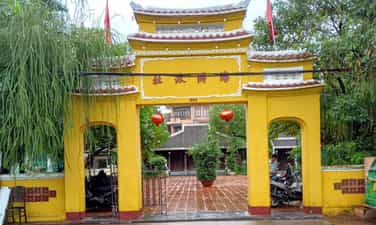
Hai Chau Communal House
Hai Chau communal house is considered one of the tourist destinations in Da Nang that is visited by many domestic and foreign tourists every year. Hai Chau communal house is considered the oldest communal house in the coastal city of Da Nang. This relic was officially recognized by the state in 2001. Hai Chau communal house was formerly known as Phuoc Hai pagoda. This is where Lord Nguyen Phuc Chu in the year of the Pig (1719) entered Quang Nam, stopped and stayed here. Hai Chau villagers then built an altar to King Nguyen Phuc Chu here. Hai Chau communal house is located right in the center of Da Nang city on the left bank of the Han River (alley 48 Phan Chau Trinh street, Hai Chau 1 ward, Hai Chau district). According to the genealogy of the Nguyen Van family, one of the 43 clans of Hai Chau village, the ancestors who pioneered and the later generations who cultivated Hai Chau village originated from Hai Chau village, Tinh Gia district, Thanh Hoa province. In the process of following King Le Thanh Tong to explore the land, they established Hai Chau village and settled in this land at the end of the 15th century. Records of the elders show that, in the 5th year of Gia Long (1804), Hai Chau village officials asked King Gia Long to build a communal house to worship the village's Thanh Hoang and the village's predecessors and successors on the land. Nghia Loi on the banks of the Han River. By 1858, the communal house was severely damaged due to the war of invasion by the French colonialists. Two years later, people rebuilt the communal house at the land that is now Da Nang University of Medical Technology and Pharmacy (99 Hung Vuong Street). In 1903, the French occupied the communal house and used it as a place to treat patients during the smallpox epidemic. A year later, the communal house was returned following the villagers' request. However, the people of Hai Chau thought that the village was seriously polluted, so they made a petition to King Thanh Thai asking for permission to rebuild the communal house at the current location (group 3, Hai Chau 1 ward, Hai Chau district). and exists to this day. Hai Chau communal house is one of the national historical and cultural relics in Da Nang, one of the Da Nang attractions that leaves many impressions in the hearts of tourists who come here. The main gate of this village communal house still retains the four words "Hai Chau Chinh Xa", written entirely in Chinese characters. Hai Chau communal house is an architectural complex, located in a campus of up to 3,500 square meters, including: Hai Chau communal house, Tien Hien church, Chu sect church and Ba temple. In front of the village communal house is a small lake with shady rockery and a sapling tree that is hundreds of years old. The church on the left is the church of the Nguyen Van family, the church on the right is a common church including 42 tablets of 42 clans, these 42 clans all come from Thanh Hoa, following King Le Thanh Tong to the South. from the year of the New Mao (1471). King Le Thanh Tong established Han Giang hamlet (now Da Nang) and those clans lived together to become Hai Chau village, which was ordained by the Nguyen Dynasty as "Chinh Commune". Inside the communal house, people keep many lacquered horizontal panels, parallel sentences, and gilded parallel tureens written entirely in Chinese characters and dating back hundreds of years. Among them, there are 9 horizontal panels and 2 pairs of opposing tureens made of wood, all beautifully carved and of high artistic value. On the bell tower of Hai Chau village communal house, there is a bell cast in bronze, on the body of the bell there are sentences and poems written in Chinese characters. These sentences and poems record the heroic historical milestones of the communal house. The general meaning of these words is as follows: In the 5th year of Minh Mang (1842), the pagoda was restored. In 1825, the king issued a decree for the pagoda, naming the pagoda "Phuoc Hai Pagoda", in the 13th year of Minh Mang (1832). ) On auspicious days, Hai Chau Chanh Dong commune created this bell. Source: Da Nang Electronic Newspaper
Da Nang
8981 view
Rating : National monument

Dai Nam communal house
Dai Nam communal house (local people call it Nai Nam) is a typical cultural and historical relic of Da Nang city. For those who love discovering ancient cultural values, this is a destination not to be missed when coming to the "worth-living city". Dai Nam communal house - a communal house more than 100 years old, associated with many important historical stories and events of the nation. The communal house was built in 1905. In 1999, Dai Nam communal house in Da Nang was recognized as a national monument. The address of this relic is located in Hoa Cuong ward (now Hoa Cuong Bac ward), Hai Chau district, Da Nang city. In 1946, Nai Nam communal house was located in Hoa Binh village (in Nai Nam commune). At that time, Hoa Binh village was the residence of people from Hoa Son and Khue Trung. In 1949, Hoa Binh village merged into Da Nang city and was renamed the South area under this city (separated from Hoa Vang district). The South area includes Nai Nam, Hoa Binh, Khue Trung villages and part of Lien Tri commune. The communal house faces Southeast, built entirely of bricks, tiles and wood, with a roof covered with yin and yang tiles. The communal house has a large yard and surrounding walls. The communal house gate has four square pillars, each pillar is about 5m high. The two central pillars create the main entrance to the communal house, on the top of the pillars are molded two unicorns, the left and right pillars are attached to the wall, the top of the pillars is shaped like a lotus bud. On the middle pillars are pairs of parallel sentences made of porcelain. During the fierce resistance war against the French and the Americans, Dai Nam Communal House in Da Nang was one of the bases and locations of the revolution. The communal house became a base for secret operations. During the period 1960-1965, the communal house was a communication station, communicating in and out of the city. Many important historical events took place here such as the admission ceremony of Party members, the deployment of military and political forces at various times from 1850 - 1975. According to history, many heroes , soldiers lived, fought hard, and died at this location. Source: Da Nang website
Da Nang
9496 view
Rating : National monument
Thuy Tu Temple
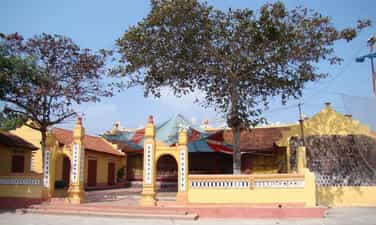
Thuy Tu Temple belongs to Thuy Tu village, formerly known as Ngoc Phuong village, Thuy Duong commune, Thuy Nguyen district, Hai Phong city. Thuy Tu Temple and other relics of Thuy Duong such as: Thuong communal house, Ha communal house, Luong Duong temple, Chim Phuong communal house (Hoa Binh commune) form a cluster of historical relics to remember the achievements of the four sons of the Pham family. Participated in fighting the Tong invaders in the 10th century (981) under the leadership of Le Dai Hanh. At that time, Thuy Duong commune had a family named Pham, who had four children. They are Pham Quang, Pham Nghiem, Pham Huan, and Pham Thi Cuc Nuong. They are two pairs of twins. When Mr. Quang and Mr. Nghiem were 18 years old; Mr. Huan and his 15-year-old sister Cuc Nuong lost both their parents. The four Pham brothers buried their parents in Ma Thuyen field, east of the site. When the Song army followed the Bach Dang River to invade our country, the king sent troops to defeat the enemy. The imperial army arrived at a high mound in Thuy Duong district and was warmly welcomed by the villagers. Especially the old people in the village told the king that there were 4 brothers and sisters of the Pham family who were all respectful and talented in martial arts. The king called all four Pham brothers to fight the enemy. Obeying the king's command, all four brothers happily paid homage to their ancestors and parents and then came to pay their respects to the king. Seeing that all four Pham brothers had unusual appearances and were good at martial arts, the king was happy, gave them titles and sent them to fight the enemy. After the victory, the four Pham brothers were all awarded titles and asked the king to let them visit their parents' and ancestors' graves and reward officers and villagers. The four invited the elders to the party and gave 300 denarii in money to show their gratitude. After the four Pham brothers died, the people of the villages built temples. Ngoc Phuong site (now Thuy Tu village, Thuy Duong commune) worships his eldest brother Pham Quang, Chiem Phuong site worships Pham Nguyen, Truong Son site worships Pham Huan and Cuc Nuong. The people of 3 pages all organize traditional festivals every year from the 9th to the 12th of the third lunar month. Thuy Tu Temple was ranked by the state as a historical and cultural relic in 1991. Source: Department of Culture and Sports of Hai Phong City
Hai Phong
7242 view
Rating : National monument
TEMPLE OF FEMALE GENERAL LE CHAN - ELEPHANT MOUNTAIN RELIC AREA
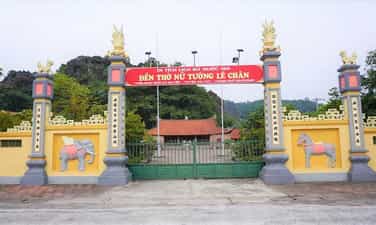
Hang Temple at the foot of Voi Mountain, An Lao district, Hai Phong city has long been a place to worship Female General Le Chan - who had meritorious contributions with people in the area to establish An Bien village during the Eastern Han Dynasty. After leaving her hometown of Quang Ninh to avoid being forced to become a concubine of the governor To Dinh. Le Chan set foot in the land of Hai An, Hai Phong, recruited soldiers to join them in farming, building a hamlet named An Bien site (today's inner city). Great ambition did not stop there. Disgruntled over the crimes committed by the enemy, causing the people's lives to be miserable and miserable, Le Chan silently prepared his forces, waiting for the day of the uprising. She went to the present-day Elephant Mountain area, gathered soldiers, actively practiced, stored food and herbs, and took advantage of the rugged terrain of the mountains and forests to hide from the enemy. Afterwards, receiving news of Hai Ba Trung's uprising, from the mountains and forests of An Lao, Le Chan contacted and officially brought his army to join the uprising. Due to its good fortified terrain, along with the commanding talent of a talented female general, the Elephant Mountain base quickly developed its forces, in a short time becoming an important base in the Northeast region. During that time, the surrounding area also had many insurgent troops, typically the insurgent army of Mrs. Tran Thi Trinh and her son Ngu Dao in Dai Dien, Tong Thuong Cau, An Lao district, (6km from Elephant Mountain), heard News of Le Chan's reputation contacted the Elephant Mountain base and became a general under her command. Although the uprising later failed and female general Le Chan had to commit suicide to preserve her reputation in the mountainous areas of Lat Son - Ha Nam, An Lao people still remembered her merits and kindness, so after hearing News of the female general's death, people in the area took her to worship in Hang Pagoda. Therefore, Hang Pagoda is also known as Hang Temple - which represents a wonderful combination of Buddhist religion and national hero worship. In the temple, King Thanh Thai still retains the title of female general as "Hoang Ba Long Hoi, Great King, Middle-Class Minister". On the basis of the old Hang Temple, in 2011 the government restored a new temple commemorating the Female General. The Temple of Female General Le Chan is located in the Hang Temple area, where the Buddha, the Holy Mother, the Monsignor and the Princess Thanh Chan were formerly worshiped in An Tien commune, An Lao district, on a large closed campus. more than 4000m2. The main temple has a Dinh-shaped structure with an area of 190 square meters, including five pre-sacrificing rooms and one back room. The front of the temple faces south, looking straight at Highway No. 10, beyond are undulating hills and mountains, the back side is based on a cliff creating a sustainable position. The temple is surrounded by city walls. The ritual gate is made up of 4 large pillars, the 2 tall central pillars at the top are converging purple phoenixes, the 2 slightly lower columns on both sides and at the top are 2 unicorns facing the center. The outside of the ritual wall is embossed with a white horse on the left and a large statue on the right. The renovation and embellishment of the Temple of General Le Chan was completed and put into use, not only meeting the visiting needs of people and tourists while also contributing to preserving the values of the monument for generations to come. next system. Source: Hai Phong Youth Union
Hai Phong
9720 view
Rating : National monument
Lang Suong Temple
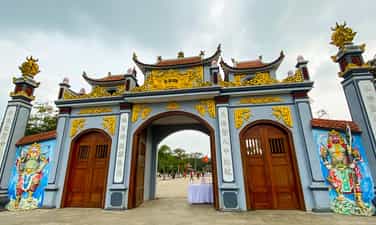
Lang Suong Temple is located in the system of relics worshiping Tan Vien Son Thanh along the Da River and the Northern Midlands Delta. The temple dates back to the reign of Thuc An Duong Vuong. During the Le dynasty, it was restored (981-1009), and under the Nguyen dynasty, in the 7th year of Thieu Tri (June 19, 1847), there was a major renovation. The temple is located in Trung Nghia commune, Thanh Thuy, Phu Tho. Tan Vien Son Thanh is known as the head deity of the "four immortals" of traditional Vietnamese beliefs. With respect and admiration, the people worshiped Tan Vien as the "Most Highly Spiritual" deity, "First blessed god" in Vietnamese traditional beliefs. Lang Suong Temple is proud to be the land where Saint Tan was born. This can be considered the land where the representative deity of Vietnamese folk beliefs is buried. Along with the belief in worshiping Saint Tan, Lang Suong Temple also worships Saint Mother - the person who is credited with giving birth to Saint Tan. The belief in Mother Goddess worship here has merged with the common belief in Mother Goddess worship of Vietnamese people such as Mother Au Co, Mother Earth, Mother Water... Lang Suong Temple has quite a large area and has architecture with many ancient and profound features. Experiencing rain, sun and fighting, the temple was much damaged. In 1991, the local government and people renovated Lang Suong Temple on a large area of land with an area of 3,000 square meters, including the following works: Temple gate, Hai Co temple, Thien Thanh well, stele house, hammock house, Left desert, right desert temple and Holy Mother's mausoleum. This is the only temple in Vietnam that worships the entire family of Saint Tan and is also the original place of worship in the system of relics worshiping Tan Vien Son in Vietnam. Truong Sa Beach - Trung Do where Lac Long Quan and Au Co met and became husband and wife - giving birth to Lac's children, Dragon's children - Origin of the Vietnamese people. With its profound historical and spiritual cultural values, Lang Suong Temple was recognized and ranked as a national historical relic by the Ministry of Culture and Information on July 12, 2005. Source: Phu Tho Tourism Promotion Information Center
Phu Tho
4645 view
Rating : National monument
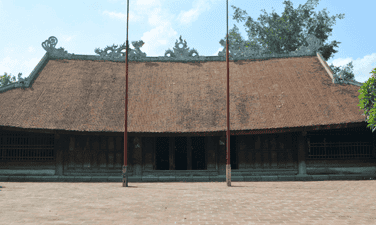
Lau Thuong communal house
Lau Thuong Communal House was built in the Dinh style, including a 5-compartment, 2-room worship hall and a 3-compartment harem, with a length of 28m and a width of 22m in the Southeast direction. The entire communal house has 60 large columns with a diameter of 0.75m linked with horizontal and vertical beams to form a frame with a sturdy structure in the shape of four boat valley pillars. The harem has a unique structure and is exquisitely carved. On the upper beam are two dragons flanking the moon with a tight layout, a harmonious combination of dragon-shaped lines and shapes intertwined with clouds, carved in the style of the Nguyen Dynasty. Below are two elaborately carved residual ends. The entire middle space of the harem is reserved for worship. The main structure of the altar is covered with four roof pillars, outside is a delicately carved door painted in red and gilded gold. Outside the forbidden door on the altar there is also a statue of Hai Ba Trung, carved in a sitting position. The communal house also retains a palanquin with bowls and bowls of tribute, painted and gilded with intricate carvings in the style of the post-Le period. Lau Thuong Communal House currently preserves a number of valuable artifacts such as 4 thrones and gilded tablets crafted during the Nguyen Dynasty, placed in the main altar. Besides, many classic stories such as: "Teaching Mister", "Double Phoenix Ham Thu", "Two Dragons Adoring the Moon", "Dragons Gathering", "Mother Dragon Trains Her Child"... are depicted in paintings. Elaborate carvings on architectural structures. Each carving is a unique work, vividly expressing the simple, liberal beauty, talent, ingenuity, creativity and aesthetics of our ancestors in the past. Lau Thuong village festival takes place on January 9 every year to perform worship rituals and participate in folk cultural and sports activities. Before the main festival, many sports and physical exchange activities between residential areas in the commune took place. On January 9, people organized a palanquin procession from the Ngoai Communal House to the Noi Communal House to celebrate, Then the procession took the palanquin to the front of Dinh Ngoai's temple and continued the ceremony. The annual festival of Lau Thuong village has great significance in connecting the community and educating the nation's patriotic traditions. With precious cultural and artistic values, Lau Thuong communal house was recognized and ranked as a national historical and cultural relic on February 21, 1975. Now when coming to Viet Tri city, tourists in addition to worshiping the Hung King temples on Nghia Linh mountain, visiting Hung Lo ancient communal house to listen to Xoan singing, sightseeing at Thien Co Temple... can also visit Lau Thuong communal house, Feel the ancient and quiet features of this precious architectural sculpture, calm your heart after a busy life to better understand and appreciate the cultural and historical values left by your ancestors. Source: Phu Tho Tourism Promotion Information Center
Phu Tho
4352 view
Rating : National monument
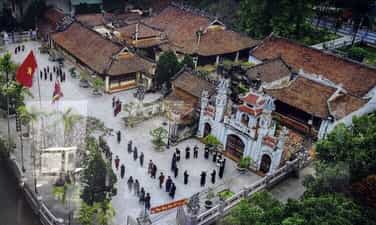
Hung Lo Communal House
Located in the ancient village of Hung Lo with a date of more than 300 years old, Hung Lo communal house has long entered the consciousness of Vietnamese people with customs and practices associated with the belief of worshiping Hung King. Hung Lo ancient village (Hung Lo commune, Phu Tho province) is located on the banks of the romantic Lo River, about 5km from the center of Viet Tri City. Hung Lo Communal House's historical and cultural relic complex was built on a land area of 5,000 square meters. Legend has it that in the reign of Le Hy Tong (1967), people here built a temple to worship the 18th Hung King, facing Nghia Linh mountain, where the Hung King's capital was located. Hung Lo Ancient Communal House is a complex of historical and cultural relics built on a large strip of land, including many construction items such as: Dai Dinh, Phuong Dinh, Bell Lau, Drum Lau, Sacrifice House... All are Built with rare types of wood such as nails, ironwood, bamboo, etc. The Great Court is structured according to the traditional architecture of three compartments, two wings; All three rooms have altars. The altar rooms are built according to the structure of five compartments and two wings. On both sides of the communal house are the Buddhist temple and the Shen Nong altar. The communal house's yard is spaciously decorated with rockery, sycamore trees, and shady banyan trees. This place also preserves a system of worship objects to serve the most complete worship rituals; In particular, the system of ancient couplets is very rich with 43 couplets praising the scenery of the homeland and the merits of King Hung. Most of the ancient worship objects are over 300 years old, typically 5 red-painted palanquins and gilded palanquins and festive symbols. Another notable feature, Hung Lo communal house is very famous for its tradition of the Hung Temple palanquin festival from ancient times to present. In the year of Mau Ngo (1918), Hung Lo communal house was awarded the "First Hung King Commemoration"; Currently, this reward sign is still solemnly kept in the communal house. On the occasion of the annual Hung Temple festival, coming to Hung Lo communal house, visitors will be immersed in a grand palanquin procession of over 200 men, wherever they go, it stirs up the whole region. The procession will go from the village communal house to Hung Temple; Returning from Hung Temple, the offerings at the village communal house were conducted, and finally the ceremony was held at Elder Yen's house. Source: Phu Tho Tourism Promotion Information Center
Phu Tho
4666 view
Rating : National monument
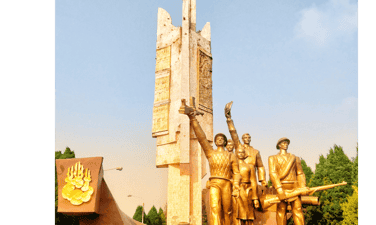
Song Lo victory monument
Song Lo Victory Monument is located on Don Mountain in Chi Dam commune, Doan Hung district. At the foot of the mountain, the Lo and Chay rivers merge here, creating a charming terrain and rich land. Standing in the monument area, looking far away, you will see the vast green river, close to the roofs and hamlets. Song Lo Victory Monument was built in 1987 with a total planning area of up to 2,537 m2; includes two parts: statue and monument. On both sides of the monument are two symbols of the ship's hull and soaring waves to represent the historical image: The victorious ship carrying the combined strength of the Vietnamese people is sailing out to sea following the flow of history. The 26m high pedestal next to the 7m high statue group is made of concrete and reinforced steel, painted in imitation bronze on the outside. The Victory Monument bears the image of a fire, symbolizing the strong vitality and everlasting existence of the Lo River victory; The body of the pedestal is designed with massive angles and is covered with stones that fit tightly together. On the four surrounding sides of the memorial, there are eight ceramic reliefs depicting the victory of Song Lo and summarizing some typical features in the life of the people of Doan Hung land. Each of the above reliefs is a delicate and elaborately sculpted work of art. The group of victory statues right at the foot of the monument, the statue's face facing the clear blue Lo River includes 5 characters representing the elements and forces he used to participate in the fight to win the Song Lo victory. Each statue is depicted standing and has a different charisma; There is a statue of a soldier in a proud posture holding a gun high, wearing a guard shirt, carrying a bag of rice on his back, and wearing rubber sandals; There is a statue of a soldier holding a rifle with both hands in a ready-to-fight position; The statue in the middle is the image of an ethnic female guerrilla, her head covered with a scarf, her hand holding a stick, her eyes looking into the distance, ready to fight; There is also a statue of a soldier standing next to a cannon, raising his hat and waving, his shirt fluttering in the wind, revealing a healthy, bare chest full of vitality... The above statues vividly portray the historical figures of the people who created the Song Lo victory, carrying the breath of years of heroic fighting to pass down to posterity in a complete and authentic way. . Many years have passed, generations of people born and raised, attached to this majestic land, all carry within them a great pride every time they mention the resounding victory of their ancestors. In their eyes, the Song Lo victory monument is not only a work honoring and praising the Song Lo victory but also a testament to the resilience of their ancestors who sacrificed themselves to protect the Fatherland. Song Lo Victory Monument was recognized as a national historical and cultural relic on September 27, 1997; Source: Phu Tho Tourism Promotion Information Center
Phu Tho
4705 view
Rating : National monument

Rung Sac Military Special Zone - Ho Chi Minh City
Historical relic of the Sac Can Gio Forest War Zone (formerly known as Can Gio Forest Park) with an area of 2,215.45 hectares, of which 514 hectares have been and are being exploited for tourism. Here are all the species and habitats of the most typical sub-region of the mangrove ecosystem. This place also houses many groups of monkeys with a total of more than 1,000 monkeys, living completely in natural conditions and very bold with humans. Located inside the Historical Relic of the Sac Forest War Zone in Can Gio is the Rung Sac Revolutionary Base, which is recognized as a National Historical Relic Area. This base has been known to many people in the past. heroic of the Sac Forest Special Forces. The base has been built and recreates almost all the living and fighting scenes of ancient heroes such as: Guard house, reception house, bunker, hall, logistics house, military house. medical, military house, cipher house; Scene of the commander of Group 10 listening to a report on the field situation and deciding to organize a raid to destroy the Nha Be gas depot, scene of Group 10 soldiers destroying crocodiles, how to distill salt water into fresh water, scene of the farewell Soldiers in battle, DKZ artillery shelling the Independence Palace... Rung Sac relic area (Can Gio district, Ho Chi Minh City) at that time was considered a floating base, close to Saigon - Gia Dinh to the southeast, where the Long Tau river was the "throat" of transportation. providing logistics for the giant war machine with millions of American troops and the Saigon government. On April 15, 1966, the Regional Command established the Sac forest special area with the code name T10, later changed to Group 10 with the task of guarding the seaport, guiding the people and building facilities, and grasping the enemy situation. Regiment 10 - Sac Forest Special Forces, has the task of penetrating deeply, holding on at all costs to occupy the Sac forest to continuously attack warehouses, ports, headquarters, and apparatus lairs. American war - Saigon government. To protect the Long Tau River, the US declared "weeding Rung Sac" with a "rain of bombs and storms of bullets". One of the famous ship battles was the battle of the Victoria ship in August 1966. At this time, the US sent ships Victoria carried about 100 tanks, armored vehicles; 2 helicopters, 20 tons of food... to supply an American division, preparing for the first dry season campaign of 1966-1967 Continuous fire, planes swarmed in the sky; on the ground there were dense ambushes. Rung Sac commando soldiers had to submerge themselves in the water, burying themselves in camouflage. After more than a month of preparation and planning, On the morning of August 23, when the Victoria ship passed by, two mines blew up the ship with a tonnage of more than 10 thousand tons and its weapons sank into the river bed. Nine years of fighting (1966-1975), Group 10 stubbornly stood firm on the defensive posture and took the initiative to attack, attacking deep into the harbor and enemy rear warehouses according to the orders of the Regional Command. , build local revolutionary movements, guide people in strategic hamlets to fight the enemy, build revolutionary bases in areas temporarily occupied by the enemy, develop guerrilla warfare to break the enemy's grip, and contribute Participate in the great victory of the resistance war against America and national salvation of the entire nation. With the leadership and direction of superiors, the 10th Rung Sac Special Forces Group has surpassed itself, knowing how to rely on the people to build a "people's heart posture", building a steadfast and steadfast ideology and a determined will to fight. willing to sacrifice their lives for the independence and freedom of the Fatherland, promoting revolutionary heroism to defeat enemies, the unit's tradition: "Rung Sac is the home, the port, the warehouse is the battlefield, Long Tau River is a decisive battle point - if you have an order, you will fight - in any situation, you will fight - if you fight, you will win. That tradition is like a song going into battle, following the special forces soldier into battle and making heroic achievements. On January 21, 2000, UNESCO recognized Sac forest as Can Gio World Biosphere Reserve with a unique and diverse flora and fauna typical of mangrove areas. On December 15, 2004, Sac Forest Base was decided to be ranked as a national historical relic by the Ministry of Culture, Sports and Tourism. Visiting the Rung Sac War Zone Historical Relic today, we not only enjoy the pristine nature but also find our roots as a way to remind and review the nation's heroic history. According to the Department of Cultural Heritage
Ho Chi Minh City
6635 view
Rating : National monument
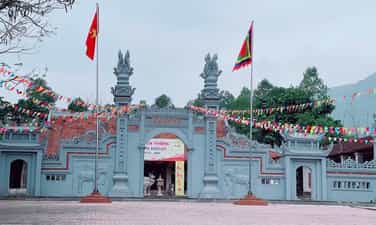
Dinh Thach Khoan
Thach Khoan Communal House was built a long time ago, at first it had small and simple architecture with main construction materials being wood, thatch, bamboo, and palm leaves. In 1905, the communal house was built a new one, and in 1914 the communal house was burned down. In 1925, the communal house was restored. In 1967, the communal house was renovated by the State and local people. After that restoration, the communal house exists to this day. Thach Khoan Communal House was built in the shape of the letter "Nhat" with 5 compartments in the southwest direction. The middle room looks directly towards Ba Vi mountain (Tan mountain), called the main palace, and has an altar to worship Tan Vien Son God. The left palace has tablets to worship Princess Mi Nuong, daughter of the 18th Hung King. The right palace has tablets to worship General Dinh Cong Moc and the Dinh family prisoners, who helped Le Loi fight against the Minh invaders. Thach Khoan village festival is held from January 23 to 25. The festival is organized into 2 parts including: the Ceremony part with activities of organizing palanquin processions, offerings, and offering incense according to traditional rituals. And the Festival part organizes cultural camps in residential areas, organizes cultural activities: Wrapping contest, cooking banh chung, pounding banh giay contest, gong performance, and dong duong contest; Mass entertainment festivals, folk games such as tea swing, tug of war, shuttlecock throwing... and mass sports activities. This is a typical traditional festival of the Muong ethnic people, a beauty in the way of educating the historical and cultural traditions of the homeland and the country, remembering the merits of the ancestors who opened the mountains and destroyed the mountains. The rocks that formed this land. Thereby contributing to preserving and promoting the cultural and spiritual values of ethnic communities, encouraging and encouraging people to return to their roots, promote local cultural traditions, and strengthen mass organizations. unite all people, honor traditional culture, raise awareness of responsibility in protecting, restoring and embellishing historical and cultural relics in the area. Source: Phu Tho Tourism Promotion Information Center
Phu Tho
3740 view
Rating : National monument