Relic point Vietnam
Việt Nam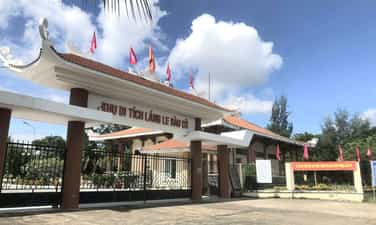
Lang Le Bau Co relic site
Lang Le Bau Co relic site is located in Tan Nhut commune, Binh Chanh district, Ho Chi Minh City. Lang Le Bau Co is associated with the resistance war against the French invasion in 1948 with major battles that went down in history. Lang Le Bau Co relic was recognized as a city-level historical relic in 2003. The reason it is called Lang Le Bau Co relic area is because the name of Lang Le Bau Co relic area was given by local people. The hamlet was established next to the interlaced canals and rivers. Lang Le Bau Co is located inside a large field with many shrimp, crabs, and fish. Along with many species of birds such as mallards, storks, teal, nuthatches, gongs, partridges, herons, and red armpits come to feed here. Therefore, Tan Nhut people call it by the familiar and rustic name Lang Le Bau Co. Lang Le Bau Co relic is considered the gateway to move to the center of Vuon Thom base and attack the enemy headquarters in Saigon. Previously, Lang Le Bau Co relic area was originally a field of overgrown reeds. On April 15, 1948, the French colonialists sent 3 thousand soldiers and many modern weapons to simultaneously attack the Lang Le Bau Co area to destroy the Vuon Thom base. At that time, the revolutionary armed forces in Lang Le - Bau, because of their small force and rudimentary weapons, had the help of local people along with the advantage of terrain. After just over half a day of fighting, it turned to attack, causing the French army to suffer a large number of casualties. The victory at Lang Le Bau Co killed 300 enemies, captured 30 mercenaries, and destroyed many machines, military vehicles, and guns of all kinds of the enemy. However, on our side, there are many officers and soldiers who heroically sacrificed their lives at a very young age. On October 14, 1966, in Lang Le, the Republic of Vietnam Army Ranger Battalion was destroyed by tourist militia. Lang Le Bau Co relic site has great historical significance for the people of Saigon in particular and the whole country in general. Faced with hatred for the French colonialists, Lang Le Bau Co's army and people fought a war of great historical significance that opened the door for our side and the enemy. For our side, the battle opened the door to heroism in a strong resistance position. As for the enemy, they had to retreat into a strategic position and were destroyed. The French colonialists could no longer form a strategy to defeat the Viet Minh. Moreover, at Vuon Thom base, Lang Le Bau Co also took place a determined battle to protect our base and destroy all sabotage plans of the enemy. Lang Le Bau Co relic area, after the Dong Khoi movement in 1960, was also a logistics and springboard for the armed forces to liberate Long An - Saigon - Gia Dinh. To commemorate the sacrifices of our compatriots and soldiers, in 1988 Binh Chanh district built a historical building in Lang Le Bau Co land with an area of 1000m2. Source: Ho Chi Minh City Electronic Information Newspaper
Ho Chi Minh City
16811 view
Rating : City-level relics
Cu Chi Tunnels historical relic site
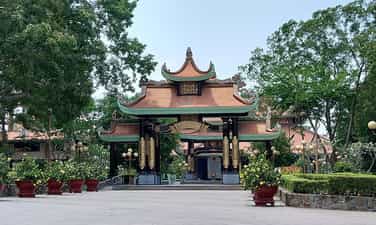
Located about 70 km northwest of the center of Ho Chi Minh City, Cu Chi Tunnels is a miniature of the transformation and creativity of the army and people of Cu Chi during the long and fierce resistance war for 30 years. fight against invaders, win independence and freedom for the Fatherland. With the scale of its feat, Cu Chi Tunnels entered the history of the heroic struggle of the Vietnamese people as a legend of the 20th century and became a famous landmark in the world. With only rudimentary tools such as a hoe blade and a shovel, a unique and one-of-a-kind wonder of fighting the enemy has been created with about 250 km of tunnels spreading like a spider web in the ground, with continuous constructions. with tunnels such as: Trenches, emplacements, fighting nests, bunkers for dining, sleeping, meetings, activities, military medicine, food storage warehouses, wells, Hoang Cam kitchen... The real stories from the tunnels have exceeded human imagination. The tunnel is 3 to 8 meters deep underground, the height is only enough for one person to walk on their knees. The first tunnel at the edge of the forest has an underground well that provides drinking and living water for the entire tunnel area. The well is 15m deep and clear. The tunnel system consists of 3 floors, from the "backbone" radiating countless long and short branches that connect with each other, some branches reaching out to the Saigon River. The first floor is 3m above the ground, resistant to artillery shells and the weight of tanks and armored vehicles. The second floor is 5m above the ground and can withstand small bombs. The last floor is 8 to 10 meters above the ground, which is very safe. The way up and down between the basement floors is arranged with secret hatch covers. Above is discreet camouflage, looking like extruded termite mounds, along the tunnel there are vents. Connected to the tunnels, there are large tunnels for resting, a place to store weapons and food, a well, a Hoang Cam kitchen, a command tunnel, a surgical tunnel... There are also large tunnels and roofs. The roof is airy and cleverly camouflaged for watching movies and performing arts. Also from this tunnel, the US Crimp (trap) operation with 3,000 troops, Sedarfall operation with 12,000 soldiers, with tanks and maximum support aircraft, aimed to turn Cu Chi into a "destruction free zone". destroy" has been smashed. Cu Chi truly deserves the title "land of steel and bronze" through 20 years of persistent fighting. With the value and stature of the victory summed up by the blood and efforts of tens of thousands of soldiers and compatriots, the Cu Chi tunnel base has been recognized by the Ministry of Culture as a special national monument. Since the return of peace, tens of thousands of tourist groups with millions of people of all skin colors and ethnicities around the world have visited Cu Chi tunnels. From General Secretaries of the Communist Party, Heads of State, to politicians, generals, scientists, philosophers, writers, journalists, American veterans... have set foot in the tunnels with all emotions and admiration for the heroic land. A politician in the Federal Republic of Germany said: "For many years I have been skeptical about the struggle of the Vietnamese people. How can a small and poor country defeat a large and rich country like America? But when I came here, going through the 70m tunnel, I was able to answer that question myself." Source: Ho Chi Minh City Historical Relics
Ho Chi Minh City
6612 view
Rating : Special national monument
Nha Rong Wharf - Ho Chi Minh Museum (Ho Chi Minh City Branch)
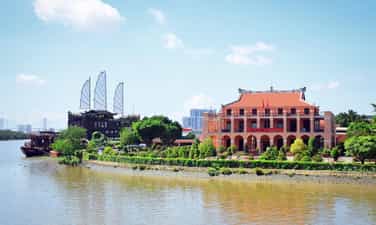
Nha Rong Wharf is one of the historical relics associated with the great President Ho Chi Minh's path to national salvation. Nha Rong Wharf or Ho Chi Minh Museum started out as a major commercial port of Saigon. This trading port is located on the Saigon River and was built in 1863, and more than 2 years later, in 1864, this Nha Rong was completed, on the area near Khanh Hoi bridge. Construction of Nha Rong began on March 4, 1863, by the "Sea Shipping Company" to build a store to serve as a residence for the General Director and a place to sell train tickets. The roof is decorated with a dragon image, in the middle instead of a pearl is a badge with the image of "Horse head and anchor". The "Horse Head" insignia refers to the time when in France, this company specialized in road transport with horses pulling carts, while the "Anchor" symbol symbolizes ships. In 1919, the company was allowed to build a wharf with reinforced cement but could not do so. It took until March 1930 to complete the new wharf, which had only one wharf but was 430m long. In 1955, after the French colonialists failed in Vietnam, Saigon Trade was transferred to the southern government of our country to manage. The government restored the roof and replaced the two old dragons with two other dragons with heads facing outward. With a construction area of nearly 1,500 square meters, the remaining area is a green garden with cool air and a romantic setting of more than 400 precious trees from all over the country gathered here to show off their beauty and fragrance, especially especially the banyan tree of the late General Secretary Nguyen Van Linh and the bodhi tree of the President of India. In 1965, Nha Rong was used by the US military as the headquarters of the US Military Aid Receiving Agency. In 1975, after the country was unified, Dragon House, the symbol of Saigon port, was managed by the Vietnam Seaway Department. Nha Rong Wharf is currently the Ho Chi Minh Museum, Ho Chi Minh City Branch, one of the museum branches and souvenirs about President Ho Chi Minh in the country. Because here, on June 5, 1911, young man Nguyen Tat Thanh (later Ho Chi Minh) boarded a train to work as a kitchen assistant to have the opportunity to go to Europe. Next was the day Uncle Ho left to find a way to save the country in Vietnam. Nha Rong Harbor is a place to preserve many priceless documents and artifacts to help future generations better understand the life and great revolutionary career of the Father of the Nation. The museum is built into 12 galleries with about 170 data, images and artifacts. Not only that, this is also an address for people to come and learn about the life and revolutionary career of Uncle Ho. Nha Rong Wharf is also a destination that attracts millions of domestic and international tourists. From the above great values and meanings, Nha Rong Harbor deserves to be a national historical relic that we need to preserve, honor as well as propagate and promote to friends in five continents. Nha Rong Wharf will forever be a great pride of the entire nation. Source: Department of Cultural Heritage
Ho Chi Minh City
10490 view
Rating : National monument

Independence Palace
The Independence Palace today is called the Reunification Palace or the Thong Nhat School Association. This was once the residence and workplace of the President of the Republic of Vietnam. The Independence Palace is currently classified as a special national monument by the Vietnamese government. In 1962, Ngo Dinh Diem built the project with the design of the building by architect Ngo Viet Thu. In 1868, after occupying Luc Tinh Cochinchina, the French colonialists built a mansion here. The ding was originally the residence of the governor of Cochinchina. Since 1887, when the French president signed the decree establishing the Indochina Federation, the independence palace became the French governor-general in Indochina. In 1954, with the defeat at Dien Bien Phu and according to the Geneva Accords, the French expeditionary force had to withdraw from Vietnam. On September 7, 1954, the High Commissioner of the French Military Command in Indochina, on behalf of France, returned the Independence Palace to the representative of the Saigon government, Prime Minister Ngo Dinh Diem. On February 27, 1962, there was a coup. Two Saigon army pilots or bombers collapsed the entire main left wing of the Palace. Since it was impossible to restore it, Ngo Dinh Diem decided to Construction of the palace began on July 1, 1962. During the construction of the new palace, Ngo Dinh Diem's family moved to live at Gia Long Palace. While the project was being built, Ngo Dinh Diem was killed by a coup faction on November 2, 1963. Therefore, on the inauguration day of the palace, the person presiding over the ceremony was Nguyen Van Thieu - Chairman of the National Leadership Committee. . The person who lived the longest at the Independence Palace was Nguyen Van Thieu. This is the headquarters of the Saigon government, where many foreign military interventions were witnessed in the brutal war in Vietnam and where many anti-people policies were born. President of the Republic of Vietnam Nguyen Van Thieu. With the Ho Chi Minh campaign on April 30, 1975, Tank number 390 rammed through the gate of the Independence Palace to enter the palace. At 11:30 a.m. on the same day, Lieutenant Bui Quang Than, commander of the company commanding vehicle 843, lowered flag 36 and raised the flag of the National Front for the Liberation of South Vietnam. The flag fluttering on the roof of the Independence Palace ended 30 years of arduous and heroic war for the Vietnamese people. At this moment, the last President of the Republic of Vietnam, Duong Van Minh, and the entire cabinet of the Saigon government, announced their unconditional surrender to Ho Chi Minh's campaign of complete victory over the people of the two Souths. Bac has reunited as a family. Independence Palace has been recognized by the state as a historical and cultural relic. In addition to the names independence palace, there are also a number of other names such as Governor General's Palace, Presidential Palace or another name, Dragon's Head Palace. Architect Ngo Viet Thu has harmoniously combined modern architectural art with traditional Eastern architecture. The entire Palace is shaped like the word Cat, which means good and lucky. The center of the Independence Palace is the location of the national document presentation room on the top floor, Tu Phuong. The mouth-shaped main door promotes education and self-expression. The architectural beauty of the Palace is also shown by the stylized floral curtain. This is a modification from the image of the Hue Imperial Palace, which increases the beauty of the palace. Usable area is 20,000 m², divided into 95 rooms. Each room here has a unique function with architecture and decoration suitable for its intended use. After 1975, the main house continued to be used in some circles to serve tourists. At the corner of Princess Huyen Tran Street - Nguyen Thi Minh Khai before 1975 was the living area of the Guard crew who flew the plane for Nguyen Van Thieu. Currently, it has been renovated into a lunch break area and collective kitchen for Thong Nhat hall staff. The two-storey building with an area of 160 m², under Nguyen Du street, before 1975 was the headquarters of the Democratic Party, and after 1975, it was the workplace of the board of directors. In addition to the above buildings in the left corner of the palace on Nguyen Thi Minh Khai street, Thong Nhat Hall also has a 4m Van Giap Duong house built on a high mound. Independence Palace is not only a unique architectural work but it is also a historical testament. The Independence Palace has accompanied our country through many ups and downs of history. Its solidity has left a lifetime of valuable lessons for our children and grandchildren about patriotism and resilience in the lives of our ancestors. ta. Source: Ho Chi Minh City electronic information portal
Ho Chi Minh City
5865 view
Rating : Special national monument
DINH HOA, THAI NGUYEN ATK ATK REMOTE AREA
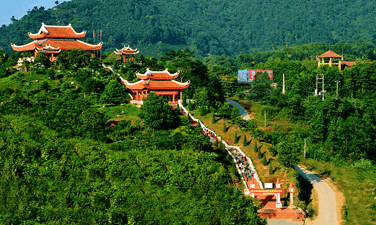
ATK Dinh Hoa Special National Relic Area is the residence, work and activities of President Ho Chi Minh, the Party Central Committee and the Government during the resistance war against the French colonialists (1946 - 1954). Here, together with the Party Central Committee, President Ho Chi Minh made many important decisions related to the fate of the entire nation's resistance war against the French colonialists. The pinnacle was the Dien Bien Phu victory, "Illustrious in five continents, shaking the earth", ending the war and restoring peace in Indochina. ATK Dinh Hoa Special National Relic Area is evaluated "As the most important relic complex of the Vietnamese people in the 20th century". It is a red address where revolutionary historical traditions are educated for the young generation of Vietnamese people on pilgrimage to their origins, and deserves to be a meaningful eco-tourism destination in the strategy of attracting millions of domestic and international visitors. Offer incense at the President Ho Chi Minh Memorial House and visit relic sites. It is a vivid testament to efforts to preserve and promote the unique values of the revolutionary land. Dinh Hoa Safety Zone (ATK) historical relic is located in the communes of Phu Dinh, Diem Mac, Thanh Dinh, Dinh Bien, Bao Linh, Dong Thinh, Quy Ky, Kim Phuong, Binh Thanh and Cho Chu town, district Dinh Hoa, Thai Nguyen province, with a total conservation planning area of over 5,200km2. This is also the bordering area between Thai Nguyen, Tuyen Quang and Bac Kan provinces. In 1981, the relic site was ranked as a national monument by the Ministry of Culture and Information (now the Ministry of Culture, Sports and Tourism), including 13 component relics: 1. Cho Chu Prison (Cho Chu town, Dinh Hoa district) 2. Location of establishment of the Vietnam Liberation Army (Dinh Bien commune, Dinh Hoa district) 3. Place where Uncle Ho lived and worked at Khau Ty hill in 1947 (Diem Mac commune, Dinh Hoa district) 4. Location where Uncle Ho lived and worked at Tin Keo hill (1948 - 1954), Phu Dinh commune, Dinh Hoa district 5. Uncle Ho's relic cluster in Khuon Tat: Banyan tree, Khuon Tat stream section - where Uncle Ho bathed, washed and fished, Uncle Ho's stilt house and cellar in Na Dinh hill (Phu Dinh commune, Dinh Hoa district) 6. Location of General Secretary Truong Chinh and the Party Central Committee's office at Phung Hien (1947 - 1949), Diem Mac commune, Dinh Hoa district 7. Location of the General Command of the Vietnam People's Army (1949 - 1954) in Bao Linh commune, Dinh Hoa district 8. Khuon Tat 7-tier waterfall (Phu Binh commune, Dinh Hoa district) 9. Location of establishment of the Vietnam Journalists Association (Diem Mac commune, Dinh Hoa district) 10. Location of establishment of the Vietnam Peace Committee (Diem Mac commune, Dinh Hoa district) 11. Location of establishment of the Central Inspection Committee (Diem Mac commune, Dinh Hoa district) 12. Location of the first issue of the People's Army Newspaper (October 20, 1950) Dinh Bien commune, Dinh Hoa district 13. Location of Pu Don hill, where President Ho Chi Minh presided over the ceremony conferring the military rank of General on comrade Vo Nguyen Giap (1948) (Phu Dinh commune, Dinh Hoa district) An Toan Zone (ATK) Dinh Hoa is truly the most important relic complex of the Vietnamese people in the 20th century, a resistance capital with key relic areas: Pac Bo (Cao Bang), Tan Trao (Tuyen Quang), ATK Dinh Hoa, Cho Don, Chiem Hoa, Son Duong, Yen Son (Thai Nguyen, Bac Kan, Tuyen Quang) have meaning and value in many aspects. In particular, ATK Dinh Hoa was the place that initiated, organized and directed the Dien Bien Phu campaign to win, end the war, and restore peace in Indochina... Source: Department of Cultural Heritage
Thai Nguyen
7805 view
Rating : Special national monument

Duom Temple
Duom Temple is located at the foot of Duom Mountain in Dong Dat commune, Phu Luong district, Thai Nguyen province, about 25km northwest of Thai Nguyen city center. Duom Temple worships Duong Tu Minh - a leader of the Tay people and a mandarin under the Ly dynasty who was assigned to manage the ancient Phu Luong palace (including continents that are now part of the provinces: Thai Nguyen, Bac Kan, Vinh Phuc, Phu Tho, Tuyen Quang, Cao Bang, Lang Son). He was also a famous general who had great merit in reclaiming a large portion of land from the Song invaders and firmly protecting the northern border region of Dai Viet. He also openly reclaimed land, developed the economy, maintained national unity, and was awarded the title of "God of Cao Son Quang Du" by the Ly dynasty. Later dynasties all ordained him as "Cao Son noble class, superior god". With his contributions to the country during the Ly dynasty, he was given his daughter, Princess Dien Binh, in marriage by King Ly Nhan Tong (1072 - 1128) and in marriage by King Ly Anh Tong (1138 - 1175). His daughter was Princess Thieu Dung in 1144. Thus, he was the son-in-law of two Ly dynasty kings. History books do not clearly state the year of birth and death of Duong Tu Minh, only that he lived in the late 11th and early 12th centuries. After his death, people built a temple to worship him at Duom Mountain - said to be the place where he died, and honored him as Saint Duom. Duom Temple was built in the 12th century and has been restored many times but still retains the ancient beauty of traditional architecture. The temple is located at the foot of Duom Mountain, with three gates facing the national highway. The main items include the bell tower, Lower temple, Middle temple, Upper temple, arranged against the mountainside in order from low to high. Ha Temple is the place to worship two princesses Dien Binh and Thieu Dung; Trung Temple is the place to worship the famous man Duong Tu Minh, and Thuong Temple is the place to worship his mother. In front of the temple is a large space with fields, palm hills, tea hills and the meandering Cau River flowing through. Although not large in scale, Duom Temple is a beautiful, majestic architectural complex, and is the top scenic spot of the midland region of Thai Nguyen. Duom Temple has been ranked as a National Monument since 1993. Every year, from January 6 to 8, Phu Luong district organizes the Duom Temple Festival to commemorate the merits of Duong Tu Minh. Currently, Duom Temple is a tourism highlight of Phu Luong district and Thai Nguyen province. Source: Thai Nguyen website
Thai Nguyen
4956 view
Rating : National monument
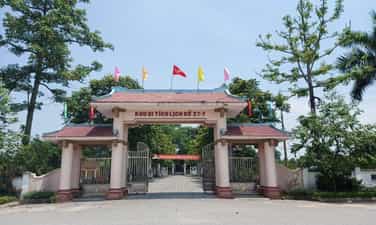
7/27 National Historical Site
July 27 is a big holiday of our people. Every year on this day, people across Vietnam respectfully bow their heads, remember and pay tribute to their predecessors, heroic martyrs, and outstanding sons and daughters of the Fatherland who heroically sacrificed and exchanged blood. bones for today's independence, freedom, and prosperity. And the origin of that humane and sacred July 27 War Invalids and Martyrs Day, the July 27 National Historical Site is located in Ban Co residential group, Hung Son town, Dai Tu district, Thai Nguyen province. . Located in the master plan of Hung Son town, which has been recognized as a class IV urban area since 2019, the July 27 Relic Area has a beautiful landscape because it has recently been renovated and renovated. Stepping through the gate of the Relic Area, many people feel that the scenery here is like a park, with cool green ornamental trees, flowers blooming, a large lake with fish swimming freely... The ceremony yard is large and shady. shadow of a tree hundreds of years old. In the middle of the spacious campus of the Historical Relic, there is a cylindrical white cloud-like stone, inscribed: "Here, on July 27, 1947, 300 officials, soldiers and representatives of local people from all walks of life met." listened to the announcement of Uncle Ho's letter, recognizing the birth of War Invalids and Martyrs Day in our country". Back in history, in the period of 1946 - 1947, amidst the chaos of work and the context of the very difficult Resistance War against the French colonialists, President Ho Chi Minh still took time and decided on many guidelines and policies. It's important to pay back gratitude. He proposed that the Government choose one day of the year as "Invalids' Day" so that people have the opportunity to show their filial piety and love for wounded soldiers. Implementing his Directive, a conference including delegates from central agencies and some localities met and agreed to choose July 27 every year as National War Invalids Day. On the afternoon of July 27, 1947, a rally of about 300 participants included representatives of the Viet Minh General Headquarters, the Women's Association for National Salvation, the Youth Union, the Information Department, the National Army Political Department and local authorities in Ho Chi Minh City. Ban Co hamlet, Hung Son commune (now Hung Son town). Here, Mr. Le Tat Dac, representative of the National Army's Political Department, announced a letter from President Ho Chi Minh. In the letter, he wrote: "July 27 is an opportunity for our people to express their filial piety, charity and love for wounded soldiers... I would like to volunteer to send a silk bra that the women donated to me." Me, one month's salary, one meal for me and the staff at the Presidential Palace combined is 1,127 VND." Thus, Uncle Ho not only agreed to celebrate July 27 but also became the President - the first citizen and members of the Government to show filial piety to war invalids. On December 16, 1947, President Ho Chi Minh signed the Decree "Regulations on pensions, benefits, disability and survivor benefits". This is considered the first document affirming the important position of war invalids and martyrs in our nation's resistance war to save the country. July 27, 1997 - Celebrating the 50th anniversary of War Invalids and Martyrs Day, the Ministry of Labor, War Invalids and Social Affairs, together with the People's Committee of Thai Nguyen province, inaugurated the July 27 Historical Relic Area and erected a commemorative stele. At the same time, the relic site was recognized as a "National Historical Site". Dai Tu district has established a Relics Management Board to take care of and serve visitors; restore and embellish items. This is a historical and cultural work of great significance, a "red address" to meet the needs of tourists inside and outside the province to visit and commemorate the great contributions of President Ho Chi Minh and fallen heroes. doctor. At the same time, it is a connection point to the tour route of Nui Coc Lake Tourist Area and relics in Dai Tu district with ATK revolutionary historical relics Dinh Hoa (Thai Nguyen) and Tan Trao (Tuyen Quang). Historical site on July 27 - where the source of gratitude is the fulcrum, belief, and motivation for Dai Tu district and Thai Nguyen province, along with the whole country, to arouse national pride, steadily develop, and deserve with the merits and blood sacrifices of his father's generation, blood sacrifices for independence and freedom, national unification and the happiness of the People. Source: Thai Nguyen electronic information portal
Thai Nguyen
4549 view
Rating : National monument

Cultural and historical relics of Trinh Temple and the legend of Tien River
Historical and cultural relic of Trinh Temple and the legend of the Immortal's descent to earth. Trinh Temple is located in Giang Tien town, Phu Luong district, 14 km from Thai Nguyen city. This place worships Cao Son Quy Minh Duong Tu Minh. Nestled beside the romantic Tien River is Trinh Temple, ancient and sacred, with charming mountain and water scenery. It is unknown when the temple was built, but according to documents about Duong Tu Minh, it was probably formed around the 12th century and associated with the Legend of the Immortal's descent to earth. It is said that the Tien River was deeper and wider in the past than it is now, located on the unique road leading to the northern border of Dai Viet. Many pedestrians passing through here encountered high water and were often swept away by flood waters, so many people died. In the region, this river is called Giang Ma, meaning devil river. One beautiful morning, people saw an old man with a well-proportioned figure, bright eyes, a silver beard covering his chest, a hat and a neat bow and sword belt riding a white horse wading down the Giang Ma River. Some people say that he is the royal concubine Duong Tu Minh, the leader of Phu Luong palace under three Ly dynasty kings: Ly Nhan Tong (1072-1128), Ly Than Tong (1128-1138) and Ly Anh Tong (1138-1175). Duong Tu Minh was twice appointed concubine, and was awarded the title "Uy Vien Dong Cao Son Quang Do Tri Than" by the Ly dynasty; “Cao Son Quy Minh”. After fulfilling his duty to the people and the water, he swam down to the river to bathe and then quietly flew with the white horse back to the Fairy realm in the sky. Since then, the river has flowed more gently, on both sides of the river there are four good seasons of green rice and corn. The Giang Ma river is no longer mentioned, but is called by the new name Giang Tien, meaning Tien river, river with Tien. take a shower. People built a temple at Giang Tien wharf and named the temple Trinh Temple, because every time soldiers and officers came to Duong Tu Minh's main temple located at Diem Son (Duom Mountain), they had to stop at Trinh Temple. prepare the crown, crown and belt, and present "Cao Son Quy Minh", that's why the temple is more solemn and respectful. Trinh Temple relics were ranked as provincial-level historical and cultural relics in 2008. The temple has been protected, restored and embellished by people for many generations and has now become an attractive spiritual tourism destination, meeting the needs of many people. the need for cultural and religious activities for tourists from all over when visiting the Duom temple festival. Source: Department of Culture, Sports and Tourism of Thai Nguyen province
Thai Nguyen
4580 view
Rating : Provincial level relics
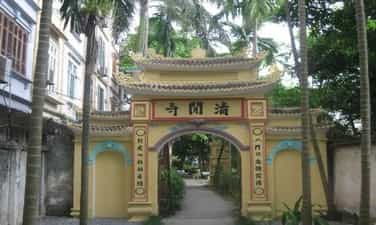
Thanh Nhan Pagoda
Thanh Nhan Pagoda (Linh Son Tu) is the Party's secret revolutionary base, the Ancestral Church is the meeting place, printing of leaflets, and accommodation for revolutionary cadres active in the period before the August Revolution of 1945 and when France temporarily occupied Hanoi (1947- 1949). A number of officers who sacrificed heroically at the pagoda in March 1949 were buried at Mai Dich cemetery - Hanoi. Thanh Nhan Pagoda (Linh Son Tu) is the secret revolutionary base of the Party and the church. The group is a meeting place, printing leaflets, and accommodation for revolutionary cadres active in the period before the August Revolution of 1945 and when the French temporarily occupied Hanoi (1947- 1949). A number of officers who sacrificed heroically at the pagoda in March 1949 were buried at Mai Dich cemetery - Hanoi. Located to the south of the ancient Thang Long citadel, close to the O Cau Den area, there is a pagoda called Thanh Nhan Pagoda in its literal name, Linh Son Tu in its literal name. Thanh Nhan Pagoda is currently located at alley 331 Tran Khat Chan. Thanh Nhan Pagoda is located in a complex of relics including Lac Nghiep Communal House in the East, close to the pagoda, a little further away are An Cu Communal House, Luong Yen Communal House. Thanh Nhan Pagoda is located on a mound that people here used to call a mountain, engraved on the ancient stone stele "Linh Son Bao Tu" carved in the year Canh Hung 20 (1759), during the Le Dynasty. Monk Chinh Minh, the abbot of Linh Son pagoda at that time, wrote as follows: "Now in Ong Mac land, Thanh Nhan village in the capital, there is a land with a towering mountain of land. That mountain has a vein leading from West Lake, flowing to the To Lich River, on the right there is Bach Ho, on the left there is Thanh Long, in front is a robin, behind is a feathered bird, as far as the eye can see, it is truly a first-class quiet land. most of all". Thanh Nhan Pagoda has a large scale. The three-entrance structure is shown in the form of pillars, with a main gate. The main pagoda is located on the highest position compared to the supporting structures and faces south, overlooking the courtyard and lotus pond of the pagoda. The pagoda has a "Dinh" shaped structure, gabled walls, and tiled roof. The ridge and the embankment are raised high, decorated with rosettes on the top, and in the middle of the ridge is the great pagoda "Linh Son Tu". The decoration in the main pagoda's architecture is gentle, the themes and motifs are mainly in the artistic style of the Nguyen Dynasty, such as: apricot bamboo stems, seal patterns, concentrated on the mesmerizing parts. Along with the main temple architecture, there is an ancestral house with five compartments. The temple also has a model electric house. Currently, Thanh Nhan Pagoda still preserves a rich amount of relics in both quantity and artistic value. Typically, there are ancient stone steles (9 steles). The system of Buddha statues, Mother Goddess statues, and Patriarch statues includes 61 large and small statues. Two bronze bells were cast in the year of Tu Duc (1848). Other artifacts: horizontal boards, parallel sentences... are products of the Nguyen Dynasty. On May 28, 2003, Thanh Nhan Pagoda - Linh Son Tu was ranked by the Hanoi People's Committee as a historical architectural and artistic relic by Decision No. 2942/QD-UB. What we cannot mention is that in the early years of the resistance war against the French colonial invaders, Thanh Nhan Pagoda was a base for raising underground revolutionary comrades, a place where documents were printed and hidden. Party leaflets, in the fierce and persistent struggle, there were comrades who heroically sacrificed their lives at this pagoda. A number of other comrades later took on the responsibility of the Party and the State, they became heroes. witnesses of the historical period, and also witnesses affirming the positive contribution of Thanh Nhan Pagoda in the cause of fighting to protect Hanoi Capital, protecting the Fatherland, creating more motivation to promote the war. The revolution quickly led to brilliant victory. On August 5, 2005, Thanh Nhan Pagoda was labeled a revolutionary historical relic. Today, the pagoda is also an address for generous-hearted Buddhists to contribute and share with many difficult situations in society through very practical and humane charity works such as cooking rice. , charity porridge for cancer patients in difficult circumstances at two K hospitals (Addresses Quan Su and Thanh Tri). Organize gift distribution programs combined with medical examination and treatment for people in remote areas; eye surgery program for the poor; distribute wheelchairs to disabled people. Coordinate with the Health Department to organize charity clinics for the poor right at the temple. Source: Phuong Thanh Nhan website
Hanoi
9434 view
Rating : National monument

Lang Pagoda
Lang Pagoda is located in Lang village. Lang or Ke Lang is the name of Yen Lang village, now in Lang Thuong ward, Dong Da district, Hanoi. Lang Pagoda has many unique characteristics, because this is a temple worshiping Buddha and Saints, associated with a famous figure of that era, Zen Master Tu Dao Hanh. During the Ly Dynasty (1010 - 1225), Buddhism flourished. Many temples were built and expanded. In Thang Long and Hanoi, during this period many pagodas were restored and built such as Tran Quoc, Hoe Nhai, One Pillar, Kim Lien and Lang pagodas. Among them, Lang Pagoda has many unique characteristics, because this is a temple worshiping Buddha and Saints, associated with a famous figure of that era, Zen Master Tu Dao Hanh. Lang Pagoda is located in Lang village. Lang or Ke Lang is the name of Yen Lang village, now in Lang Thuong ward, Dong Da district, Hanoi. Lang Pagoda is located right next to Lang Pagoda street in this ward. Lang Pagoda was built during the reign of King Ly Than Tong (1128 - 1138) right on the old house of Mr. and Mrs. Tu Vinh, who gave birth to the famous Zen master Tu Dao Hanh. Zen master Tu Dao Hanh once practiced at Phat Tich Pagoda (Sai Son - Hanoi) and according to the book Hoan Long district chi, Tu Dao Hanh once went to Tay Thien to study Buddhist magic, knew how to ride clouds, step on water, fly into the sky, and crawl down. Earth, immeasurable magic. After Tu Dao Hanh went to Sai Son mountain to practice, the reincarnation was reincarnated as the son of Sung Hien marquis, (Ly Nhan Tong's younger brother) and was passed down to the throne as Ly Than Tong.(1). Lang Pagoda, in addition to worshiping Buddha, also worships Tu Dao Hanh and Ly Than Tong. Lang Pagoda's literal name is Chieu Zen Tu. The stele creating the statue of Chieu Thien Pagoda (Chieu Thien creates the image of self-compassion) was engraved in the 4th year of Thinh Duc (1656) and still kept at the pagoda, explaining the name of the pagoda as follows: "The blessed land and the sacred world only have the best Chieu Thien pagoda." . Because it has a clear good omen, it is called "Chieu". This is the birthplace of Zen Master Dao Hanh, so it is called Zen. Researching pagodas and pagoda statues of the Ly Dynasty, Associate Professor. Tran Lam Bien wrote: "A third type of pagoda originated from the Ly dynasty, which is Lang pagoda. Like Thay Pagoda and 2 Keo Pagodas (Nam Dinh, Thai Binh), this is a pagoda with a "temple"-like architecture whose temple properties in ancient times were probably quite strong. In addition to worshiping Buddha with many precious statues, great attention has been given to worshiping Saint Tu Dao Hanh as a "Taoist" ancestor. Sometimes people forget that it is a pagoda, and Tu is a monk, so his successor was once Mr. Thong or Ms. Tu as a shaman with elements of witchcraft. That's why it's difficult to find ancient towers or ancestral houses here. The above explanations are completely reasonable when we explore this temple. The pagoda has 2 three-entrance gates, of which the outer three-entrance gate is believed by researchers to have the ceremonial gate of the royal palace of the Le Trung Hung period (1533-1789) with 4 large square pillars and three small curved roofs attached to it. column rib. This three-entrance gate is considered a model three-entrance gate for other cultural works restored later such as Voi Phuc temple gate, Tay Phuong pagoda gate and Kim Lien communal house gate (Hanoi). The custom stele of Chieu Thien pagoda praises the scenery of Lang pagoda: "This world is at the top of all three thousand worlds. This Zen realm surpasses the thirty-six realms of Zen. It is truly a most famous place, no temple in the world can compare to it. The good energy of Phuong Thanh on the right spreads everywhere, the To Lich river on the left circles around. Nhi Ha thousands of miles around the capital meanders like green dragons flocking back and forth, Tan Vien mountain range is full of beautiful air heading in, like white tigers playing lutes coming to meet. This is the most beautiful scene in the Son Nam region The sacred land molds wealth and talented people; Heaven gave birth to a Holy mother, a child of Buddha."
Hanoi
5064 view
Rating : Updating