Relic point Vietnam
Việt Nam
HISTORICAL RELIC OF THE VICTORY BATTLE OF XUAN BO
On National Highway 1A through Quang Binh province, from Cam Lien intersection, go southwest about 7km to Le Thuy district center. From there, go across Treo market bridge to Xuan Bo village - Xuan Thuy commune - Le Thuy district. More than 55 years ago, in this land rich in cultural and revolutionary traditions, a fierce battle took place between us and the French army, which was the Xuan Bo victory (May 20, 1950). To deal with the enemy's tricks, the Party Committee and the Binh Tri Thien Command decided to open the Le Lai campaign and the 1949 Fall-Winter campaign. The purpose of these campaigns was to expand and consolidate the regions. Based on the delta, the key points are the two districts of Quang Ninh and Le Thuy, determined to protect crops. To carry out the campaign, the Command also reinforced the two districts of Quang Ninh and Le Thuy, Regiment 18 and Regiment 95, belonging to Division 325. Regiment 18 was stationed in Xuan Thuy commune, Battalion 436 of the 18th Regiment stationed in Xuan Bo village, Xuan Thuy commune. On the morning of May 19, 1950, units of the 18th Regiment along with the people of Xuan Bo held a rally to celebrate Uncle Ho's birthday and celebrate the victory of the Le Lai campaign. Receiving this news, French General Le-Brit flew from Thua Thien-Hue to Dong Hoi, decided to suddenly launch an attack, plotting to destroy the 18th Regiment. The 6th Sphahy Battalion was notorious for its wickedness, The French press always boasted that they were "very good at fighting" and "had not yet met their opponents" and were also dispatched from the Northern Delta earlier. Understanding the enemy's plots and plans, the leaders of the 18th Regiment immediately dispersed the rally to prepare to fight the raid. At 8:00 a.m. on May 20, 1950, the 6th Sphahy Battalion from My Trach station and the Quang Binh Combat Response Battalion from Thuong Phong station both crossed the river and coordinated to attack Xuan Bo village. At the same time, artillery from Hoa Luat Nam station also fired heavily. Judging from the unequal battle between us and the enemy, regiment commander Phung Duy Phien arranged Battalion 436 to stay on the spot to coordinate with the army and people to fight back the enemy, and at the same time decided to dispatch Battalion 724 (at that time). This group is stationed in Uan Ao village, opposite Xuan Bo village) and crossed the river to provide additional reinforcements. Due to the reasonable arrangement of forces, when the enemy attacked Xuan Bo, they immediately encountered fierce resistance from us. Our troops, with their cunning and courageous fighting style, sometimes tricked the enemy into entering the battlefield and then organized a counterattack; When we knocked them out into the field and then used lethal firepower, we continuously broke up many enemy attacks. The battle took place very fiercely. After half a day, we switched from defensive to offensive. Our soldiers rushed in and fought hand-to-hand with the enemy using bayonets and rifle butts. The fighting lasted until dusk and gradually moved from Xuan Bo village to the fields. Faced with the fierce attack of our forces, the enemy had to gradually retreat. On the verge of victory, our army chased and fought the enemy to the end. As a result, after 13 hours, with cunning, courage and the spirit of determination to win, the 18th Regiment along with local soldiers completely broke up the attack with an extremely sinister plot. of the French colonialists, causing their plans to fail miserably. From the fierce confrontation with the enemy, many examples of heroic fighting and sacrifice emerged. Comrade Lam Uy, Platoon Leader of Company 2, struggled fiercely with the enemy. After his gun broke, he used a bayonet to stab and kill dozens of French soldiers. With his heart broken, he continued to grapple with the French officer, knocking him down into the river. He sacrificed himself on the Kien Giang river. Father and son, old soldier Duong Ne, rowed a boat like a shuttle carrying soldiers across the river amid a hail of enemy bullets. Soldiers' mothers and women braved dangers, providing meals for soldiers and taking care of wounded soldiers. All contributed to a glorious victory: the victory of Xuan Bo. After the Xuan Bo victory, the collective officers and soldiers of Division 325 were awarded the title of Hero of the People's Armed Forces by the National Assembly and the Government. The 18th Regiment was awarded the Second Class Military Merit Medal. And, to recognize the great merits and heroic sacrifice of comrade Lam Uy, the State posthumously awarded him the title of Hero of the People's Armed Forces. In 1992, the Ministry of Culture and Information signed a Decision to classify Xuan Bo Victory as a historical relic. At the location where the battle took place, where the hero Lam Uy died, a memorial stele was built, marking the heroic feat that his ancestors had to shed blood and sacrifice to regain each piece of land. bamboo banks, to remind generations of children to always know how to preserve, protect, and build their homeland in the new era. Source: Electronic information portal of Xuan Thuy commune, Le Thuy district, Quang Binh province.
Quang Tri
4835 view
Rating : National monument.
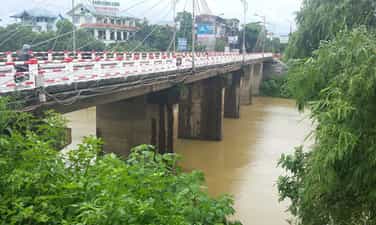
Gia Bay Bridge
Gia Bay Bridge was built around 1928-1930. Previously, the bridge was located on National Highway 1B, the main road connecting Lang Son to Thai Nguyen. During the Indochina War, the bridge was destroyed by Vietnamese soldiers and people in 1947. In 1965, the bridge was hit by three bombs by US planes and was seriously damaged. In 1991, the bridge was newly built at the old location, with a length of nearly 100m and a controlled width of 9m. Gia Bay Bridge is a place with many historical marks, especially during the resistance war against American imperialism. History has recorded: On October 17, 1965, the American enemy mobilized aircraft 29 times, threw 116 explosive bombs at Gia Bay bridge and many series of missiles at the anti-aircraft artillery field of Regiment 210, opening began their war of air sabotage against Thai Nguyen. The massive destruction of the bomb caused two abutments of the Gia Bay bridge to be damaged, the main beam and the upstream and downstream side beams were broken, causing traffic to completely stop. American bombs killed and injured 147 people; 45 houses on both sides of the bridge burned and collapsed; 32 officers and soldiers in the Self-Defense Company of Hoang Van Thu neighborhood were injured. SOURCE: Department of Foreign Affairs of Thai Nguyen Province
Thai Nguyen
4241 view
Rating : Provincial level relics
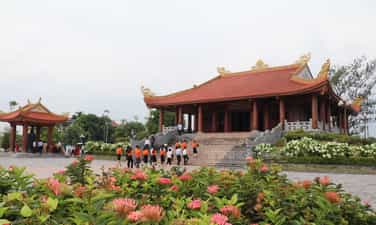
Cluster of Thai Nguyen uprising relics
105 years ago, the Thai Nguyen uprising led by Doi Can and Luong Ngoc Quyen shook the French colonial government in Indochina. This is considered the most heroic armed uprising in our nation's history in the early twentieth century. Going back in history, in the early years of the 20th century, the people in Thai Nguyen province as well as the whole country suffered greatly from the oppression and exploitation of the French colonialists and their henchmen. In that situation, the patriotic children of their hometown Thai Nguyen raised the flag of insurrection, led by Trinh Van Can and Luong Ngoc Quyen. The uprising broke out on the evening of August 30, 1917. Doi Truong, Ba Chen and a number of enlightened soldiers came to kill the warden Noel and other powerful henchmen of the enemy. Mr. Doi Gia and his teammates came to kill a couple named Loet (Loet) - a very cruel prison guard, opened the prison door, broke the chains, and freed over 200 political prisoners and common criminals. Mr. Luong Ngoc Quyen was paralyzed and was carried out by his brothers. Next, Mr. Doi Gia opened the military food warehouse, took clothes and ammunition to equip the insurgents, then occupied the Consulate Palace, the courthouse, the courthouse, the wine warehouse, the ammunition warehouse... With tenacious fighting spirit, the insurgents took control of the province within a week. On September 5, 1917, the insurgent front in Thai Nguyen town was broken, forcing them to retreat from Thai Nguyen. Mr. Luong Ngoc Quyen was seriously injured and sacrificed heroically. Although it later failed, the uprising left a special milestone. For the first time in Vietnam's modern history, an uprising took place, seizing power in a province, having a declaration, declaring independence, having a national flag, a national name, and establishing its own army. The cluster of Thai Nguyen uprising relics was ranked Nationally in 1997, including relics: Green loincloth soldiers camp, French ambassador's palace, Thai Nguyen prison, Doi Can temple. SOURCE: Department of Foreign Affairs of Thai Nguyen Province
Thai Nguyen
4221 view
Rating : Provincial level relics

Ecotourism area, preserving traditional culture of the Tay ethnic group in Thai Nguyen
Located more than 10km from the center of Thai Nguyen city, Thai Hai eco-tourism area in My Hao hamlet, Thinh Duc commune, Thai Nguyen city has been a tourist area to experience Tay ethnic customs and traditions for many years. . Thai Hai Tay ethnic cultural conservation and eco-tourism area currently has about 30 stilt houses built according to the original stilt houses of the Tay people Dinh Hoa Thai Nguyen where you can enjoy Tay culture. same uniqueness Here, under the stilt houses clustered in the green space of palm trees, acacia forests, and vau forests in the mountains and hills, artifacts and traditional folk culture of the Tay and Nung Viet Bac people are preserved. Village Thai Hai's stilt house is divided into many areas with separate functions, including a conservation area, food area, entertainment area, event organization... and is an attractive destination that attracts domestic and foreign tourists.
Thai Nguyen
4169 view
Rating : Provincial level relics

Museum of Cultures of Vietnam's Ethnic Groups
Museum of Cultures of Vietnam's Ethnic Groups The Museum of Vietnamese Ethnic Cultures is located at No. 1 Doi Can, Trung Vuong, Thai Nguyen city (Thai Nguyen province), established in 1960 with the original name Viet Bac Museum, until 1960. 1990 changed name to Museum of Cultures of Vietnamese Ethnic Groups. With an area of nearly 40,000 square meters, this is a project that converges, stores, displays and introduces important documents about the history and cultural identity of ethnic communities in Vietnam. The Museum of Cultures of Vietnam's Ethnic Groups won the Ho Chi Minh Prize for architectural works, phase I, 2006. In particular, ethnic groups in areas such as the Delta, Northern Midlands, Northwest, Northeast, Central Highlands, Southern Delta... are recreated through nearly 50,000 artifacts in the museum space. In particular, the cultural identity of customs, labor practices, production, rituals, festivals, costumes, cuisine, architecture, crafts... are vividly recreated through the documentation system, tangible and intangible cultural heritage. SOURCE: Central Agency of the Communist Party of Vietnam
Thai Nguyen
4168 view
Rating : Provincial level relics

Khuon Manh forest relic
Khuan Manh forest relic Khuan Manh forest is a forest in Trang Xa commune, Vo Nhai district, 50 km northeast of Thai Nguyen city. This is the birthplace of the Party Central Committee to preserve and continue to strengthen its forces. On September 15, 1941, on behalf of the Party Central Committee's standing committee, Mr. Hoang Quoc Viet came to the base to witness the establishment and handover ceremony. Mission for National Salvation Army II, Mr. Chu Van Tan is the commander, Mr. Nguyen Van Phan is the deputy commander. At first the platoon had 36 people, including 3 women, but later increased to 46 people, equipped with rudimentary weapons, only pistols and spears. After the founding ceremony, the platoon began building a political base among the people, promoting guerrilla activities in Trang Xa and Dinh Ca, causing many losses to the enemy. In November 1944, many fierce battles between the National Salvation Army II (with the participation of local people) and the French army at Dong Thu bridge, Khe pass, La Han banyan tree, Da Do mountain, Mo Ga cave... these places mark the glorious victories of the Vo Nhai army and people at that time. SOURCE: World Travel
Thai Nguyen
3664 view
Rating : Provincial level relics
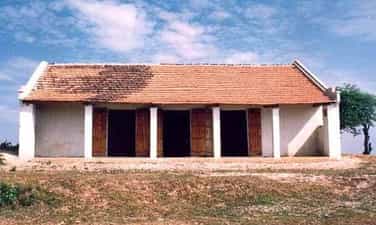
Dong Cao Pagoda
Dong Cao Pagoda or Doi Cao Pagoda, built during the Ly Dynasty, is located on a hill in Phuc Duyen village, Tan Huong commune. During the resistance war against the French colonialists, the pagoda was destroyed. In 1999, Tan Huong commune organized the restoration of the pagoda and the construction of a bell tower. In 2002, people in the commune and benefactors mobilized to donate more than 120 million VND to renovate the pagoda. Currently, the pagoda has been invested in a spacious, clean and beautiful construction, with a Tam Bao house, Mother Goddess church, Uncle Ho church, and in front is a 3-story bell tower. Dong Cao Pagoda was recognized as a provincial historical-cultural relic in 2004. Every year, on January 14 and 15, people in the commune and tourists from all over come to the pagoda to pray for a peaceful new year, for trees to sprout and everything to be prosperous. The festival also takes place cultural and artistic exchange activities (photo) and folk games that attract a large number of people to participate such as wrestling, Chinese chess, cockfighting... The pagoda is often called Dong Cao Pagoda or Cao Pagoda, located on a hill in Tan Huong commune, Pho Yen district, Thai Nguyen province. From Hanoi to Thai Nguyen province, go another 16km to the temple. The pagoda belongs to the Northern sect. The pagoda was built in the Later Le Dynasty. Today's temple was built by Master Thich Dam Hinh on May 17, 1992, completed on July 21, 1992. The pagoda still retains the towers, steles, and stone pillars of the Later Le period, such as the ancient stele engraved with the 18th year of Chinh Hoa (1697). SOURCE: Viet Architect Group
Thai Nguyen
3419 view
Rating : Provincial level relics
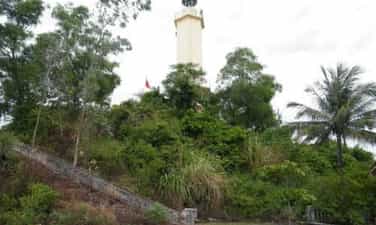
Thay's rampart (Dao Duy Tu rampart)
Thay accumulation site, also known as Dao Duy Tu ramparts, is a system of ramparts formed during the Trinh-Nguyen war (1627-1672) in Quang Binh with Truong Duc ramparts in Hien Ninh, Quang district. Ninh, Dau Mau ramparts, Nhat Le ramparts in Dong Hoi city, are ranked as National according to Decision No. 97/Decision dated January 21, 1992 of the Ministry of Culture and Information. (now the Ministry of Culture, Sports and Tourism). Luy Thay also has many other names such as Nhat Le, Dong Hoi, Truong Duc... in Quang Binh province today. King Thieu Tri later called the rampart system the place 'Dinh Bac great wall' to remember his ancestors for maintaining the South. Luy Thay is the name given by the people of Dang Trong to pay tribute to the famous man Dao Duy Tu as a military and political master. This project was started in 1630 after winning the battle with the Trinh army on the banks of the Nhat Le River in 1627. The project aimed to protect and strengthen Dang Trong from the attacks of Lord Trinh in Dang Outside. Next, in 1631, Lord Nguyen continued to send Dao Duy Tu and Nguyen Huu Dat to build Dau Mau ramparts and Nhat Le ramparts (both of these ramparts are collectively called Tran Ninh ramparts). In 1634, Lord Nguyen again built a 7km long Truong Sa rampart to close the Bao Ninh sand cave area. Thus, in more than 3 years, Lord Nguyen completed a system of fortifications nearly 34 km long. This is a continuous rampart system consisting of many floors, layers, and lines and is collectively called Thay rampart. Dai Nam Thuc Luc Tien Bien records: Truong Duc Citadel was built in the style of Hui, so it is also called Luy Hoi Van. Accordingly, the outside is surrounded by a wall, inside are barracks, battle fortifications, and treasures arranged in a Di-shaped pattern closely connected with the outer ramparts. The rampart is 2,500 meters long, one and a half meters wide, and 1 meter high (about 4 meters). Luy Truong Duc is an architectural work that demonstrates the military talent of Dao Duy Tu. In 1648, after failing to attack the Truong Duc ramparts, the Trinh army turned to attack the Vo Xa area and achieved victory. However, when they gained a foothold, they were blocked and attacked by Luu Don's army at Thap Dinh (now still Dinh Muoi commune, Quang Ninh district) and pushed into the Vo Xa swamp, which was a natural swamp along the road. Thien Ly from Quang Binh to Thuan Hoa. Trinh's army got bogged down here. And in the dilemma of not having support from the waterway, they were then forced to withdraw their troops to the North. Because of this event, to this day, people continue to sing the song: "The first is afraid of Luy Thay, the second is afraid of Vo Xa swamp". Two hundred years later, when King Thieu Tri made a pilgrimage through the rampart system, Thay was moved by this majestic rampart system and gave it the name "Dinh Bac Truong Thanh" to remember his ancestors for maintaining the South. Through time and war bombs, the Thay citadel was almost completely damaged. By 1994, the citadel was restored to its original state and recognized by the State as a national monument. Today, Luy Thay still has clear traces on Quach Xuan Ky street and the west of Phu Hai ward, in Dong Hoi city, Quang Binh province and has become a hundred-year mark reminding generations of the time of the Trinh dynasty - Nguyen divided the conflict in Vietnamese history. Source Quang Binh province electronic information portal
Quang Tri
4743 view
Rating : National monument.

Ferry wharf and Mother Suot monument
The name of hero Nguyen Thi Suot is known throughout the country as a symbol of revolutionary heroism. Her mother's name is associated with historical events in the early days of fighting against the Americans of the army and people of Quang Binh in particular and the whole country in general. It is a vivid and heroic symbol of our nation's determination to defeat the American enemy, to protect national sovereignty. Mother Suot is a typical woman of the land of "two good people", as beloved Uncle Ho praised, "Quang Binh is good at fighting and good at production". Through long years of fighting against the French colonialists and coming to victory. In 1954, not long after peace was restored, the empire started a destructive war. Setting up the Gulf of Tonkin incident, in 1964, the US imperialists began to raid the North, and the Dong Hoi - Quang Binh area was considered by them to be a hotbed, the front line of a large rear, so they focused on raiding. with the most fierce and intense level with the intention of destroying and leveling, turning this place back to the Stone Age. Mother Nguyen Thi Suot was born in Van Chai hamlet, Phu My village (now My Canh hamlet, Bao Ninh commune, Dong Hoi town). Since childhood, I had to go live to take care of myself. My mother's life has been from one rich house to another, working as a hired laborer all year long, all month long, but still miserable. The August Revolution successfully cut off the chains of slavery, liberated the homeland, the nation and liberated her own life. But before we could rejoice, the French colonialists invaded our country again and like the rest of the country, my mother had to continue her miserable and bitter life. When the American invaders waged war to destroy the North, her mother was now 60 years old, but following the call of the revolution, Uncle Ho and the local Party Committee, she understood the miserable life of slavery and the loss of her country. melted as well as imbued with love for the homeland and hatred for the American invaders who destroyed the villages. Mother Suot volunteered to take on a seemingly normal, simple but extremely dangerous job: Carrying a ferry across the Nhat Le River at that time was one of the three important tasks of the 3-room team: prevention and treatment. fire, first aid, transport of wounded soldiers and transportation. Go back in time to the early days of anti-Americanism. That day was Sunday, February 7, 1965 (ie the 6th day of the Lunar New Year), the US Air Force massively attacked and bombarded Dong Hoi town and surrounding areas (they mobilized 160 aircraft). modern jet). Dong Hoi town seemed to be shaking in the smoke and fire of enemy bombs. On the Nhat Le River, black columns of water were thrown up violently by bombs and bullets. Mother Nguyen Thi Suot still proudly held the oar to carry soldiers across the river, transporting ammunition from the shore to our warships to fight back against the enemy. Mother's ferry trips are also a communication line between Dong Hoi town and Bao Ninh. Under the rain of bombs and bullets from the enemy, my mother and the ferry ferried officers, soldiers, and people back and forth between shores. There is no more beautiful image than a mother who is over 60 years old and still defies danger, proudly holding her head high in the face of a series of bombs and bombs that the US always controls and prevents. Those who passed by her mother's boat during those heated hours could not help but admire the courage and courage of a mother who turned hatred into extraordinary actions. And until now, those who directly fought and witnessed the morning of February 7, 1965 still cannot explain and understand why in the midst of Nhat Le river, boiling water and burning bullets, Mother Suot still heroically rushed forward and fought. Completed the mission so excellently: supplying ammunition to our navy to fight back American planes, bringing wounded soldiers to shore, transporting soldiers to the river. Mother Suot's victory and many other silent victories of Dong Hoi's army and people created a resounding miracle in just two days, February 7 and 8, 1965, Dong Hoi's army and people shot down 14 American planes. ; From February 14 to April 28, 1965 - 5 American warships were sunk and set on fire in Nhat Le Sea - opening the brilliant victory of our army and people. After that fierce battle, Suot's mother boat continued to transport officers and soldiers across the river during the days of fighting against the Americans. With her mother's achievements, on January 1, 1967, mother Nguyen Thi Suot was awarded the title of Labor Hero in the resistance war against the US and to save the country by our Party and State. The war became more and more fierce, with painful losses in the South, the US imperialists increased their attacks on the North and Dong Hoi continued to suffer from bombs and bullets. On October 11, 1968, while on duty, Suot's mother heroically died in an enemy bomb attack. Such a vivid picture of revolutionary heroism. That image has been known by the people of Quang Binh and the whole country as a typical example of a heroic Vietnamese mother. The old Mother Cheo wharf became a typical historical relic in Quang Binh during the anti-American period with a loving and respectful name: Mother Suot wharf. Mother Suot wharf relic is located in Trung Binh village, Bao Ninh commune (right bank) and near Dong Hoi fish market (left bank of Nhat Le river). In 1980, to commemorate and appreciate a heroic Mother of the homeland, the People's Committee of Dong Hoi town built the Mother Suot stele in the center of the wharf so that Quang Binh people can visit every day. to be close to the image of Mother. Here, one day in the near future, the Mother Suot monument will be a place for exchanges and cultural activities of local people in the province, a place for children to hang out, and a place for people across the country to celebrate. Visiting Mother Suot's wharf in the past to pay tribute to a heroic Vietnamese mother. Source Electronic information portal of Dong Hoi city, Quang Binh province.
Quang Tri
5351 view
Rating : National monument.

My Tho Thanh Hoang Temple - Trung Luc
My Tho - Trung Luc Tutelary God Temple is located on Loi Da hill, Tan Luc village, Tan Thuy commune. The east borders Trung Luc village, the west borders My Tho village. From Mai market - right next to National Highway 1A, follow the dirt road about 4 km southeast to reach the relic. My Tho - Trung Luc Tutelary God Temple is associated with typical historical events of the Quang Binh Party Committee, associated with the early days of striving to establish the first Communist Party Party cell in the south of Quang Binh province. Binh, with the struggle to preserve and develop the revolutionary movement, associated with the national liberation campaign of the province and the country during the August Revolution. During the Can Vuong movement, the My Tho - Trung Luc area was the place to gather and hide Can Vuong troops. The insurgents of Hoang Phuc, De En, and De Chit often stayed here, protected by the people (De Chit married a wife from My Tho). In the ranks of the insurgent army, there were dozens of commanders who were originally from My Tho - Trung Luc people. The knowledgeable Confucian scholars in the two villages all participated or had sympathy for the Can Vuong insurgents. On February 3, 1930, the Communist Party of Vietnam was born, a fighting movement was launched by the Party nationwide, especially in the climax of 1930-1931, the Soviet - Nghe Tinh was born to encourage the local movement. direction. In the years 1929 - 1930, enthusiastic young people of Trung Luc - My Tho sought revolution, carrying within themselves the spirit of patriotism, through many paths in different times, they sought to make contact. with the Party. Authorized by the Quang Tri Provincial Party Committee, a number of Party bases in Vinh Linh sought to develop their bases in the Le Thuy area. Mr. Duong Cong Phat, a good citizen, acted as an intermediary for the Party Cell to contact young people who were enthusiastic about the revolution, including 3 people: Le Thuan Chat, Le Thuan San, and Nguyen Dong. Following the Party's guidance, Mr. Chat brought the Party's propaganda materials to the locality and together with Mr. San organized poor, patriotic, anti-feudal landlord farmers into 7 groups of 21 people. , called the "Red Farmers' Association", a form of organization like Xo Viet - Nghe Tinh, aimed at gathering revolutionary farmers. Following the instructions of the Quang Tri Provincial Party Committee, Party officials tried to break in and stay there. back to the base in the My Tho - Trung Luc region. Mr. Nguyen Dong voluntarily took the Party cadres home and hid them in his house. Comrade Doan Ba Thua went to the facility to educate 3 core masses to bring those comrades into the Party and direct the 3 masses to organize organizations. Other mass organizations secretly organized propaganda campaigns of the Communist Party's program in each good mass group in My Tho - Trung Luc protecting officials and mobilizing the masses November 17, 1931, at the tutelary temple of Trung Luc village, comrade Doan Ba Thua, on behalf of the Party, admitted 3 comrades Chat, San, and Dong into the Indochina Communist Party. That same night, comrade Doan Ba Thua, on behalf of the superior party committee, decided to establish the My Trung cell, the first Party cell in the southern province. The Party cell, led by comrade Chat as Secretary, opened a new period, an important turning point in the political and emotional life of the people of the two villages My Tho - Trung Luc and the struggle movement in the South Quang Binh region. . By June 1932, the cell had 9 comrades, the cell appointed a party committee, assigned a number of tasks: Establishing a red guard team, raising funds to create capital, transferring documents from Vinh Linh to Le Thuy and vice versa. again. The cell mobilized the masses to fight, achieving some initial successes: In 1935, the cell grew to 12 comrades with a quite strong Red Guard team. The Party's mass associations had hundreds of participants. In early September 1941, comrade Bui Trung Lap, an officer of the Quang Tri Provincial Party Committee, was sent by the Central Party Committee to contact the My Trung cell, disseminate the situation of new tasks and convey the Eighth Resolution of China. Party Central Committee. The content stated: "The task of national liberation is the most urgent task of the Indochina revolution" and advocated the establishment of the Viet Minh front. The Viet Minh My Tho - Trung Luc facility was established with comrade Le Thuan Chat as the head, the cell now had 29 party members, comrade Le Thuan Khuong as Secretary. In November 1942, the secret police henchmen found a contact with us in Trung Luc - My Tho, and they arrested Le Gia Lieu and 13 other comrades. Afterwards, comrade Bui Trung Lap was also arrested. A bloody and challenging period for the Party base and the masses of My Tho - Trung Luc. Despite being brutally tortured by the enemy, the party members and loyal comrades of My Tho - Trung Luc still fought until their last breath. There are loyal Party establishments like Mr. Dinh Tu Khac and his wife, Ms. Tuong, who are examples of strengthening trust in the Party and the revolution. On March 9, 1945, Japan overthrew France, this news quickly spread to My Tho - Trung Luc. On March 27, 1945, comrade Vo Ho Thanh (Vo Hau) and comrade Nguyen Van Dong (Dong Sy Nguyen) returned to resume communication and instructions from their superiors to My Tho - Trung Luc. At the end of June 1945, the Central Unification Committee sent comrade Hong Xich Tam to convey the Central Committee's instructions, the Central Unification Committee's call to establishments in Quang Binh and contact comrade Vo Hong. Thanh in My Tho - Trung Luc and comrade Tran Huu Duc, preparing to establish a joint leadership agency of the province. In early July 1945, the Provincial Party Committee Conference convened at An Xa Pagoda. Comrade Le Thuan Khuong, Secretary of My Tho - Trung Luc Party Cell, was one of 13 delegates attending that Conference. The conference established the provincial Viet Minh front in An Sinh, deciding that the provincial headquarters would be located in My Tho. On the night of August 22 and 23, the revolutionary masses of My Tho - Trung Luc and 18 neighboring villages divided into 4 columns to march straight up Le Thuy district along with other attacks in the district to join forces to seize power in the district. , contributing together with the whole province and country to make the August revolutionary uprising a success. Currently, funds have been invested in the monument, the temple and entrance gate to the monument have been restored, and a monumental stele has been erected to record this memorable historical event. Every year on November 17, the Party Committee and people of Le Thuy district organize incense offerings and visit relics. This is truly a bright red address to educate young generations, vowing to live and work, striving to follow the path chosen by the Party and Uncle Ho. Source Electronic information portal of Le Thuy district, Quang Binh province.
Quang Tri
4949 view
Rating : National monument.