Relic point Vietnam
Việt Nam
Memorial area of the 1948 My Thuy massacre
My Thuy is a village located south of Hai An commune, Hai Lang district, Quang Tri province, about 15 km east of Hai Lang district town and National Highway 1A along Provincial Highway 8. Location in the north of the road Provincial Road 8, at the beginning of My Thuy village is the center where the My Thuy village massacre took place in 1948, which has been ranked as a national monument by the Ministry of Culture and Information according to Decision No. 38-2001/Quyet Dinh -Culture and Sports July 12, 2001. My Thuy is a coastal village located on the eastern slope of Dai Truong Sa sand dunes, formed relatively late after the 17th century. Like many other coastal villages in Quang Tri, My Thuy people have long linked their lives to the sea by struggling with waves and the worries and hardships of making a living. It was in that situation that My Thuy's person was forged the qualities of tolerance, hard work, kindness, tolerance, and a determined, persevering heart, regardless of enemies to follow the revolution. During the years 1930-1945, the revolutionary movement in My Thuy under the direction of the Trieu Lang cell had positive activities, contributing together with the whole Hai Lang region to the victory of the general uprising in August 1945. 1945. After the victory of the August Revolution, My Thuy was a village of Hai Chau commune. Since the French colonialists returned to pacify Quang Tri (January 1947), due to many strategic advantages, My Thuy was both a border area and a free area) to control and master the area but Still unable to establish a meeting. The revolutionary movement still maintains and develops. Based on the convenient location of waterway traffic and far from the political center of My Thuy, the main force and resistance officers chose this as a place to stop, consolidate forces, and conduct guerrilla warfare. The people of My Thuy wholeheartedly follow the Party and the resistance. In particular, after 1947, the Tri Thien battlefield faced many difficulties: hungry people, officers and soldiers lacked food, medicine, ammunition... Military Region IV organized campaigns in Thanh Hoa and Nghe An provinces. An and Ha Tinh provided support to help Tri Thien continue the resistance. Because there are no road transport conditions, goods must be transported by sea and gathered in coastal areas, far from the control and control of the French government and its henchmen. In My Thuy, Binh Tri Thien's communication and supply lines have many times gathered and dispersed goods and weapons smoothly. This made the French army extremely bitter and frantic in trying to destroy the revolutionary movement in My Thuy, continuously organizing raids, arson and committing barbaric crimes. Since advancing to pacify Quang Tri (January 1947 - April 8, 1948), French troops have carried out three raids and burned My Thuy village. On March 5, 1947 (February 2, Dinh Hoi year), French troops invaded My Thuy village, burned most of the houses, killing 3 people. On March 17, 18 and 19, 1948, the French colonialists mobilized forces to simultaneously sweep into villages in the Hai Lang delta with a campaign called "Hai Lang Week". During this large-scale raid, they killed more than 1,300 people, burned thousands of houses, and robbed a lot of property, including My Thuy village. On March 19, 1948, after only 1 hour of committing a crime and then withdrawing, the French army and its henchmen killed 74 innocent My Thuy people; Most of them are middle-aged men, breadwinners. Hundreds of meters of nets, fishing gear and more than 20 fishing boats were completely destroyed. This was both a massacre and an attack on the pink economy, crushing the spirit and will to resist of the My Thuy people. Less than 20 days after the massacre, when the grass on the graves of those killed on March 19 had not yet grown, on April 8, 1948, the French colonialists carried out another massacre and wild arson. more savage, more brutal in the true sense of "three cleans" on the villagers of My Thuy. After more than 3 hours of burning, raping and looting, the French army withdrew, leaving behind a desolate, mourning village of My Thuy; White sand stained with human blood, piles of flesh and bones littering burning houses. The whole village had only a few children left and less than 20 people. 452 innocent people were murdered and all the houses and fishing gear of My Thuy villagers were completely destroyed. This was a brutal massacre and had the highest number of deaths that the French colonialists inflicted on the people of Quang Tri. The My Thuy massacre in 1948 is eloquent evidence of the brutal murder of the French colonialists against the My Thuy people in particular and the people of Quang Tri in general; is the pain of loss, but also represents a tradition of heroic and resilient struggle of those who sacrificed for national independence. Source: Quang Tri province electronic information portal.
Quang Tri
4802 view
Rating : National monument.
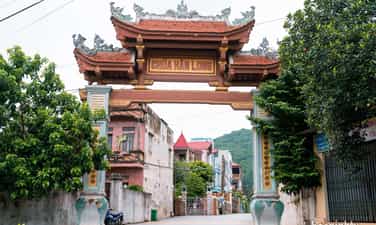
Historical and cultural relic of Hoang Long Pagoda
Cultural and historical relic Hoang Long Pagoda, An Dao commune - Phu Ninh district is an ancient pagoda dating back more than 300 years, is one of the typical cultural and historical relics, a convergence of historical values, outstanding culture, art, and spirituality, ranked as a relic by the state National level cultural history according to the decision dated January 19, 2001, has been given many policies of attention by the authorities at all levels from the province, district, and temple, creating a mechanism for the Provincial Buddhist Executive Committee to nominate monks. The teacher directly manages and invests in many investment policies to renovate, restore, embellish, and build many new construction items. SOURCE: PHU THO PROVINCE
Phu Tho
3550 view
Rating : National monument

Victory at Khe Sanh - Lang Vay
In early 1968, Khe Sanh - Huong Hoa suddenly attracted the attention and attention of the whole world when the Politburo and Central Military Commission decided to open the Route 9 - Khe Sanh Campaign. Not only the US military advisory team in Saigon but also America's leading military experts were "disoriented" when they thought there would be "another Dien Bien Phu" at Khe Sanh. US President B. Johnson directed the establishment of a "Special Situation Room", created a Khe Sanh table in Washington, and requested General Westmoreland - Commander of the US Military Advisory Command in South Vietnam to sign a pledge. We promise not to lose Khe Sanh at any cost because it is America's honor. Khe Sanh Valley is located in the remote mountainous area in the west of Quang Tri, identified as one of the strategic areas in the area bordering the route. In 1966, in the area south of the 17th parallel to Route 9 - Khe Sanh, the US built an invisible defense line, named the McNamara electronic fence. In the "anchor" position of the border junction area, Khe Sanh is positioned as one of the three magic eyes of the McNamara electronic fence, where the US focuses on building a group of strong bases including the Huong Giang Military Region. Hoa, Lang Vay stronghold cluster and Ta Con airport, were fully equipped with the most modern and advanced weapons at that time with many dense fortification systems supported by B52 aircraft, along with elite army to cut off the support line on the Ho Chi Minh Trail, prevent our troops from entering from the North and from Laos and create a screen to shield their defense area east of Route 9. At the beginning of 1968 , there are many reasons why Americans believe that the liberation army will carry out the decisive strategic battle at Khe Sanh. First, from the similarities in topographic factors and strategic roles between the Dien Bien Phu and Khe Sanh basins. Next, America believes that by "abandoning" our traditional rural areas, the mountains and forests will be a springboard for us to attack the plains and urban areas. From the commander to the US ambassador, everyone judged that the liberation army did not have enough strength to attack cities and urban areas and that it was just a "diversionary attack"; The main battlefield will definitely take place at Khe Sanh. The Central Bureau of the South also intentionally dropped documents that made the US believe even more that Khe Sanh was the place where a decisive strategic battle took place. On our side, after the victories won in the dry season of 1965 - 1966, 1966 - 1967, the Politburo Conference in December 1967 commented: We have defeated the enemy in both strategy and tactics, and military force. and our politics in the South have grown stronger than at any time, we are taking the initiative across the battlefield. "The basic development of the situation is that we are in a winning position, proactive and favorable position, the enemy is in a losing position, passive and difficult position." On that basis, the Politburo advocates opening: "the attack of the main force in the direction of especially important strategic coordination, Route 9 - Khe Sanh, to attract and detain the enemy's strategic forces... ” Implementing the above strategic policy, according to the proposal of the General Staff, the Politburo decided to launch the Offensive Campaign on Route 9 - Khe Sanh in the spring and summer of 1968. The General Command mobilized a force for the campaign. strong, including 4 monks regiments (304, 320, 324 and 325), Regiment 270 and 2 local army battalions of Quang Tri province, 1 battalion and 5 special forces companies, 5 artillery regiments (45th, 84th, 164th, 204th and 675), 3 anti-aircraft artillery regiments (128, 282, 241), 1 tank battalion (4 companies), 1 battalion information battalion, 1 reconnaissance battalion, 1 chemical defense battalion, 1 regiment and 2 engineer battalions, 1 flamethrower company, 6 transport battalions and local armed forces of Gio Linh district, Cam Lo, Huong Hoa. The entire above force is under the unified command of the Campaign Command, led by Major General Tran Quy Hai - Deputy Chief of General Staff as Commander, Major General Le Quang Dao - Deputy Director of the General Political Department as Political Commissar. At the time we launched the campaign, the enemy force defending Road 9 - Khe Sanh had about 45,000 troops, including 28,000 American troops (10 battalions of the 3rd Marine Division, 9 artillery battalions, 3 battalions of group and 1 mechanized company; arranged in front line in the east: from base 31, Doc Mieu, Con Tien, Quan Ngang to Bai Son temple; Dong Ha, Cam Lo, Ai Tu and Quang Tri town; the middle line is the bases of Tan Lam, Ca Lu, 241 (west of Quang Tri town); the western area includes the bases of Huong Hoa, Lang Vai, Huoi San and the Ta Con stronghold cluster (including Dong Tri, 832, 845...). With the determination to "Turn Khe Sanh into a living hell for the American army", on On January 20, 1968, we launched the Route 9 - Khe Sanh campaign. After 170 days and nights of continuous attacks and sieges, our troops eliminated 17,000 enemies from combat, shot down and destroyed 480 aircraft and 120 soldiers. military vehicles, 65 large-caliber cannons and mortars, 55 gasoline and ammunition depots, confiscating thousands of guns of all kinds, successfully ending the Route 9 - Khe Sanh Campaign Historically, Huong Hoa district was completely liberated with more than 10,000 people. The victory of the Route 9 - Khe Sanh campaign proved our Party's correctness and creativity in fighting the enemy, not only with the US Military Command but also with the planners. "tough" strategy in the White House. The Khe Sanh victory is the result of the correct and creative leadership of our Party, headed by President Ho Chi Minh. Source Electronic information portal of Huong Hoa district, Quang Tri province.
Quang Tri
4799 view
Rating : National monument.

Historical relic of Doi Can Workshop - Military Ordnance Factory k77
Historical relic of Doi Can Factory - Military Ordnance Factory k77 (1947-1954) in Dong Lan hamlet, Dong Thinh commune, Dinh Hoa ATK. On September 15, 1945, President Ho Chi Minh signed a directive to establish the Military Department under the Ministry of National Defense, with the following tasks: collecting, purchasing and organizing weapons production facilities to equip the army. Doi Can Factory (K77 Military Ordnance Factory) under the Military Department of the Vietnam People's Army is the main factory producing ammunition and weapons, making a great contribution to the victory in the resistance war against the French colonialists (1946). – 1954), building the foundation of the Vietnam Military Industry (now the General Department of Defense Industry) to contribute to the army and people of the whole country winning the resistance war against the French and the Americans to save the country, build and defend firmly. Surely Vietnam is a socialist Fatherland meaning. Doi Can Workshop and the Military Armament Workshops of the resistance war zones against the French colonialists nationwide contributed to the great achievements of the Vietnamese Military Sector. The Military Department (now the General Department of Defense Industry) was awarded many noble awards by the Party and State: Conferred the title of Hero of the People's Armed Forces in the resistance war against the French colonialists and the Americans to save the country. , Gold Star Medal, two Ho Chi Minh Medals, First Class Military Merit Medal, hundreds of Victory Medals, Labor Medals. 17 collectives and 58 individuals were awarded Hero of the People's Armed Forces and Hero of Labor in the Reformation Period, including 3 factories Z111, Z121, Z113 which were awarded Hero twice... Factory Relics Doi Can was invested by the Military Department and the General Department of Defense Industry to build a campus and fence with a complex of artistic ceramic reliefs "President Ho Chi Minh with Military workers" Additional exhibition house di Relics - library serving the people of Dong Thinh commune and visitors to the special national relic ATK Dinh Hoa, Thai Nguyen. Determined to be the origin of the General Department of Defense Industry at Viet Bac Base. The above historical relics have a particularly important meaning in the ATK Dinh Hoa Special National Relic Area complex and in the work of educating revolutionary traditions, studying and following moral and private examples. Ho Chi Minh's ideas and style. In order to promote the potential value of historical relics and perform the functions and tasks of the Management Board of Historical and Ecological Relic Areas ATK Dinh Hoa and Thai Nguyen, research and prepare scientific records based on historical values , cultural and scientific relics submitted to the Ministry of Culture, Sports and Tourism. On March 9, 2017, Minister of Culture, Sports and Tourism Nguyen Ngoc Thien signed Decision No. 814/DECISION OF THE MINISTRY OF CULTURE ranking national monuments for historical relic sites of the Ministry's agencies. The General Staff of the Vietnam People's Army and the residence and work of Chief of the General Staff Hoang Van Thai (1949 - 1954) and Decision No. 813/DECISION MINISTRY CULTURE SPORTS TOURISM historical relics Doi Can Factory - Military Ordnance Factory k77 (1947-1954). SOURCE: Management Board of ATK Dinh Hoa Historical-Ecological Relic Area, Thai Nguyen
Thai Nguyen
3886 view
Rating : National monument

Historical site: The residence and work place of General Vo Nguyen Giap
The historical relic site of the General Command of the Vietnam People's Army (1949- 1954) includes two main points: the residence and working place of General Vo Nguyen Giap and the Military Commission office on Don My hill (the hill jackfruit) and the office of the General Command on Khau Cuoi hill (banana forest) in Bao Bien village, Bao Linh commune, Dinh Hoa district. During the years of resistance against the French colonialists (1947-1954), Bao Bien was chosen by President Ho Chi Minh and our Party to be one of the central points of the Central base (Safety Zone - called ATK). ). There used to be leaders and commanders of the Ministry of National Defense living and working here such as comrade Ta Quang Buu - Minister of National Defense, comrade Hoang Van Thai - Chief of General Staff of the Vietnam People's Army at the communal house. Khen version. After the successful resistance war, Prime Minister Pham Van Dong and General Vo Nguyen Giap wrote many letters to visit and encourage ethnic people here, in the spring of 1989 and August 12, 1998, General Vo Nguyen Giap returned. Bao Bien, visited the place where he lived and worked in the past and the office of the General Command during the resistance war against the French. General Vo Nguyen Giap's living and working place and the district party office are located on Don My hill, looking ahead in the East-South direction to Bao Bien field, with a car road running through, cutting right in front. The relic is a newly opened village road, on the right and left are people's houses. Behind is the Lai Liep mountain range connected to the majestic Hong mountain range. Currently, through survey, we can see 5 different large and small house foundations covered by trees. Based on the size, location and testimony of witnesses, the large floor of the house is on top of the hill, with a cellar door in the middle that is a meeting and working place. In front is the guard house, behind is the kitchen, on the left is General Vo Nguyen Giap's house and the Military Commission office along with service staff, at the foot of the hill behind there is a luxuriant reed pond surrounded by fields. of the people. The Commander-in-Chief's office area is located on a low hill, facing the front about 700m East - South of General Vo Nguyen Giap's residence, surrounded on the right and left, behind is a palm forest. , in front looking up to the West - North is Bao Bien field. Through the survey, it was found that there are two adjacent house floors with clear traces, which are the large hall and the office of the General Command, in addition, there are many different large and small house floors scattered on Khau Cuoi hill, That is where our soldiers live to protect the Bao Bien base area. The entire Bao Bien historical relic site is located in a small narrow valley, surrounded by mountains and forests, very discreet, convenient for keeping secrets, but also very convenient for communication in all directions. From here you can easily go to Chu Market, Thai Nguyen, Cho Don - Bac Kan, Son Duong - Tuyen Quang. Bao Bien is the military headquarters of our Party, where General Vo Nguyen Giap, together with the Military Commission and the General Command, develops important military plans and submits them to the Standing Committee of the Party Central Committee for approval by President Ho Chi Minh. Approving, commanding, and directing many major campaigns, including the historic Dien Bien Phu campaign, Bao Bien has an important position in the history of our nation's resistance war against the French colonialists. Over time, due to the impact of nature as well as humans, the monument has been greatly degraded. The living and working place of General Vo Nguyen Giap, the Military Commission Office and the Office of the General Command were previously made of bamboo and wood, but no longer exist, traces of the floor are still relatively intact. Thanks to the awareness of protecting the relics of the people, both locations of the relic area were not damaged or encroached. In early 1996, according to the state's investment project to build the ATK area, a motorway was opened in front. At the center of the relic site, a road built with bricks and cement steps leading to the residence of General Vo Nguyen Giap and the Military Commission office, the national power grid is also being built. At the end of 1996, local people mobilized to build a motorway to the site of the Office of the General Command. Along with the relics in the Dinh Hoa ATK area, such as the place where the Vietnamese Propaganda and Liberation Army team merged with the National Salvation Army to become the Vietnam Liberation Army (May 15, 1945) in Dinh Bien. President Ho Chi Minh's relics in Keo province, Phu Dinh commune, passing Deo De Hong mountain is the Tan Trao historical relic site (Tuyen Quang)... forming a complex of revolutionary and resistance relics, convenient for traveling. tourist sightseeing. To promote the value of the monument, it is necessary to create a good environment for material and spiritual life, promote economic development, culture, education, raise people's knowledge in the region, and restore a At several important relics, a stele house was built to mark the event, and a guide sign was erected to welcome visitors regularly. The site of the relic site of the General Command of the Vietnam People's Army (1949 - 1954) in Bao Bien was ranked as a national historical and cultural relic by the Ministry of Culture and Information according to Decision No. 43/1999- QD-BVHTT, on July 12, 1999, the army and people of Bao Linh commune were honored as Heroes of the Armed Forces in the resistance war against the French colonialists. SOURCE: Management Board of ATK Dinh Hoa Historical-Ecological Relic Area, Thai Nguyen
Thai Nguyen
4397 view
Rating : National monument
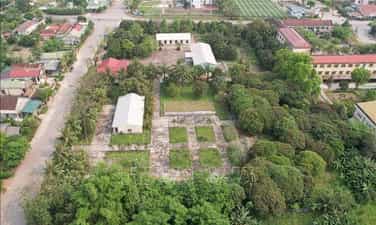
Headquarters of the Provisional Revolutionary Government of the Republic of South Vietnam (June 1973 - May 1975).
The location of the headquarters of the Provisional Revolutionary Government of the Republic of South Vietnam (from June 1973 to May 1975) is located in Tan Hoa village, Cam Lo town, Cam Lo district; More than 200m north of Highway 9, 12km west of Dong Ha town. The relic has been ranked nationally by the Ministry of Culture and Sports according to Decision No. 154/Decision - Culture dated January 25, 1991. Located in Cam Lo town, 150 meters north of Cam Lo district People's Committee, construction started on May 6, 1973, and was completed on May 30, 1973. Although it was built urgently in a short time, it still has a majestic, spacious appearance and is full of essential living amenities. Here, on June 6, 1973, the Provisional Revolutionary Government of the Republic of South Vietnam held a ceremony to introduce itself to the people in a solemn meeting, in the presence of a large number of domestic and foreign press reporters. abroad. Delegates from 19 brotherly countries from all 5 continents attended and enthusiastically cheered the arduous struggle and sacrifice of the Southern people, such as comrade Phiden Castro - Chairman of the Communist Party of Cuba, and comrade George - Marxist - Secretary of the French Communist Party, ... Since its inception, the Provisional Revolutionary Government Zone has gathered democratic forces fighting for democracy and national independence, representing the people of the South to speak out, and is the place where foreign relations are established. communicate with all brothers and friends near and far around the world. The Provisional Revolutionary Government, with its sharp and wise strategies and tactics, led the people of the South to fight from one victory to another. Bringing the holy resistance war against American imperialism to complete victory. Currently, the headquarters was built by the Quang Tri Museum with a commemorative monument in May 1993 and restored the National Archives of the Trinh House. Source: Electronic information portal of Cam Lo district, Quang Tri province.
Quang Tri
4425 view
Rating : National monument.
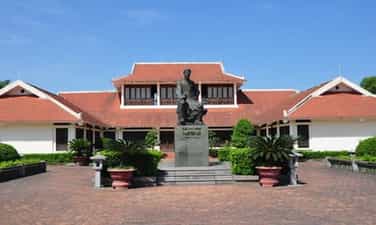
Party Central Office
The site of the relic of General Secretary Truong Chinh and the Party Central Office working in Na Mon, Phu Dinh commune, Dinh Hoa district, Thai Nguyen province. The national resistance broke out (December 19, 1946), implementing the policy of "all-people resistance, comprehensive, long-term, self-reliant" to protect national independence, General Secretary Truong Chinh and his Office The Party Central Committee moved from Hanoi to Phu Tho, through Tuyen Quang, Deo Khe, Minh Tien (Dai Tu district)... The first stop of General Secretary Truong Chinh, comrade Le Van Luong and Mr. Le Duc Tho... At the Safe Zone (ATK) of Dinh Hoa, there are stilt houses of people in Quang Nap commune, now Binh Thanh commune, bordering Minh Tien commune, Dai Tu district, gateway to ATK, with a resistance village market, a town. quite crowded in early 1947 of the Viet Bac war zone. Moving together, setting up a working agency with comrade Truong Chinh, in addition to the Party Central Office, there are also the editorial department, reporters of the Party's Truth newspaper, and the Central Organizing Committee, which mainly moves around the foot of the mountain range. Hong from Diem Mac commune to Phu Dinh commune... (According to the story of Ms. Nguyen Thi Bich Thuan, former Deputy Director of the Police Department, wife of the late member of the Politburo, Head of the Central Organizing Committee Le Van Luong and her daughter visited the old place at ATK Dinh Hoa in 2006) Stopping in Quang Nap for a few months, the General Secretary and the Central Office moved to Khuoi Khe hill, Phung Hien hamlet (Thanh Dinh, now Diem Mac commune), then moved to Na Mon hamlet (Commune Phu Dinh), at the foot of Hong Mountain, near people, with fields spreading out in front. From here to Tham Khen hill where Deputy Prime Minister Pham Van Dong worked (1950 - 1953) is about 1km, 2.5km from Uncle Ho's Presidential Palace in Keo Province. You can follow the horse road to go over De Pass from Hong Mountain to Tan Trao (Son Duong, Tuyen Quang) for 6-7 km. During the resistance period, Comrade Truong Chinh and the Party Central Committee moved with Central agencies and President Ho Chi Minh from Dinh Hoa to Vo Nhai, to Cho Don (Bac Kan), to Son Duong, Champa. Hoa (Tuyen Quang)... then returned to live, work, and live with the Tay and Nung ethnic people in Na Mon village at the foot of Hong Mountain, Phu Dinh commune for the longest time from 1948 to early 1954. The Party Central Office in Na Mon is an advisory and assisting agency for General Secretary Truong Chinh, receiving instructions and reports from the Party Committees of provinces and inter-regions and is the place to broadcast policies, guidelines, and reports. resolutions, directives, and leadership nationwide. Here, many important directives, policies and resolutions were adopted, and major campaigns were launched such as the determination to liberate and open the border with our friend China (1950), the Trung Du campaign, and the Ha Nam campaign. Ninh, Hoa Binh campaign, Northwest campaign... Also here prepared political reports, expected personnel, organized the preparation of documents for the 2nd National Party Congress taking place in Kim Binh, Chiem Hoa, province Tuyen Quang in 1951… SOURCE: Management Board of ATK Dinh Hoa Historical-Ecological Relic Area, Thai Nguyen
Thai Nguyen
3802 view
Rating : National monument

Locations related to Lord Nguyen's Palace (1558-1626)
Historical relics of locations related to the Palace of Lord Nguyen (1558-1626) in Trieu Ai commune, Trieu Giang commune, Ai Tu town, Trieu Phong district. In October of Mau Ngo year (1558), Nguyen Hoang was sent by King Le to defend Thuan Hoa. Nguyen Hoang and his entourage followed the sea route to Viet Yen gate (Cua Viet) then went up Thach Han river (Quang Tri) and stopped at the sandy beach called Sa Khuu (later called Con Co beach). Located in Ai Tu commune, Vu Xuong district, Trieu Phong district. As soon as he set foot on the new land, Nguyen Hoang was supported by mandarins and local people and he decided to choose this sandy beach to build his barracks. This is the first palace of Lord Nguyen in Vu Xuong district, Trieu Phong palace. During the 68 years of ruling the land of Vu Xuong, Trieu Phong and Nguyen Hoang moved their palaces twice. The first time was in 1570, after 12 years of stationing in Ai Tu, he moved his residence to Tra Bat; The second time in 1600, he moved the palace from Tra Bat to Dinh Cat. The relocation of the palace/town is a process of expanding the scale and solidifying the headquarters, not changing the headquarters space. Before and after, Nguyen Hoang still chose the land of Ai Tu - Tra Bat, Vu Xuong district as the political - administrative center, where the central apparatus governing the entire Thuan - Quang region was concentrated. In 1613, Nguyen Hoang passed away, Lord Sai Nguyen Phuc Nguyen succeeded him and he continued to carry out his father's unfinished plans. In 1626, Lord Nguyen Phuc Nguyen moved his palace to Phuoc Yen area (now Quang Dien district, Thua Thien - Hue province), ending 68 years of Ai Tu - Tra Bat land, Vu Xuong district, Trieu Phong district being The headquarters of the Nguyen government was in Dang Trong. During the 68-year journey of setting up headquarters in Vu Xuong district, Trieu Phong prefecture, in addition to building palaces to ensure the administration and management of the government, Lord Tien Nguyen Hoang and Lord Sai Nguyen Phuc Nguyen focused on The establishment of institutions serving military, commercial and cultural activities, traces of which are still left today in places such as: Bai Truong, Mo Gun, Con Kho, Con Tap, Tau Tuong, Hom Market, Ghenh The Palace and Temple of Lady Trao Trao... aimed at turning the headquarters of Ai Tu - Tra Bat into the nerve center of the whole Dang Trong; creating a solid foundation for the work of expanding the realm to the South. With these historical and cultural meanings and values, locations related to Lord Nguyen's Palace (1558-1626) on Trieu Phong land have been specially ranked as provincial relics according to Decision No. 707/Quyet Dinh -Committee on July 12, 1996. However, over the past 20 years, due to objective and subjective conditions, the devastation of war, and natural disasters, the relics of the Nguyen Lord's period in Trieu Phong, Quang Tri have not received adequate attention. preserved, invested in, renovated, has not been put into exploitation to promote its historical and cultural value, so it has not aroused and awakened the spirit of pride of many generations of Trieu Phong and Quang Tri people about this piece of land. Lord Nguyen's startup land. This is one of the many reasons why the monument has lost its trace. On June 20, 2018, the Ministry of Culture, Sports and Tourism issued Decision No. 2328/Decision - Ministry of Culture, Sports and Tourism Decision on ranking national relics Historical relics of related locations to the Palace of Lord Nguyen (1558-1626) in Trieu Ai commune, Trieu Giang commune, Ai Tu town, Trieu Phong district. From here, historical relics of places related to Lord Nguyen on Trieu Phong land have a scientific basis for planning, conservation plans, investment in restoration and especially promoting historical value. , culture, worthy of its role and position in educating patriotic traditions, pride and deep gratitude to previous generations who have contributed to the development of the nation. Source: Quang Tri province electronic information portal.
Quang Tri
4601 view
Rating : National monument.
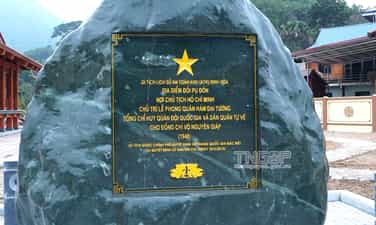
Pu Don Hill
In an excited atmosphere, the entire party, people and army look forward to celebrating the 80th anniversary of the founding of the Vietnam People's Army and the 35th anniversary of the All-People's National Defense Festival, on the afternoon of December 9, 2024, in Tinh hamlet. Keo, Phu Dinh commune, Dinh Hoa district, Thai Nguyen province, the Command of Region I in coordination with the People's Committee of Thai Nguyen province solemnly organized the inauguration and handover of the renovation and embellishment project of the National Monument. Hill family Pu Don, belongs to ATK Dinh Hoa Special National Relic Area, Thai Nguyen. The project to renovate and embellish the Pu Don Hill National Monument began construction in January 2024, with an area of 3.32 hectares including the following items: Nghi Mon Gate; stone block with the name of the project; reception house; relic stele house; General Vo Nguyen Giap memorial house; stone screen; flagpole and other auxiliary items. After more than 10 months of renovation and renovation work, it has been completed and put into use to serve tourists inside and outside the province. After being inaugurated and put into use, Pu Don Hill National Monument along with other relics in the ATK Special National Monument Area will be a red address for officers and soldiers of the entire army to learn about traditional education sources. network, contributing to improving the promotion and introduction of the potential and strengths of the land and people of ATK Dinh Hoa, Thai Nguyen./. SOURCE: Department of Culture, Sports and Tourism of Thai Nguyen province
Thai Nguyen
3501 view
Rating : National monument

General's Hill
On January 20, 1948, at the Presidential Palace - a simple palm leaf roof in Khuon Tat (Phu Dinh commune), President Ho Chi Minh signed Decree No. 110/SL conferring the military rank of general on a number of leading officials - Army commander, General rank: Vo Nguyen Giap, Lieutenant General rank: Nguyen Binh, Major General rank: Nguyen Son, Le Thiet Hung, Chu Van Tan, Hoang Sam, Hoang Van Thai, Le Hien Mai, Van Tien Dung, Tran Dai Nghia, Tran Tu Binh. In a house built next to a large stream, leaning on one side of a mountain, the trees are densely covered, making it difficult to see from the outside and difficult for airplanes to search. A special gallery. There is a Fatherland altar, surrounded by red tape with slogans: "Long-term resistance war will definitely win", "Reunification and independence will definitely succeed"... looks simple but dignified. President Ho Chi Minh and Mr. Bui Bang Doan, Head of the Standing Committee of the National Assembly, stood on both sides of the altar, all Government employees stood in line in front of the altar (Mr. Cu Huy Can - Secretary of the Government Council, Phan My - Chief of Government Office)... President Ho Chi Minh held a decree calling Vo Nguyen Giap to the altar, then he remained silent, sobbing and shedding tears... An extremely touching minute, everyone was in tears. tear. After a while, President Ho Chi Minh spoke up and declared: In the name of the President of the Democratic Republic of Vietnam, I give you the position of General, so that you can command soldiers and soldiers to fulfill the mission entrusted to you by the people. falls for. Comrade Vo Nguyen Giap received the decree. The Head of the Standing Committee announced a few words in the name of the National Assembly. Mr. Phan Anh, on behalf of the Government, said a few words of congratulation. Ta Quang Buu - Minister of National Defense, on behalf of the soldiers, expressed congratulations to the entire army and raised the spirit of heroic struggle under the command of General Vo Nguyen Giap. Finally, comrade Vo Nguyen Giap stood up to thank President Ho Chi Minh, the National Assembly and the Government, declaring that he would continue to make efforts to fulfill his duties to bring independence and unity to the country, Vo Nguyen Giap said. Shake everyone's hand in turn. Then President Ho Chi Minh announced the closing of the ceremony. Marking this event, "Vietnam People's Police Guard, Chronicle History 1941-1954" is inscribed. “From the beginning of May to the end of May 1948, Uncle Ho's guards returned to Na Lom, Phu Dinh commune, right at Uncle Ho's children's camp next to Na Lom stream, about 200m from the old hill. Here, Uncle Ho and the Government conferred the military rank of General on comrade Vo Nguyen Giap"... The Management Board of Thai Nguyen relics and landscapes has compiled a scientific dossier to submit to the Ministry of Culture, Sports and Tourism to rank a national historical and cultural relic for the relic site of President Ho Chi Minh presiding over the ceremony. conferred the first military rank of General of our army, which marked an important historical event marking the formal and modern advancement of our army and the attention to training, disciplining and promoting generals. The Vietnam People's Army became a team of military leaders defeat invading enemies to protect the independence and freedom of the Fatherland.
Thai Nguyen
3935 view
Rating : National monument