
 vn
vn en
en ja
ja ko
ko zh
zh


Don't Miss These 14 Famous Historical Sites in Dong Thap
Đồng Tháp, a true gem of Vietnam's Mekong Delta, captivates hearts with its expansive landscapes and rich cultural heritage. This isn't merely an ideal stop for nature enthusiasts; it's also a destination to delve into Đồng Tháp's distinctive historical sites.
The historical sites in Dong Thap promise an exciting and profound journey of discovery. When you set foot in this land, don't miss the opportunity to visit these special places to immerse yourself in the unique cultural and historical beauty of the Mekong Delta. Let's join63Stravelto learn about Dong Thap's famous historical sites in this article!
Top 14 Historical Sites in Dong Thap You Absolutely Must Explore
Here are some historical sites in Dong Thap you can visit for your Mekong Delta trip.
Trieu Am Tu Pagoda (Ong Dao Ngoan)
Trieu Am Pagoda (Thanh Dao)(Ong Chin Pagoda) is a Buu Son Ky Huong pagoda, founded by Ong Dao Ngoan in 1854. The pagoda was not only a place for religious practice but also a center for healing, spreading the Four Graces doctrine, and a gathering point for patriotic dignitaries.
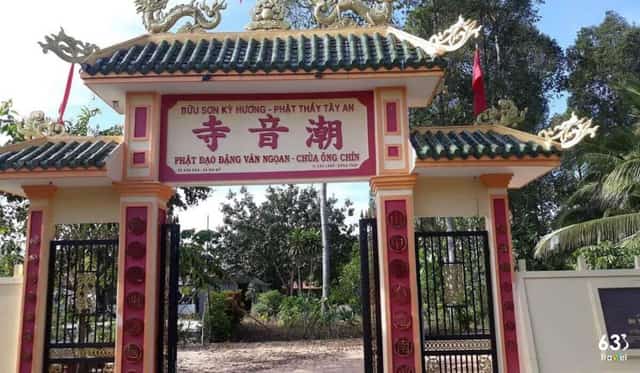
Discover Ong Dao Ngoan Pagoda, Disciple of the Buddha Master
During the resistance war, the pagoda became an important revolutionary base, a refuge for cadres, and contributed to the resistance against the French. Trieu Am Tu Pagoda has been recognized as a provincial-level historical and cultural relic, preserving cultural values, patriotic traditions, and the virtue of compassion.
Dinh Dinh Yen Communal House
This communal house is a prominent symbol of traditional Southern Vietnamese architecture, possessing unique artistic value with exquisite wood carvings – a pinnacle of Vietnamese craftsmanship in the early 20th century. The intricate carvings, dragon-headed fish figures, bao lam (decorative panels), thanh vong (altar screens), altars, and antique mother-of-pearl inlaid cabinets all contribute to its majestic and revered beauty, attracting numerous visitors from near and far to admire and worship.
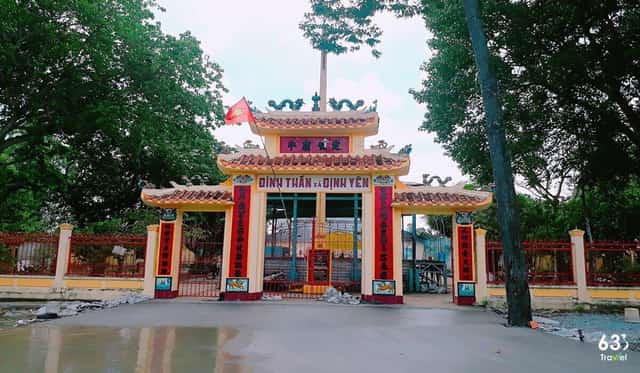
Dinh Dinh Yen Communal House - A Cultural and Historical Landmark in Dong Thap
It's no surprise that director Ly Hai chose thisDinh Yen Communal House as the setting for his film "Face Off 6 - The Fateful Ticket". During filming, scenes were meticulously staged to authentically and vividly recreate the life of a craft village that once "shone brightly." After completion, the film crew restored the communal house to its original state, ensuring no alterations or damage to the relic.
Currently, Dong Thap province is implementing a plan to preserve and promote the value of these two cultural heritage sites. This is combined with tourism to introduce the unique characteristics of local culture to domestic and international visitors.
Buu Hung Pagoda
Buu Hung Pagodais an ancient pagoda featuring the distinctive Buddhist architecture of the Southern region. Built by Zen Master Nguyen Dang in the mid-18th century with simple materials, the pagoda has undergone numerous renovations and expansions, embodying profound artistic and historical value. The pagoda was bestowed the title "Sac Tu Buu Hung Tu" by Emperor Gia Long in 1803, after Nguyen Phuc Anh once sought refuge here during the war against the Tay Son.
The pagoda covers an area of approximately 4,000 square meters, designed in the "Tam" (three-part) style, comprising the Front Hall, Main Sanctuary, and Ancestral Hall. The Main Sanctuary stands out with its three large bays and two wings, featuring exquisitely carved bao lam (decorative panels) and than vong (altar screens) depicting the four sacred creatures. Additionally, the ancient stupa area next to the pagoda is where the remains of monks who once practiced here are enshrined.
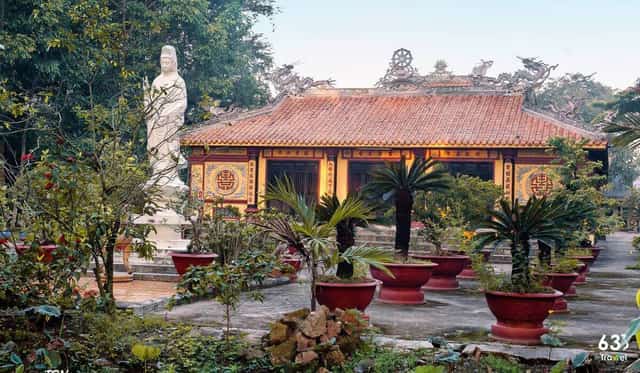
Buu Hung Pagoda - A National Historical and Cultural Relic in Dong Thap
A special feature of the pagoda is that most of the Buddha statues are made from various precious woods, including an Amitabha Buddha statue offered by the Nguyen Dynasty in 1821. The pagoda also preserves over 100 large wooden columns and three sets of intricately carved wooden doors from the early 20th century.
Nestled amidst a tranquil garden with a lotus pond and a poetic canal flowing through it, Buu Hung Pagoda is not only a serene sanctuary but also an ideal pilgrimage site for Buddhists and tourists. During major festivals like Buddha's Birthday and Vu Lan, the pagoda hosts many special activities, offering a sacred and peaceful atmosphere for all visitors.
Kien An Cung Temple Sanctuary
Kien An Cung Temple Sanctuary is also known asKien An Cung (Ong Quach Pagoda), is a historical landmark nearly a century old. Built between 1924 and 1927 by the Fujian Chinese community, the temple is a quintessential symbol of Chinese culture and has been recognized as a national historical relic since 1990.
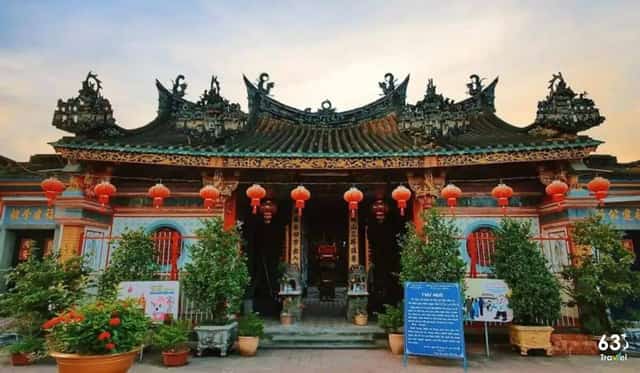
Kien An Cung - An Ancient, Sacred Temple in the Heart of Sa Dec
The temple is not only a place for ancestor worship and educating descendants but also a community hub, a place for gathering and exchanging information. Its unique architecture is evident in the exquisitely crafted cement fence, resembling rustic green bamboo stakes, creating a look that is both splendid and solemn. The temple is built in the majestic "Công" (work) character shape, with a facade featuring three main bays and yin-yang tiled roofs gently curving like waves, symbolizing the spirit of overcoming challenges and achieving success.
Upon entering the Kien An Cung Temple Sanctuary, visitors will be amazed by the exquisite wood carvings and the bao lam (decorative panels) connecting the columns, all crafted by the talented artisans of ancient China. Despite nearly a century passing, the temple retains its grand appearance, with its paintings and architectural details showing no signs of fading, a testament to the supreme skill of the artisans of that era.
Dinh Yen Mat Market
Dinh Yen Mat Village is a traditional craft village with a long history and unique artistic mat-making techniques. Here, the skilled hands of artisans create products rich in cultural significance, reflecting the beauty of nature and the lives of local people.
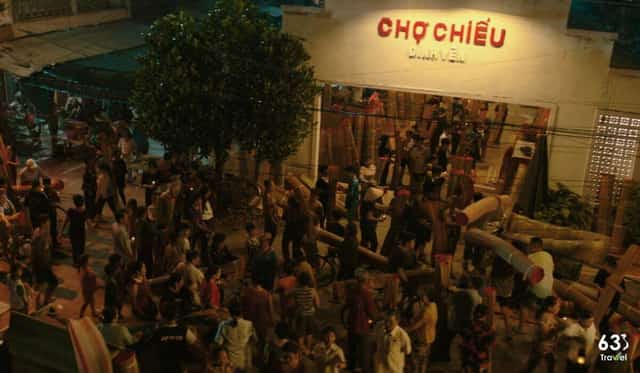
Dinh Yen Mat Village, Dong Thap - A National Intangible Cultural Heritage
Visitors to Dinh Yen Mat Village will have the opportunity to discover the meticulous mat production process, from gathering raw materials and weaving to finishing the product. The mat village not only preserves a precious cultural heritage of the Dong Thap region but also serves as an attractive destination for those who wish to experience and explore the exquisite beauty of traditional mat weaving art.
Tan Phu Trung Communal House
Tan Phu Trung communal houseis one of Dong Thap's ancient and quintessential communal houses, well worth visiting and exploring. The communal house worships the Thành Hoàng Bổn Cảnh (Guardian Deity of the Locality), who was granted a royal decree by Emperor Tu Duc in 1854. Having undergone several major renovations, notably in 1952 and 1957, Tan Phu Trung Communal House still retains the distinctive architectural features of a Southern Vietnamese village communal house from the early 20th-century Nguyen Dynasty.
From the communal house gate, visitors will immediately feel the solemnity of the structure, with its sturdy main gate, solid brick pillars, and a ceramic kylin statue atop. The spacious courtyard, paved with traditional tiles, features an 8-meter-high flagpole in the center, beneath which lies the Altar of the Land and Grain, an important spiritual symbol. The courtyard also houses shrines to the Mountain God and the Five Elements, all contributing to a highly symbolic space that reflects the spiritual and cultural mindset of the local agricultural community.
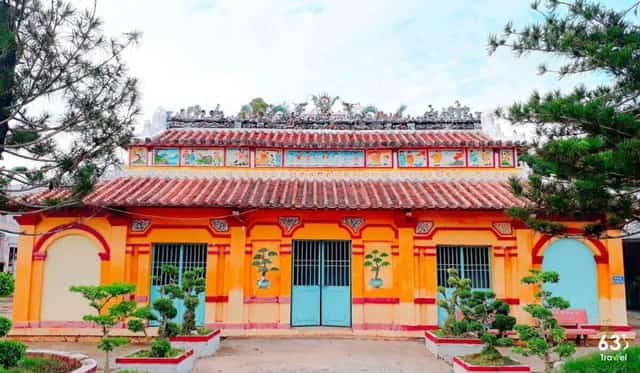
Tan Phu Trung Communal House - An Ancient Communal House by the Nga Cai River
The main communal house is built with three interconnected blocks, each featuring four main pillars known as "tu tru" (four pillars), forming a sturdy structure with yin-yang tiled roofs and elaborate decorative motifs such as two dragons vying for a pearl, fish transforming into dragons, kylins playing with their young, the Eight Immortals, and phoenixes holding scrolls. Inside the communal house, the carved horizontal lacquered boards, bao lam (decorative panels), and parallel couplets showcase rich traditional artistry with themes of Dragon - Kylin - Tortoise - Phoenix and the four seasons: spring, summer, autumn, and winter. Notably, the communal house also preserves three statues of Quan Thanh – De – Quan made from rare agarwood, precious artifacts of the communal house.
More than just an architectural work of historical value, Tan Phu Trung Communal House is also a hub for community cultural and religious activities, contributing to the preservation and promotion of indigenous culture. Due to its outstanding values, on August 15, 2012, Tan Phu Trung Communal House was recognized as a National Historical and Cultural Relic.
Annually, the Tan Phu Trung communal house festival takes place on the 16th-17th days of the lunar calendar (in even years) and the 12th-13th days of the lunar calendar (in odd years), attracting tens of thousands of visitors for sightseeing and worship. This is an occasion for people to pray for national peace, favorable weather, abundant harvests, and a prosperous life.
>> See more: Discover Dong Thap: 12+ Must-Visit Spots You'll Instantly Fall in Love With
Go Thap Relic Site
Go Thap relic siteis a rich complex of historical and cultural relics, featuring prominent pagoda towers, steles, Buddha statues, and an ancient tomb system. This site not only holds profound architectural and spiritual value but also serves as an attractive destination for those wishing to explore the unique cultural heritage of the Southwestern region.
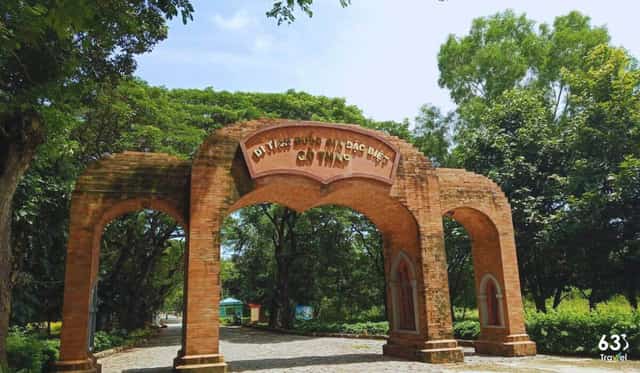
Go Thap Relic Site - A Special National Relic in Dong Thap
Recognized as a national relic since 1998, Go Thap preserves precious cultural and historical values, from the era of the Funan Kingdom, through the resistance wars against the French and Americans, to distinctive layers of folk culture. With its intricate canal system and lush melaleuca forests, this relic site not only bears a strong historical imprint but also blends harmoniously with wild natural beauty.
Ranked as one of Vietnam's 34 "special national relics," Go Thap is an unmissable tourist destination, boasting unique architecture and distinctive cultural and historical value. Visitors here will have the opportunity to explore the origins of ancient civilizations and enjoy a sacred, peaceful space amidst nature.
Monument to the 1954 Troop Regrouping Event
Even after 66 years, the 1954 troop regrouping event to the North in Cao Lanh still retains its significance, further enhancing the revolutionary traditions of the homeland. To commemorate this historical event and educate the younger generation about patriotism, Dong Thap province, with support from cities and provinces such as Ho Chi Minh City, An Giang, Tien Giang, Long An, Binh Phuoc, Binh Duong, Dong Nai, and Tay Ninh, built a commemorative monument spanning over 12,000m² right at the site where the event took place.
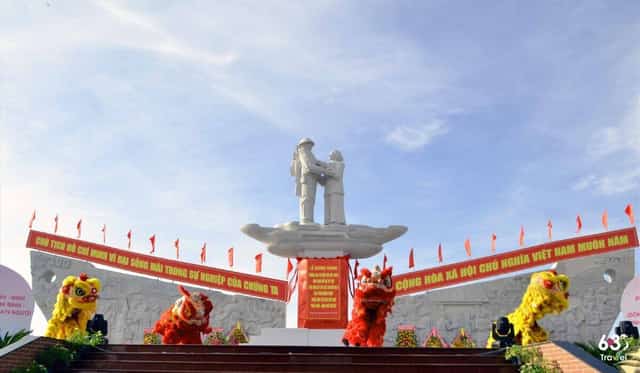
The 1954 Northern Regrouping Point in Dong Thap Recognized as a National Relic
Monument to the 1954 Gathering event is designed with inspiration from a blooming lotus flower beside the Tien River, symbolizing the sacred affection and sacrifice of the Southern people. Surrounding the monument are two bas-reliefs depicting the activities and emotional farewell scenes during the regrouping days in Cao Lanh. Images of an elderly mother wrapping a checkered scarf around her child, a young wife embracing her husband, or a father handing over a handful of homeland soil are beautiful symbols of love for one's homeland and patriotism.
Situated by the poetic Tien River, the Monument to the 1954 Troop Regrouping Event, with its modern architecture and harmonious green space, is not only a historically and culturally significant structure but also a potential tourist destination. This monument not only marks a historical event but also contributes to educating about patriotic traditions and serves political objectives during the period of international integration.
Phuoc Kien Tu Pagoda (Giant Lotus Leaf Pagoda)
Phuoc Kien Tu (Lotus Leaf Pagoda)also known as Phuoc Kien Tu Pagoda, is one of the most famous pagodas in Dong Thap, attracting numerous visitors from all directions for sightseeing and worship. The pagoda stands out with its ancient architecture and serene atmosphere, especially its giant lotus pond, an unmissable highlight when visiting.
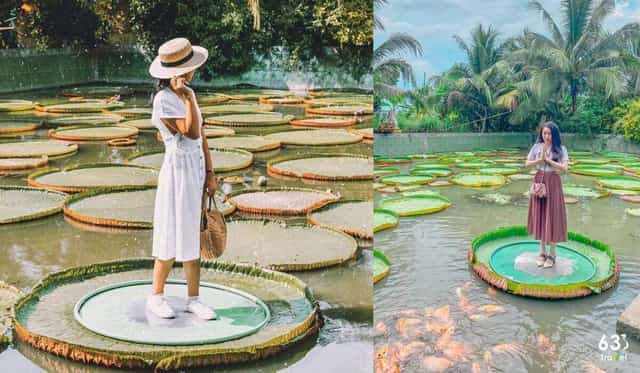
Giant Lotus Leaf Pagoda - The Hottest Destination in the Mekong Delta during the Flooding Season
The pagoda's lotus pond area is the main attraction, with a square pond symbolizing earth and round lotus leaves symbolizing heaven. This special type of lotus first appeared at the pagoda in 1992 and has been propagated by the monks, becoming increasingly widespread and famous. Although local people have various names for this lotus, such as "king lotus," "súng nia," or "cay nong tam," it is officially known by its scientific name, Victoria Regia, originating from the Amazon region.
Phuoc Kien Pagoda attracts visitors not only with its giant lotus pond but also with its unique history and architecture. Located in Hoa Tan Commune, Chau Thanh District, Dong Thap Province, the pagoda was destroyed during the war in 1966 but rebuilt in 1975, with the lotus pond created from bomb craters. The ideal time to visit is from September to January when the lotus leaves are in full bloom, creating a stunning landscape. Besides the lotus pond, the pagoda is also famous for its sacred turtles and cranes, making it a distinctive and captivating spiritual destination.
Cao Lanh Temple of Literature
Cao Lanh Temple of Literature is an important destination for preserving and promoting the essence of Confucianism. Built in 1878, the Temple of Literature has played a crucial role in worshipping Confucius and housing valuable collections of books.
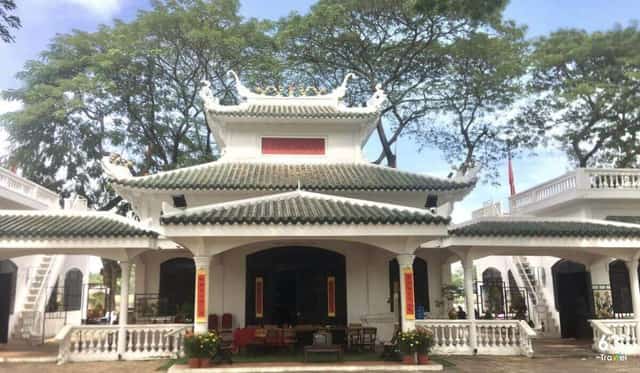 Cao Lanh Temple of Literature - A Symbol of Vietnamese Confucianism
Today, the Temple of Literature has been expanded into a large park, providing convenient conditions for visitors to explore and experience. This site has been recognized as a provincial-level Historical and Cultural Relic, marking its significant role in the region's cultural and historical heritage.
Huynh Thuy Le Ancient House
Huynh Thuy Le ancient houseis a distinctive historical and cultural heritage site of Vietnam. Built in the late 19th and early 20th centuries, this house reflects a unique blend of French architecture and Southeast Asian traditions. It was the residence of the Huynh Thuy Le family – a renowned aristocratic family in the region.
This place is not only an architectural icon but also linked to the boundless romantic love story between French writer Marguerite Duras and the Vietnamese-Chinese gentleman Huynh Thuy Le. This romance became the inspiration for Duras's famous work, "The Lover."
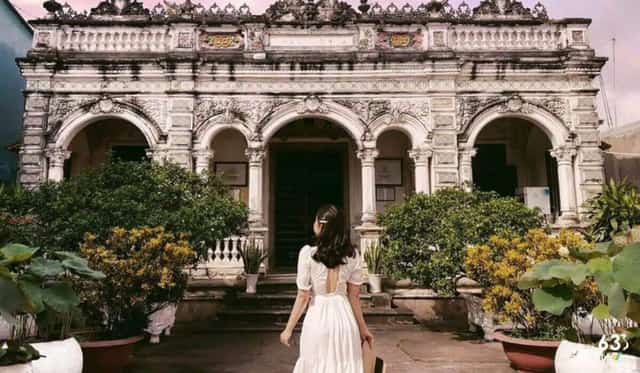
Huynh Thuy Le Ancient House – Preserving the Memories of a Cross-Border Love Story
Originally, the house was built in the traditional three-compartment style of the Southwestern region, using precious wood and yin-yang tiled roofs. Today, Huynh Thuy Le Ancient House has been recognized as a national relic, open to visitors to explore its ancient architectural beauty and learn about the life and history of the Huynh Thuy Le family.
Located near Sa Dec wholesale market, the house attracts visitors not only with its historical and cultural value but also with its wonderful blend of Eastern and Western architectural styles, creating a captivating destination for those who appreciate Vietnamese history, architecture, and culture.
>> You should read:Let's Explore Đồng Nai! Discover Over 10 Captivating Historical Sites.
Xeo Quyt Relic Site
Xeo Quyt is a unique historical and ecological tourism complex in the Mekong Delta. Known for its pristine beauty and vividly recreated war zone relics, Xeo Quyt is nestled deep within canals leading into a primeval forest. This area is also a conservation zone with rich biodiversity, including 170 plant species and 200 wild animal species, many of which are listed in Vietnam's Red Book.
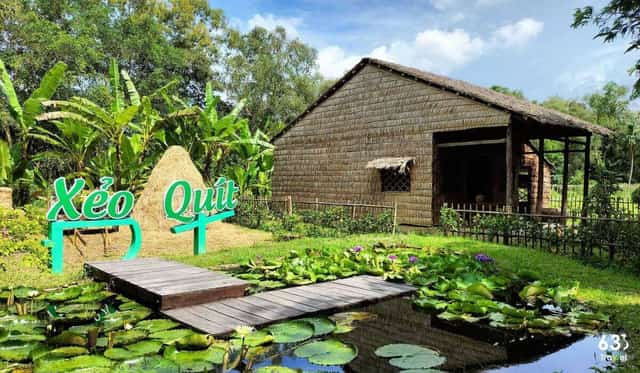
Xeo Quyt Relic Site - A Unique Ecological and Historical Tourist Destination in Dong Thap
The ideal time to visit Xeo Quyt is from September to November, when visitors have the opportunity to experience paddling a "xuong ba la" (three-plank boat) through a 2 km forest path. During this journey, the boat operator will enthusiastically recount stories of places where our troops once hid and fought during the war. Additionally, the large lotus and water lily ponds are ideal spots for taking unique photos.
Xeo Quyt Relic Areacovers an area of 50 hectares, of which 20 hectares are melaleuca forest. It is home to many rare animal and plant species such as king cobras, Burmese pythons, and box turtles. The area is also famous for its bomb shelters and combat bunkers, restored from historical traces. Recognized as a national historical relic since 1992, Xeo Quyt is an ideal destination for nature and history lovers.
Phuong Nam Cultural Tourist Area
Phuong Nam Cultural Tourist Area is a captivating new destination, offering spacious grounds and a vivid portrayal of Southern Vietnam's history and culture. Opened in 2017, the tourist area spans 17 hectares and comprises five main components: Nam Phuong Linh Tu Temple, Dang Clan Nam Phuong Linh Tu Temple, the Dang Family Museum, the Southern Vietnam Museum, and a surrounding long corridor symbolizing the five continents.
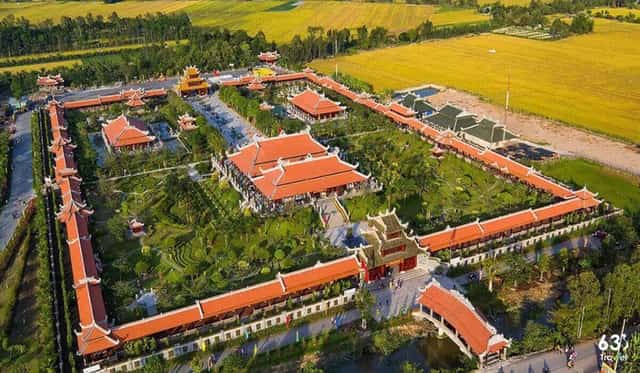
Phuong Nam Cultural Tourist Area - Nam Phuong Linh Tu Temple in Dong Thap
This area stands out with its harmonious blend of nature and architecture. Lush greenery and vibrant flowers create a pleasant, fresh atmosphere. Tree-covered corridors and dazzling lotus ponds add to its allure. The Nam Phuong Linh Tu Temple, with its traditional Hue architecture, commemorates 125 historical figures of Southern Vietnam. Unique artistic structures such as tiled bridges, Buddha statues, and models of Southern Vietnamese villages, along with the Land of Phuong Nam Museum, all contribute to a space rich in culture and history.
Nguyen Sinh Sac Relic Site
The relic site of Pho Bang Nguyen Sinh Sacis the resting place of Mr. Nguyen Sinh Sac, the father of President Ho Chi Minh. This is an important historical relic, recognized as a national-level site, embodying profound historical and spiritual value.
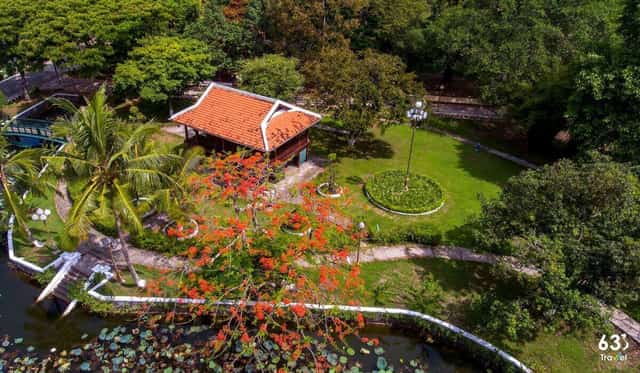
Nguyen Sinh Sac Relic Site - Preserving the Roots of History
This place is not only where people nationwide express their respect and remembrance for Deputy Censor Nguyen Sinh Sac but also a prominent destination for Dong Thap tourism. The relic complex includes the mausoleum and a stone stele carved with images of Mr. Nguyen Sinh Sac, along with poems expressing deep reverence.
With its unique architecture and solemn atmosphere, the relic site not only commemorates the life and career of Mr. Nguyen Sinh Sac but also profoundly reflects the soul and spiritual values of President Ho Chi Minh. This is an ideal place for visitors to learn about history and culture, while also feeling a connection to the nation's cultural and spiritual values.
Above is a list of famous historical sites in Dong Thap to make your Mekong Delta trip even more interesting for all travelers. Be sure to save this list of relics to experience the fascinating things here!
Dong Thap 29925 view
Update day : 23/08/2024



Monuments close by
See all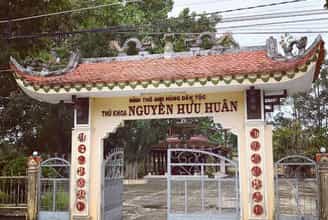
Thu Khoa Huan's tomb and temple
Thu Khoa Huan's real name is Nguyen Huu Huan. Born in 1830 in Tinh Ha village, Kien Hung district, Dinh Tuong province. Now it is My Tinh An commune, Cho Gao district, Tien Giang province. Son of Mr. Nguyen Huu Cam, a well-off farmer in the area. As a child, he was famous for being smart, assertive, very good at studying, and very diligent in his studies. In 1852 (during the reign of King Tu Duc), he took the exam in Gia Dinh and passed as valedictorian (top bachelor's degree). After that, he became a teacher or school director in Kien Hung district, Dinh Tuong province. When the French colonialists invaded our country (February 1859), he quit his teaching position, said goodbye to his family to join the resistance, linked up with patriotic scholars, recruited soldiers to stand up against the enemy, contrary to The Nguyen Dynasty's strategy of peace was essentially surrender. In April 1861, the French occupied My Tho. He and Thien Ho Duong launched an uprising, operating in Tan An and spreading to My Tho, greatly influencing the scholars of Cochinchina. At that time Thien Ho Duong was the Chief Administrator, he was the Deputy. At the end of 1861, seeing his influence, the French sent Ton Tho Tuong to persuade him to surrender but failed. In early 1862, he was ambushed, captured by the enemy and taken to Saigon. France assigned Mr. Do Huu Phuong (general governor of Phuong) to bribe the oligarch Viet Gian. He refused and cleverly sought to return to activities associated with Truong Dinh. In June 1863, the enemy discovered his base in Thuoc Nhieu (Cai Lay) so they surrounded and swept away. He and Thien Ho Duong escaped to An Giang to build Bay Nui base. Based on the Nham Tuat treaty, they sent an ultimatum forcing the An Giang province officials to hand over Thu Khoa Huan and Thien Ho Duong. Hearing the news, Thien Ho Duong escaped and then moved his base to Dong Thap Muoi while Thu Khoa Huan was captured and handed over to France. They accused him of opposing the state of Lang Sa (France) in opposing the treaty that the royal court had signed, sentenced him to 10 years of hard labor and was exiled to Réunion island. After 7 years in prison, they pardoned him and brought him under house arrest at Do Huu Phuong's house (Governor Phuong). At the same time, he was appointed as a teacher to teach students at Cho Lon in the hope of attracting him to their side. He took advantage of the teaching conditions to contact patriotic scholars and the Truong Phat Overseas Chinese Association to buy weapons. preparing for an uprising. While preparations for the uprising were in full swing, the French enemy, thanks to spies, captured the armed boat of Truong Phat's group. The uprising plan was broken because there were no weapons. Faced with that situation, he ordered the army to withdraw and return to My Tho to meet with Au Duong Lan to carry out the uprising. The operational area runs from Cai Lay to My Quy (Sa Dec). The center in Ben Tranh area has resonated throughout Cochinchina. To deal with the enemy, the governor and landowner Tran Ba Loc from Vinh Long to My Tho sent troops to suppress. In 1875, during a battle with an unfavorable enemy, he and his entourage, General Huong, sneaked back to Gao market with the intention of hitchhiking on a trading boat to Binh Thuan for help. But General Huong was bribed by Tran Ba Loc to lead troops to arrest Nguyen Huu Huan at Gao market on May 15, 1875, and take him into custody in My Tho. After 4 days of detention in My Tho, all his tactics to persuade him failed, and the French enemy sentenced him to death. On May 19, 1875, they sent a ship to transport him along the Bao Dinh river to his hometown of My Tinh An for execution (at 12 noon). He was 45 years old that year. On June 15, 1987, the Thu Khoa Huan Tomb relic was recognized by the Ministry of Culture and Information as a national historical relic. Source: Department of Culture, Sports and Tourism of Tien Giang Province
Dong Thap
8814 view
Rating : National monument
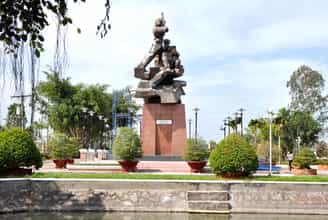
Ap Bac Victory Relic Area
Ap Bac belongs to Tan Phu commune (Cai Lay town, Tien Giang) about 21km west of My Tho city center. It is a place known to the whole country and progressive people around the world. It is not a scenic spot, but the place where a resounding battle took place. The battle in which the US and puppet forces concentrated maximum force, using modern warfare equipment and innovative tactics, with American advisors and their henchmen determined to sabotage the revolution, in order to crush Ap Bac and destroy main force of the Southern revolution. On January 2, 1963, with 200 gunmen, the army and people of Ap Bac defeated more than 2,000 enemy troops with aircraft, tanks, warships supporting and American advisors commanding, breaking two new tactics. The period that the US applied in special warfare was "helicopter transport" and "armored transport" signaling the collapse of Ngo Dinh Diem's regime and the special war strategy of the US empire. Early in the morning of January 2, 1963, the enemy launched a sweep by the 7th Division Command and the Security Task Force in Dinh Tuong sub-region. The sweep took place within Tan Phu commune to encircle and destroy our local platoon that they discovered; Our forces only had company 1 of battalion 514 and company 1 of battalion 261. At 5:00 a.m. on January 2, 1963, the enemy divided into two wings to enter Ap Bac, but we blocked and attacked them, forcing them to call in reinforcements. institute. At the same time, our engineering field used mines to sink a ship at Kinh 3 and damaged two others. At 9:30 a.m., they landed a helicopter at Ap Bac; Under the command of company commander Bay Den, we broke up many enemy attacks supported by both helicopters and M113 vehicles. By evening, after many failed attacks, the enemy withdrew from the battlefield. As a result, they failed miserably, with: 450 dead and wounded, including 10 American advisors; 3 M 113 amphibious vehicles were destroyed; 8 helicopters were shot down; 1 ship sank and 2 other ships were damaged. Currently, the relic site is an architectural complex located on an area of nearly 3 hectares including: exhibition house, area recreating the activities of Ap Bac soldiers and people in battle, bronze statues of 3 iron and steel soldiers, area display of trophies after the battle: armored vehicles, helicopters, 105mm artillery; the grave site of 3 iron and steel soldiers: Nguyen Van Dung, Do Van Trach and Hung (don't know their last names); The manor house is interspersed with a flower garden that is always blooming and fragrant. Perhaps the most impressive on the campus is the bronze statue of three tall iron and steel soldiers, weighing 18 tons: one holding a gun, the other holding a gun standing proudly on an enemy tank, their majestic image as if carrying them away. We return to the scene of guns exploding and bombs rumbling more than 50 years ago. The Ap Bac victory is a brilliant milestone in the history of the struggle against foreign invaders of Tien Giang people and our nation. It spoke of the indomitable will of the Vietnamese people, the invincible strength of the people's war. On January 7, 1993, Ap Bac historical relic was ranked as a national relic by the Ministry of Culture and Information (now the Ministry of Culture, Sports and Tourism). Source: Department of Culture, Sports and Tourism of Tien Giang Province
Dong Thap
8525 view
Rating : National monument
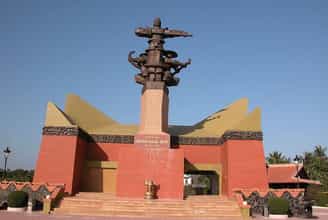
Rach Gam - Xoai Mut historical victory relic
Rach Gam - Xoai Mut historical site is associated with the glorious victory of our nation against the Siamese army (1785), which took place on the section of the Tien River from Rach Gam to Xoai Mut (now in Kim Son commune, Chau Thanh district, Tien Giang Province). The battle of Rach Gam - Xoai Mut is confirmation of the strategic talent of cloth-shirted hero Nguyen Hue and the strength of the Tay Son movement - a peasant movement that took on the mission of protecting the country and fighting against foreign invaders. . In the second half of the 18th century, in the context of the Trinh - Nguyen conflict, many peasant uprisings broke out in both Dang Trong and Dang Ngoai. In 1771, King of Siam (Thailand) Chakki 1 sent 50,000 troops, including 30,000 infantry and 20,000 sailors, to invade our country. On the night of January 19, 1785, from Tra Tan - about 15km upstream from Rach Gam, the Siamese army under the command of Chieu Tang with 300 warships sailed downstream to attack My Tho. Just past Rach Gam, all Siamese warships were caught in the ambush of the Tay Son army. Nguyen Hue directly directed the war... All attempts by the enemy to resist were crushed, warships were sunk or caught fire. As a result, nearly 50,000 Siamese - Nguyen troops were destroyed, more than 300 Siamese warships were sunk, the remaining enemy troops had to risk their lives to open a bloody path to escape, and fled on foot to Chan Lap. The current Rach Gam - Xoai Mut victory relics are works built on the site of ancient historical events, including items: gates, fences, monuments (gallery no. 1), Gallery No. 2 and Southern ancient house (Gallery No. 3). Gate: 4.1m wide, 6.61m high, the gate pillars and fence surrounding the relic are made in the shape of a boat. Rach Gam - Xoai Mut Victory Monument: bronze, weighs 20 tons, is 8m high, stands on a 10m high concrete pedestal. Gallery No. 1: located right below the bronze statue, built in the shape of a warship, with an area of 135m2. The outer wall is decorated with a row of bronze reliefs with a width of 0.8m, weighing 6 tons, with patterns, stray bird motifs, and a figure holding a fighting shield (originally taken from the Dong Son Bronze Drum)... In the gallery are artifacts and weapons of the Tay Son insurgent army and the Siamese army. Gallery No. 2: total area 132m2, display area 93.5m2. The content displays the events of the battle of Rach Gam - Xoai Mut. Southern ancient house (gallery no. 3): This is a 3-room ancient house, built in 1927, recreating the image of an ancient Southern garden house. In the ancient house, there are some artifacts related to the Rach Gam - Xoai Mut victory on display. The Rach Gam - Xoai Mut victory was celebrated on January 20, 1785. With special values, the Rach Gam - Xoai Mut Victory Site Historical Relic (Chau Thanh district, Tien Giang province) was ranked a special national monument on December 31, 2014. Source: Department of Cultural Heritage
Dong Thap
8511 view
Rating : Special national monument
Truong Dinh's Fortress
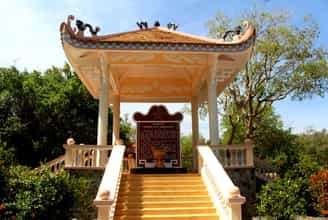
Luy Phao Dai relic belongs to Phao Dai hamlet (Phu Tan commune, Tan Phu Dong district), this is a national historical relic ranked at the national level in 1987. According to documents of Dr. Nguyen Phuc Nghiep (Department of Propaganda and Education Tien Giang Provincial Party Committee), Luy Fort Monument has the following history: To protect Cua Tieu, in the 15th year of Minh Mang (1834), the Nguyen Dynasty built Tu Linh Fort here, with a circumference of 60 meters. (378m), 5 meters 5 inches (2.57 m) high, two doors open. The 3rd and 7th years of Thieu Tri (1834 - 1847) were repaired. After the fall of Dinh Tuong citadel, in April 1861, Truong Dinh returned to Tan Hoa to build a base to resist the French. Tu Linh Fort was used as a barricade, called the Fortress barricade, equipped with large cannons (the location of the cannon was previously located far outside between the West and Northwest gates of the citadel next to the river bank. Cua Tieu and Don canal are about 60m). Surrounding Fort Fort is a high, thick earth wall with 6 fairly evenly balanced sides, forming a hexagonal (hexagonal) shape. On the earth wall, tamarind trees are planted, in the middle there is a large Trom tree and a water well. In the southeast direction, the Fort has a 21m high round mound named Tho Son, considered an observation tower for the insurgents. Outside the citadel is surrounded by forests of embankments, mangroves, nipa palms, and cork; on the riverbed, to protect the river mouth and prevent enemy warships from bulldozing the assault beach onto the shore. In addition, to slow down the enemy ships and serve as target for the cannons to push the enemy to the shore of Trai Ca for the insurgents to destroy, Truong Dinh poured stones to weld a section along the width of the Cua Tieu River in front of the barricade. to the west is called Han Stone Dam. This dam still exists today and has been marked so that ships can enter and exit without obstruction. Fort Fort along with the insurgents guarded an important estuary of the Mekong Delta. In 1987, Luy Phao Dai was recognized as a national historical site. In 2000, the Department of Culture, Sports and Tourism built the Luy Fort Monument stele house. The stele house has a beautiful, airy and dignified architecture, with a height of 9.4 m, a width of 8.4 m, a tiled roof, concrete columns, a corrugated iron foundation 2m above the ground and 2 guns have been restored. magic. During the construction of the road to the Luy Phao Dai relic site, Kobe's vehicle dug up 2 strange bricks at a depth of about 1.4 m, facing east (facing the sea), at the foot of the citadel and donated them to the Museum. Tien Giang. Through direct field surveys, Tien Giang Museum discovered 4 more large bricks lying in the ground, all broken, different shapes, but especially on the top of each brick was engraved: Giap three, Giap five, Giap eight, Giap nine. According to the Department of Culture and Information of Tan Phu Dong district: Luy Phao Dai relic is included in the traditional tour with other national relic clusters in the Go Cong area such as: Temple of National Hero Truong Dinh , Governor Phu Hai's House, Dark Leaves... This relic is not only a tourist attraction but also becomes one of the "red addresses" for the younger generation about the heroic process of building and defending the country of our ancestors. Currently, Luy Phao Dai is being restored and newly built items such as: Protective fence system, walkways and roads leading to the relic site. Source: Electronic information portal of Tien Giang province
Dong Thap
8345 view
Rating : National monument
Tan Phu Trung communal house
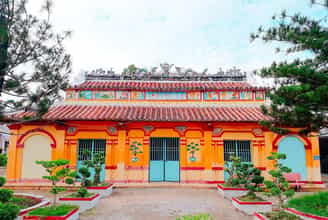
Tan Phu Trung communal house is located on a large plot of land, in the middle of a rich countryside in Tan Phu Trung commune, Chau Thanh district, and is one of the ancient communal houses in Dong Thap that is worth a visit for tourists. Tan Phu Trung communal house worships the god Thanh Hoang Bon Canh, conferred by King Tu Duc in 1854. Tan Phu Trung village communal house was greatly restored in 1952, 1957... Up to now, Tan Phu Trung communal house is one of the communal houses with architectural ideas. The architecture is quite typical of Southern communal houses during the Nguyen Dynasty in the early 20th century. Looking at the gate, we can see the main buildings: communal house gate, communal house yard, main communal house and Huong Hoi house. The main gate is right in front of the main communal house, 3m wide, 3.5m high. The gate pillar is made of sturdy bricks, with a ceramic unicorn statue on top. Embossed horizontal bar of the communal house gate: Tan Phu Trung Communal House. The communal house's yard is large, tiled, and in the middle is an 8m high flagpole. At the foot of the flagpole is the Xa Tac altar. In front of the Xa Tac Dan is a Binh Phong, in front is a painting of a pair of dragons winding in the clouds, behind is a tiger descending the mountain (lower mountain forest). Balanced in the courtyard, on the right is the Son Than (Tiger God) Temple, symmetrically is the Ngu Hanh (Ngu Nuong) Temple. Just in the courtyard of the communal house, there are countless symbols of the spiritual, cultural life and thinking of agricultural residents The main communal house consists of three blocks of houses in an arranged arrangement, each house has four main columns, also four pillars, along which the trusses and rafters are pierced to four sides, called the four images, on each rafter there is also a rafter, on top That's a set of sesame rafters... creating a sturdy communal roof. The main communal house has three roofs, like an upper floor and a lower porch, with overlapping terraces. The communal house's roof is covered with yin and yang tiles, the top is elaborately decorated with two dragons painting pearls, fish turning into dragons, unicorns playing with mothers and children, eight fairies, phoenixes holding scrolls... In the communal house, there are many carvings of horizontal panels, bamboo panels, and couplets with popular themes such as: Dragon, Unicorn, Quy, Phung, spring - summer - autumn - winter, stylized flowers and leaves. In particular, the communal house has 3 statues of Saint - Emperor - Quan made of rare and precious agarwood that are still preserved. Tan Phu Trung Communal House is not only a long-standing architectural work of the local people but also a place to preserve typical community cultural and religious activities, contributing to preserving indigenous culture. On August 15, 2012, Dinh Tan Phu Trung received the Certificate of recognition as a national historical and cultural relic. Every year, Tan Phu Trung village communal house festival takes place on the 16th - 17th day of the fourth lunar month (even years) and the 12th - 13th day of the fifth lunar month (odd years) attracting tens of thousands of tourists to Dong Thap. Visit, worship, pray for peace in the country and people, a year of good rain and wind, lush crops, good business, prosperous and prosperous villages... Source: Dong Thap Tourism
Dong Thap
7972 view
Rating : National monument
Nearby tourist attractions
See all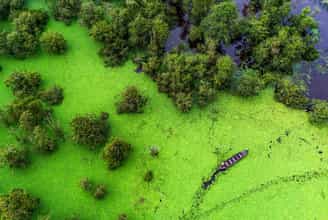
Tram Chim National Park
Tram Chim National Park is a land located in the territory of 7 communes (Tan Cong Sinh, Phu Duc, Phu Tho, Phu Thanh A, Phu Thanh B, Phu Hiep), Tram Chim town in Tam Nong district. Tram Chim National Park has a total area of more than 7,500 hectares and is a typical miniature model of the Dong Thap Muoi region, with a diverse ecosystem, where visitors discover the characteristics of the Mekong River Delta. This land of "six months the fields are dry and the grass burns, six months the fields are flooded with white water" is where rich vegetation grows with more than 130 different species. The fauna here stands out with a rich water bird system including 233 species, belonging to 25 genera and 49 families. Of these, 88% were found in the dry season, accounting for 1/4 of the total number of bird species discovered in Vietnam. And especially the Red-crowned Crane, the largest in the Crane family - an invaluable natural asset of Tram Chim National Park in Dong Thap. The fish system in Tram Chim National Park is equally rich, playing both an ecological balance and a food source for birds. Among them, there are a number of fish species in the Vietnam Red Book such as: Com fish, Tiger Cobra fish, Male Seahorse fish, Flying fish, Euc fish, Ho fish... Tram Chim National Park is located about 160km from the center of Ho Chi Minh City and the road is quite easy to travel. From Saigon, you just need to go straight along Trung Luong - Tan An - Tan Thanh highway. When you reach the My An - Moc Hoa intersection, you turn to Truong Xuan and drive a little further to reach Tram Chim town. Then you will see many signs leading to Tram Chim National Park. Just follow the signs and you'll get there. Located about 35 km away from Cao Lanh city center, the road to Tram Chim National Park is quite easy. You can refer to the following suggested travel routes. Starting at Cao Lanh city center (Cao Lanh City children's park, April 30 street) - follow Highway 30 (NH30) to the intersection near Thanh Binh district medical center - continue to turn right to Tram Chim following the road signs. From Tam Nong district of Dong Thap province, you run straight across Tram Chim bridge and then continue about 800m to reach the conservation center of Tram Chim National Park. Remember to look on the left side. The reasonable time to travel to Tram Chim is the floating water season from August to November of the lunar calendar (around September - December of the solar calendar) which is the tourist season to Tram Chim National Park. The landscape is flooded, lush green, dotted with pink lotus flowers and blooming water lilies. The source of produce becomes abundant and birds seem to gather here to party. Around this time, it is also the bird breeding season. Here, visitors have the opportunity to witness firsthand the life and proliferation of birds, which is an interesting thing. Thousands of birds compete to feed each other (typically the red sandpiper and gong coc), demonstrating sacred motherly love and bringing environmental education to the forefront for tourists from near and far, while at the same time having the opportunity to forever preserve the beautiful image of the good land where birds perch. This season is also an opportunity for you to participate in interesting activities such as: Rowing a dinghy to experience life in the flooded area, you will be able to personally carry out the livelihoods of flood zone residents such as spreading nets, laying thatch, placing shelters, or trying your hand at fishing at Tram Chim Tam Nong... especially, there is also the pleasure of hunting field mice, a specialty of this land. In particular, visitors can participate in harvesting sky rice, also known as ghost rice, a very special rice species because in the flood season, other herbaceous plants will be submerged by water. Only sky rice is the only one that grows and grows. Wherever the water rises, the rice will rise. This will be a memory of the ancient life of Dong Thap Muoi residents. In addition, in the dry season from December to May of the lunar calendar (around January to June of the solar calendar) is the season to watch the dance of red-crowned cranes in Tram Chim National Park. Because unlike many bird species in the area, red-crowned cranes only forage on the ground, so during the flood season in Dong Thap Muoi, they have to go looking for food elsewhere. Therefore, red-crowned cranes can only be seen in the dry season, most easily seen from February to May every year. You will have the opportunity to sit on a canoe (tac tong) weaving along the cool green canals, watching all kinds of birds flying around looking for prey, calling out to the noisy flock throughout the space. Flocks of hundreds of birds spreading their wings create a peaceful and charming scene. The boat follows the water, taking you to admire the beauty of fields of pink lotus, white lotus, heavenly rice, golden rice... stretching in the sunshine. A few robins, with bright red crests, dark green feathers, and fluttering tails, kept hiding and appearing in the grass as if they were playing hide and seek with tourists. The boat rowed through a small canal, weaving through the cajuput trees. Between the cajuput forests, a vast green grassland sways with the wind. The feeling of being in harmony with nature is wonderful. When you reach the lookout platform, the boat will stop completely so you can climb to the upper deck, enjoy the panoramic view of the immense green of Tram Chim National Park, relax with the gentle breeze, feel the closeness to nature and find strange peace. Another very interesting thing at Tram Chim is watching the royal soul. The sun is like a silver-coated ball surrounded by colorful halos that slowly sink to the horizon. The entire river area suddenly turned pink and radiant. The afternoon sun splashes on the water's surface with variegated colors created by a magical, multi-colored mixture: bright yellow, orange-pink, bright white... truly a masterpiece of nature. After the journey to explore Tram Chim National Park, you will have the opportunity to sit on a cool thatched hut in the middle of the forest or on floating rafts, enjoying delicious rustic dishes with country flavors such as: grilled snakehead fish, fish braised with water lily, steamed snails with pepper, crab hotpot, lemongrass steamed eel, crispy fried fish cakes, dried snakehead fish, catfish, grilled steelhead fish. If you have the opportunity to come here during the lotus blooming season, you will also have the opportunity to enjoy many attractive dishes made from lotus.
Dong Thap
8135 view
September to December
Xeo Quyt relic site
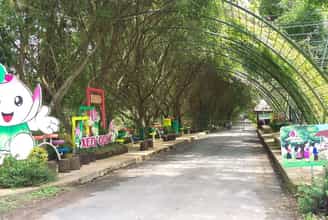
Dong Thap has many historical relics, of which Xeo Quyt is one of the meaningful tourist destinations, leaving many beautiful impressions in the hearts of visitors. Xeo Quyt relic area with an area of about 50 hectares, including 20 hectares of primary cajuput forest, belongs to 2 communes My Hiep and My Long, Cao Lanh district, Dong Thap province. The historical relic combined with the Xeo Quyt ecological area will give visitors the feeling of being lost in a primeval forest with wild natural scenery. Visiting Xeo Quyt tourist area in the dry season, you will weave along zigzag trails more than 1.5km long under cool cajuput trees to get deep into the base. During high water season, on dinghies, guerrillas in ba ba shirts, bandannas, and duck-eared hats take tourists through small, pristine canals to reach relics hidden in the vast melaleuca forest. If you go during the lotus blooming season, you will be able to see a beautiful natural picture typical of Dong Thap Muoi. Xeo Quyt was the Revolutionary base (from 1960-1975) of the Dong Thap Provincial Party Committee that led the people in the resistance war against the US. During the resistance war, Xeo Quyt suffered many bombs and bullet storms from the enemy. But with national spirit, courage, endurance of danger and strategic intelligence, the army and people of Dong Thap turned the situation around, overcame difficulties, and brought victory to their homeland and country. Recognized as a national historical site in 1992, Xeo Quyt is a tourist destination that contains many interesting things of pristine nature and is a place that preserves traces of the arduous struggle period of Dong Thap's army and people. . After sightseeing and having fun, the Xeo Quyt food court and restaurant with a strong rural feel will be an ideal stop for you to enjoy the famous specialties of this country, such as: Grilled snakehead fish with lotus, and mice. Grilled fields, sour eels, grilled frogs, fish hotpot... What could be more interesting than eating rice while enjoying and exchanging amateur music, then freely exploring and visiting the primeval cajuput forest and fishing? entertainment, or hang a hammock to lie down under the smooth green canopy of Melaleuca forest... With the strength of natural conditions, Xeo Quyt still retains its wild features and idyllic rural setting. Xeo Quyt is truly a very special stop and is suitable for those who want to temporarily get away from modern life, full of busy pressures and tensions, to find a quiet, rustic place. At the same time as a cultural and historical destination, Xeo Quyt is also a place that connects past eras, increasing pride and love for the homeland and country.
Dong Thap
7839 view
From January to December
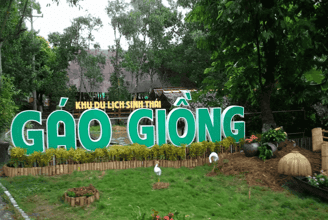
Gao Giong eco-tourism area
Gao Giong tourist area is an ideal place for you to take a sightseeing tour and enjoy garden life in the West. This is one of the few ecological areas that still retains almost all the wild characteristics of the Southern region and is known as "miniature Dong Thap Muoi". Gao Giong eco-tourism area is located in hamlet 6, Gao Giong commune, Cao Lanh district, Dong Thap province, only about 17 km from Cao Lanh city center. From Cao Lanh city, follow the route towards Tan Nghia commune, then continue to Gao Giong commune, you will see a sign leading to Gao Giong tourist area. Previously, Gao Giong was a deserted land, heavily contaminated with alum, with only a few species of flora and fauna living. But thanks to the investment and renovation process, Gao Giong has developed into a familiar resort destination for tourists from all over. The scenery here is still wild and quiet, very suitable for visitors to immerse themselves in nature and enjoy fresh air. The ideal time to travel to Gao Giong is from September to November when the West is in flood season. During the flood season, the water covers the fields, turning Gao Giong into an oasis amid the vast sky and water. The yellow of the Sesbania flower, the purple of the water lily mixed with the pink of the lotus petals, and the lush green of the Melaleuca forest emerge. In the fields, white storks diligently search for food, creating a breathtaking scene. The lotus fields - where thousands of red comb herrings gather here to dance and bustle all day long. On the herb feeding grounds, thousands of bold birds with red combs on their blue feathers leisurely pluck fresh stems. Sometimes they crow with beautiful dances. If you want to visit the bird garden, visitors can go on small boats down the green canal with village girls in Southern-style Ba Ba dresses or ride bicycles around the fields. But tourists often prefer to visit by waterway so that they can weave through the canals to admire the scenery, enjoy the feeling of floating on the water, weaving through each cajuput forest, listening to the welcoming sounds of birds singing. … Those who have been to Gao Giong tourist area have the overwhelming feeling of being lost in the land of birds. This is home to 15 bird species and hundreds of aquatic species. The birds pose gracefully, spread their wings and then land quickly, so visitors have to quickly take pictures to capture those beautiful moments. Not only that, Gao Giong is also covered by the vast green of thousands of hectares of forest with all the typical tree species of flooded areas such as: cajuput, gao, sesbania, reeds, wild rice, etc. You will feel excited when you see with your own eyes precious birds such as the copper-billed herring, teal, gong, mallard, heron... living and nesting. Most numerous is still a flock of tens of thousands of white storks, making this Melaleuca forest considered the largest stork garden today in the Dong Thap Muoi region. At dawn or dusk, Gao Giong Melaleuca forest is lively and bustling with the sounds of birds calling and flocks of white storks returning to their nests from all four directions. After hours of canoeing, you can climb up to the 18m high observation deck to see the surrounding panorama and admire the vast green of cajuput, rice, energy forests... Spread your arms wide, breathe the fresh air. peaceful, and you will feel like you are holding a beautiful natural picture in your heart, an indescribable feeling of peace. In Gao Giong, there are also many folk games that help Dong Thap tourists understand more about a part of Southern cultural life. If you come here in a group or group of friends, don't miss the opportunity to 'play hard, laugh freely' with the games. For those who like quiet, you can choose the elegant hobby of fishing to both get results and peacefully enjoy the wonderful atmosphere here. When visiting Gao Giong eco-tourism area, don't forget to go to the food court to enjoy all the Western specialties. Typical dishes include imitation worm leaves dipped in tamarind sauce, grilled mice, flexible fish cooked in sour sesban soup, grilled snakehead fish with lotus buds, cool vegetables, braised fish sauce dipped in coconut vegetables, steamed snails with pepper, pancakes... Especially The rice dish wrapped in lotus leaves is delicious and rich in the flavor of the lotus lagoon. Sitting in the middle of the lagoon having lunch is an extremely enjoyable experience. There is nothing better than delicious food, cool breeze, and the faint scent of lotus. The dishes will become a little more flavorful with a glass of sticky rice wine mixed with cajuput honey. If you have the opportunity to travel to Dong Thap, do not miss a visit to the Gao Giong eco-tourism area, this "green oasis" will give you typical experiences of the southern region of the river and downstream areas. will take you on a tour through the Melaleuca forest, relaxing with the sound of birds chirping or delicious garden dishes will be things you will never forget about this wonderful tourist area.
Dong Thap
7973 view
From January to December
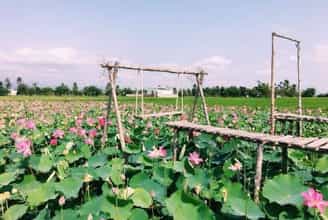
Dong Sen Thap Muoi ecological area
When mentioning Dong Thap, people immediately remember the poem "Thap Muoi is the most beautiful lotus". Pink lotus flowers with yellow pistils, raised sepals and lush green leaves create a strangely peaceful scene. Among the lotus fields in Dong Thap, the most prominent is Thap Muoi Lotus Field in My Hoa commune, Thap Muoi district, Dong Thap province. Coming to Dong Sen Thap Muoi tourist area, watching lotus and enjoying Western river specialties is a wonderful and exciting experience for visitors. Thap Muoi lotus field, about 35 km from Cao Lanh city, about 150 km from Ho Chi Minh City. The road to this place is also very convenient, without many crowded vehicles often found in tourist areas. If you come here from Ho Chi Minh City, you can go towards An My town, cross My An bridge and turn left. With an area of nearly 20 hectares, no crowded traffic, no dust, no jostling or noise often found in tourist destinations, Thap Muoi lotus field is strangely peaceful and close! With a large area, when coming to Thap Muoi lotus field, visitors will have private space without having to jostle or compete to see the lotus. Cool green lotus fields mixed with pink lotus flowers gently swaying in the wind captivate visitors. Traveling to Dong Thap in any season is beautiful and the air is fresh. However, Dong Sen Thap Muoi is most beautiful in the summer, when the lotuses are in full bloom, one flower squeezing another flower to reach the sun. Dong Thap Muoi lotus begins to bloom in the morning. The lotus flower is white at first, then turns pink at noon. At around 3:00 p.m., the lotus turns dark pink, then turns red as the sun sets. The next day, the lotus continues to bloom and change color in this cycle for 3 days, then turns dark purple and fades. As this flower fades, another flower grows and blooms, this is something only the Thap Muoi lotus can do. Visitors can also walk around to admire the lotus, breathe in the scent of pink lotus... or can transform into village girls or garden boys when returning to the lotus field. The tourist area also has a page rental service. Dressing in ao dai, ao dai... saves beautiful moments beside the lotus petals with friends and relatives. This is also an ideal location for couples choosing to take wedding photos. Visitors can take a canoe to move deep inside, admiring the countryside and feeling the closeness and peace of nature. Inhale the fresh, cool air of the morning, gently touch each leaf, each flower, gently stroke the cool water with your hand. The boat drifts slowly and takes you inside. As you go, you can admire the scenery on both sides of the river and experience a day of being a "real" farmer by leaning on the boat to pick lotus and fish. To create a space to stop and rest for tourists, people built leaf huts and in these leaf huts, people can enjoy local specialties, in which of course the presence of tourists is indispensable. lotus. lotus. Grilled snakehead fish rolled in young lotus leaves, chicken salad with lotus roots, lotus sticky rice, lotus sweet soup... Especially, when coming to the lotus field during the flood season, visitors can also eat flexible fish, sesbania flowers, grilled field mice, roasted mice. ...All are prepared according to a very unique method of the people here, so they have a very unique flavor that cannot be found anywhere else. The special dish here is snakehead fish grilled with lotus leaves and served with young lotus leaves. Young lotus leaves are a clean vegetable, grown in clean, unpolluted water. The distinguishing characteristic is that the lotus leaf just rises above the water's surface, with the two edges of the leaf curled into the middle. Grilled snakehead fish with old lotus leaves because the fish is too thick and takes too long to burn, so people often roll many layers of lotus leaves when grilling. Grilled snakehead fish is served with raw vegetables, vermicelli and tamarind fish sauce. It's still a plate of raw vegetables, bananas, and sour star fruit, but the special thing is that this dish has young lotus leaves to roll with the fish. Young lotus leaves have a sweet taste and are rolled together with grilled snakehead fish, vermicelli, bananas, and star fruit dipped in tamarind fish sauce. The flavor bursts in the mouth, creating a unique and delicious taste that is typical of the Dong Thap Muoi region.
Dong Thap
8030 view
From January to December
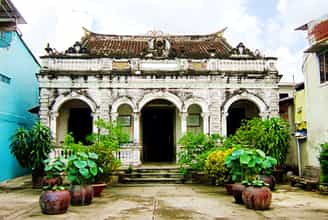
Huynh Thuy Le ancient house
For those who love nostalgia and want to relive the prosperous and wealthy period of the most luxurious family in Sa Dec at that time, the ancient house of Huynh Thuy Le is definitely an ideal place. Huynh Thuy Le ancient house is an ancient house with an architectural combination of the two most unique East and West architectural styles in the Southern region. This is the residence of Mr. Huynh Thuy Le, the male protagonist in the novel "The Lover". The house became famous around the world when the autobiography of female writer Marguerite Duras was turned into a movie of the same name (L'Amant) in 1991. Everything here seems to have been frozen in time, dyed even by time. An ancient, quiet color but still exudes elegance and sophistication. Huynh Thuy Le ancient house is located at 255A, Nguyen Hue Street, Ward 2, right in the center of Sa Dec city, Dong Thap province, on the banks of the romantic Tien River. This house is known to everyone as Huynh Thuy Le Ancient House, named after the late owner, Mr. Huynh Thuy Le, a wealthy Chinese-Vietnamese in the early 20th century. The ancient house was built in 1895 by Mr. Huynh Cam Thuan (father of Mr. Huynh Thuy Le), a Chinese businessman (Fujian, China) who was famous and wealthy at one time in Sa Dec, in the middle of the shopping district. bustling location located along the Sa Dec river. Initially, this was a traditional three-room house of the Southwest region, 258 m2 wide with the main materials being precious wood, and a boat-shaped roof covered with yin and yang tiles. In 1917, the owner restored the house with solid bricks covering the wooden frame inside. Therefore, on the outside it looks like a French-style villa, but inside, you see an architectural style with bold Chinese colors. The roof has the shape of a boat from the Western region, while the arches are curved in Roman style, carved with reliefs of flowers, plants, and birds of the 17th century. Western architecture is clearly shown in this part. The house's facade, ceiling, window frames... are all decorated with Renaissance-style reliefs. Curved arch according to Roman architecture. The Eastern architecture is seen through very sharp carved lines and gilded lacquer like images of birds, fruit trees and flowers such as bamboo, apricot, chrysanthemum, peach... The outside of the ancient house has ants. Western architecture mixed with Chinese style. Many types of house building materials such as bricks and glass are imported from France. The 30x40cm floor tiles were imported from France in 1917. The back of the tiles clearly states the place and year of manufacture. In particular, the tile floor in the middle of the house is sunken because Mr. Huynh Cam Thuan believes that "water flows to a low place." , money will flow to your house. The middle of the house is the altar to worship Quan Cong, a traditional belief that shows the strength and prosperity in the homeowner's life. The walls and walls are made of precious wood, painted with gold, and elaborately carved, showing the nobility of wealthy families in the past. The architecture in the house is also decorated according to the four sacred feng shui style, but it is Long - Lan - Bat - Phung, not Long - Lan - Quy - Phung as traditional. The image of the bat replacing the turtle in the four sacred animals is considered a symbolic example of the cultural exchange process of the Chinese people when they came to the Western river region. After many ups and downs of history, up to now, the house is still preserved quite intact and has become a symbol of a unique architecture hundreds of years ago. Guests who want to stay overnight can book a room in advance. Each room sleeps 2 people and serves breakfast and lunch. The ancient house has been known to many people since the novel L'Amant by French writer Margueritte Duras was made into the movie The Lover by director Jean-Jacques Annaud with the acting of actor Luong Gia Huy and actress Jane March. . The details in the movie have brought tears to many people's eyes when watching. Huynh Thuy Le is the main character in this famous novel and this French female writer is also Mr. Huynh Thuy Le's lover. The two met by chance on the My Thuan ferry in 1929, when she was just under 16 years old and he was 32 years old. They had a beautiful love relationship with each other. However, they faced strong opposition from Mr. Huynh Cam Thuan. When his father found out, Mr. Le knelt down and begged his father to let him live with the girl for whom he felt a strong love that could only come once in a lifetime. But because of the cultural differences between East and West and the lack of family registration between the two families, the father did not agree to let the two get together. The relationship only lasted 18 months. The day Marguerite boarded the train to return to France, from the side of the train she saw in the distance the familiar black luxury car of her Chinese lover quietly coming to say goodbye. Not long after that, he obeyed his father and married a young Chinese woman. Many years later, after many broken lives, he had the opportunity to go to Paris with his wife. He called her to propose just to hear her voice. “Then he told her that just like before, he still loved her, he could not stop loving her, he could never stop loving her, he loved her until death” (excerpt novel The Lover). After Mr. Huynh Thuy Le passed away, his children all settled abroad. The house of Mr. Huynh Thuy Le's family was requisitioned by the State as the headquarters of the Economic Police Team of Sa Dec Town Police. By 2007, Dong Thap tourism industry officially "opened" to exploit the ancient house, serving domestic and foreign visitors. In 2008, the ancient house was certified as a provincial relic, and was recognized as a national relic in 2009.
Dong Thap
7402 view
From January to December
 AI Travelviet