Relic point Vietnam
Việt Nam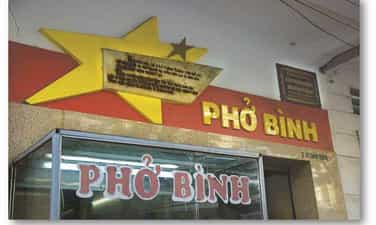
The headquarters of the 6th zone in the 1968 trade campaign
The Military Headquarters - Division 6 (Special Zone of Saigon - Gia Dinh) decided to use a noodle shop to be the headquarters of the soldiers and officials to convey orders in the general offensive and rebellion of the 1968 Xuan Than. The monument is Pho Binh shop, No. 7 Yen Do Street (now Ly Chinh Thang Street), Ward 8, District 3, Ho Chi Minh City. It is a townhouse: 1 ground, 3 floors and 1 terrace. The ground floor has an area: 4m x 19m after, the middle has a stone staircase. The ground floor is used as a noodle shop, according to the design of the kitchen to occupy half of the front corridor. Inside the dining table layout, leaving the path in the middle. Isolate kitchen, toilet, lake with diners with stairs leading to the floor 1,2,3. Each floor is divided into 2 rooms: the front room (with an area of 3m x 3.5m) and the rear room (with an area of 3m x 4m). An iron ladder on the terrace. Each floor has three front rows in size 1.2m x 4m shielding outside with bamboo flute. Pho shop is located in the residential center, spacious, customers eat relatively crowded, so the special unit used as a basis for communication and receiving documents. The three soldiers in the Special Squad were also arranged as a maid at the noodle shop. Since 1967, there have been many officials and soldiers to reside at the business noodle shop or meeting for a few days. About a month before the Tet holiday, Mr. Hai Tri went to the noodle shop to instruct Mr. Ngo Toai to urgently reserve food for about 100 users in 1 month. In compliance with the orders, Mr. Ngo Toai stores some food and food (dry food, box, chicken, raw duck ...) on the night of the thirty Tet Mau Than (in 1968), commanding the specialized units of subdivision 6 gathered at home No. 7 Yen Do Street preparing to accept the task: Mr. Tu Chu (Nguyen Duc Hung) was appointed to hold the position of Deputy Commander and Chief of Staff of Zone 6; Hai Tri (Nguyen Van Tri) - Politician of J9 cluster (A30, a battle guarantee unit); Ba Black (Ngo Thanh Van) - captain A30, captain of the 11th Special Forces in the first phase of the campaign (the unit fighting the American Embassy); Ba Phong (Do Tan Phong) - Commander of the 679 Ranger Cluster (in the first phase of the campaign); ... and officers and soldiers on duty to transport weapons, information - cipher and military medical. On the first day of the Lunar New Year (January 30, 1968), Mr. Ba Thang (Vo Van Thanh) - Political Commissar of Zone 6 to the Headquarters to direct the units. On the night of the first day of the Lunar New Year, on the third floor of the house, officials, soldiers, establishments, the commanding committee of the clusters, the special teams, the service units have gathered enough, waiting for the order to attack. At 23:30, on behalf of the Command of Division 6, Mr. Ba Thang read the signal of the Central Committee of the National Front Liberation of the South, disseminating and issuing commands for the clusters of the task of shocking, attacking the head targets of the American Empire and the minions government in Saigon. On the morning of the two New Year of the Mau Than, realizing that there were signs of the facility that was revealed, Mr. Ba Thang ordered the dispersion of force here, and the legitimate comrades continued to stay. On the morning of the third day of the Lunar New Year, when the commanders left, the Saigon army surrounded the Pho Binh shop, arrested the couple comrade Ngo Toai, daughter, son -in -law and 13 officials and soldiers to stay at the requirements of the mission. Mr. Ngo Toai was very brutally tortured by the enemy for 20 days and still did not confess anything. He was exiled to Con Dao and kept his loyalty to the revolution until he was returned to prisoners after the 1973 Paris Agreement. This secret base relic of the Ranger forces is the place to issue the command to attack for the special units and the inner rebels, recording the important historical milestone of the 1968 general offensive and rebellion in Saigon - Gia Dinh. The monument is also the expression of the patriotism of the inner city and the courage and indomitable spirit of revolutionary officers and soldiers, especially the special forces in building forces and fighting. The monument has been recognized by the Ministry of Culture as a historical monument through Decision No. 1288 - Culture/Decision on November 16, 1988. Source of the website of District 3, Ho Chi Minh City.
Ho Chi Minh City
3664 view
Rating : National relics.
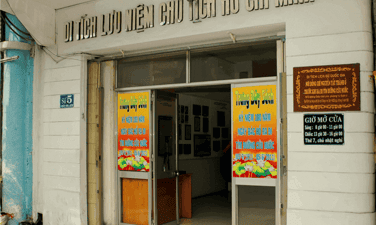
Historical relics where comrade Nguyen Tat Thanh was before leaving to find a way to save the country
In 1910, Nguyen Tat Thanh left Duc Thanh - Phan Thiet school to Saigon (September 19, 1910). The person who was officer of Lien Thanh Thuong Quan was Mr. Truong Gia Mo (close friend of Mr. Nguyen Sinh Huy, President of President Ho Chi Minh) and Mr. Ho Ta Bang brought back to stay at home No. 5 Chau Van Liem Street. This is one of the facilities of Lien Thanh Thuong Quan, a very prestigious revolutionary organization in Saigon to live and prepare for going to find a way to save the country. From this house, Nguyen Tat Thanh has just taught and went to work and apprenticeship at the école des Mécaniciens schoolmaker school, sometimes selling newspapers in the Saigon Port Port area to make a living and learn the life of workers, working people as well as ships in and out of Saigon port. During this time, Nguyen Tat Thanh knew some Vietnamese people working at Nam Sao (five -star shipping lines often running Saigon - Da Nang, Colombo and some French ports) such as Nguyen Van Lobster, Bui Van Vien ... It is known that the company is recruiting "compensation", Nguyen Tat Thanh and some Vietnamese people who have come to work and be collected by the company. On June 4, 1911, Nguyen Tat Thanh, called Van Ba (by Mr. Truong Gia Mo, Ho Ta Bang and Tran Le Chat, and changed his name to Van Ba before coming to Saigon), he left Lien Thanh Thuong campus in the French ship called Amiral Latouche Treville. On June 5, 1911, the ship left Nha Rong - Saigon port to bring Van Ba (Nguyen Tat Thanh) began to leave his homeland to find a way to save the country. After many years of traveling abroad, he came to Marxism -Leninism and has found the way to save the nation. He founded the Communist Party of Vietnam and the leader of the Vietnam People's Revolution in August 1945 successfully, establishing the Democratic Republic of Vietnam. Throughout his life, he was for the country, for the people. The thought and morality of the person who always shining the way for the Vietnamese people to firmly step on the path of struggle for national independence and build socialism - communism. The house No. 5 Chau Van Liem street has historical value - a place that marks a very important phase in the way to find the way to save the country of President Ho Chi Minh. Here, there is a display of images of Lien Thanh and Saigon images in the 1910-1911 period. With that historical significance, this house was ranked by the Ministry of Culture as a national historical monument under Decision No. 1288-Cultivation/Decision on November 16, 1988. Source of Ho Chi Minh City websites.
Ho Chi Minh City
3458 view
Rating : National relics.

Binh Gia battlefield historical relics
In the early 1960s of the 20th century, Binh Gia was an important area for the enemy on military, political and economic. Around Binh Gia, the enemy arranged a powerful military force, equipped with modern weapons, under the direct guidance of American advisers. Facing this situation, to create a new position and force for the Southern Revolution, on December 2, 1964, we decided to open a Binh Gia campaign. The force participating in our Binh Gia campaign includes: 2 infantry regiments (761 and 762), 4 Battalions of Battle Battalions (mortar 81, DKZ 75, Lien Lien 12,7) of the Regional Command; 2 battalions (D800 and D500) of Military Region 7; Company 445 of Ba Ria province; 1 battalion (D186) of Military Region 6 and local force. Weapons equipped for forces are mainly old weapons and enemy weapons in previous battles. Although the forces participated in the thin campaign, equipped with inadequate and rudimentary weapons, under the insight of the Party, the Central Department, the Regional Command and especially the heroic fighting spirit of officials, soldiers and people of all classes, we have won a resounding victory. At the end of the Binh Gia campaign (March 7, 1965), we destroyed the 4th Marines Battalion 4, the 33rd Ranger Battalion and the M113 Mechanical Motor Car Division; Heavy damage to 3 other battalions and many companies; shot down and destroy 56 aircraft, 45 military vehicles; destroying and injuring more than 1,700 enemy troops; Collect more than 1,000 guns of all kinds and nearly 100 information machines. Through the campaign, we broke the ball, destroyed many "strategic hamlets", basically liberating the rural areas of Chau Duc, Long Dat and Xuyen Moc districts and part of Xuan Loc district. As a result, our resistance base is expanded from Chau Pha, Black Translation connected to the D. War War Zone D. The victory of Binh Gia has great historical significance for the Southern Revolution. This victory proved the correctness of the Party's revolutionary way; demonstrate the maturity of our army about tactics, campaigns and art guiding art; Creating a turning point to compare forces on the battlefield is beneficial for us, detrimental to the enemy. Besides, the victory of Binh Gia also has great political significance at home and abroad. It increased the belief of the victory of the entire people and our entire army, from which to continue to overcome all hardships, rise to the final victory in the resistance war against the US on April 30, 1975. In order to mark the resounding feat in the anti -American resistance war on the land of Ba Ria - Vung Tau, the leaders and people of the province have built a monument to the Binh Gia Victory Radio close to Highway 56, Ngai Giao town. The monument campus is 20,000m2 wide, including flower gardens, monumental areas, temples and auxiliary works ... 26m high body body, light gray, placed on a 3m high granite pedestal, creating a strong feeling. With three hands clenched in Doc Le, above are three bayonets to rise to the blue sky symbolizing the three troops and three armor in the victory of Binh Gia. The two sides of the monument are two reliefs (7m long, 3m high) made from thousands of Bat Trang ceramic pieces (Hanoi) showing the combat coordination and victory in the Binh Gia campaign. The monument has been recognized by the Ministry of Culture and Information as a national historical monument under Decision No. 2754-Decision /Minister, October 15, 1994. Source of electronic portal of Chau Duc district, Ba Ria - Vung Tau province.
Ho Chi Minh City
3538 view
Rating : National relics.

Historical relics of Nui Dinh base area
Nui Dinh base area is located in 3 communes: Hoi Bai, Long Huong and Chau Pha in Chau Thanh district, Ba Ria Vung Tau province. In the reign of King Gia Long, Nui Dinh belonging to Phuoc An, Phu Long Phuoc, Bien Hoa town. During the life of Minh Mang, Dinh mountain belonging to Phuoc Tuy Phu, Bien Hoa town., Before 1975, Phuoc Tuy province, then belongs to Dong Nai province. The Dinh mountain range is located northeast of Ba Ria Vung Tau province, an important mountain range in the province with many high mountains: 193m high mountain, 491m high mountain, bao Quan mountain 504m, Da Dau mountain 436m. Dinh Mountain is made of clear granite, fine -colored or black particles are very valuable in construction. The terrain of Nui Dinh has an important strategic location, from here it can cover and project the entire eastern area of Saigon, the north is Bien Hoa city 97 km away from the east, the east is Minh Dam base (Long Dat), the south is the East Sea, the West is 22 km from Vung Tau city, the river and the river and Thi Vai river. With a rugged and convenient terrain, Dinh Mountain was chosen by Ba Ria and Chau Duc district Party Committee BRVT as a revolutionary base in the two anti -French and anti -American periods. From the base, it is possible to observe the gathering force into the center of the brain and threaten the enemy. In contrast, the enemy easily focuses on fighting at any time in our forces on the base. Based on the Revolution of Nui Dinh (National Highway 51, in Ba Ria town and Tan Thanh district), the unique revolutionary historical monument of the province, stretching on a large and complex terrain area in the two resistance wars against France and the United States of the province. The current situation of relics has not changed much. Landscape and forest trees are well protected and developed. The caves of natural stone cliffs, the old terrain used as a base remain intact, no abuse by human factors. The monument includes the locations: Caes of Pumpkin, Cave To, Mai cave, Ong Trong cave, Bung Lung base, Doi Bat cave, Dieu Linh pagoda base. With that great historical value, the Nui Dinh base area was ranked by the Ministry of Culture and Information according to Decision No. 2015 Culture/Decision, December 16, 1993 of the Ministry of Culture and Information. Source of electronic portal in Ba Ria - Vung Tau province.
Ho Chi Minh City
3557 view
Rating : National relics.

Tinh Xa Nirvana relics
The pagoda is located on a small mountainside, facing the sea. This is one of the most beautiful temples in Vung Tau with sharp architectural lines. On December 14, 1989, the pagoda was recognized by the Ministry of Culture and Information to rank the national historical monument under Decision 1987. In front of the pagoda, there was a 21m high base, with 42 brains symbolizing the first 42 pages of Buddhist scriptures that were handed down in Vietnam since the 2nd century, the pillar was cast concrete, under the big, smaller, surrounded by yellow yellow ceramic tiles, there were three branches of lotus buds spread out in three directions as a unique feature of Tinh Xa Nirvana. The two sides of the pagoda gate placed two statues of "good god" and "evil". The main area of worshiping the statue of "Buddha lying" pink brown is elaborately polished, cleverly lying on the west, 12m long and is placed on a altar of 2.5m high. The outside of the altar has the image of the disciples of Shakyamuni Buddha witnessing when he entered the electricity. Above the head and back of the Buddha Nhat Nirvana is the green natural scenery with 2 Long Tho trees, adorn the dude, the cranes spread wide wings hidden in the clouds, the lion, the tiger, the monkey admiring the Buddha to naturally naturalize Nirvana. All are embossed, elaborately carved with harmonious colors, creating a scenery that is both solemn and pure Buddha door. In front of the main hall, there is a censer of Tu Linh (Long, Ly, Quy, Phung) of large size, cleverly decorated elaborately as the treasure of the temple. Behind the main hall is the "boy" of monks. In the room, there are 34 photos that describe the Buddha's life from birth to the disciples who share their relics. In the room, there are many other paintings such as Luc Tran Maitreya paintings ... The 3rd floor yard has many bonsai, but especially the Bat Nha boat, the image of a large, stylized dragon, 12m long, surrounded by slender enamel, colored enamel. The boat symbolizes the rescue of people out of the misery to eternity. Prominent on this yard is a square bell floor, four curved roofs, in the tower there is a large bell called Dai Hong Chung, 2.8m high, 3.8m perimeter, weighing up to 3.5 tons. This is the largest, heaviest and the best echo of the existing temple bells in Vung Tau. Legend has it that those who come here to pray, pray to ask for peace if the paper can be applied to this bell, they will be satisfied. Source of electronic portal in Ba Ria - Vung Tau province.
Ho Chi Minh City
3052 view
Rating : National relics.

Minh Dam Historical Site
Located in the southeast of Dat Do district, Minh Dam base area (also known as Minh Dam mountain) was also known as Chau Long - Chau Vien. Minh Dam Mountain is 8km long and 355m long, with 3 sides of the sea and many large and small cave caves hiding under the forests, cliffs, and fresh water streams all year round. Minh Dam Mountain was derived from the grafting names of two revolutionary soldiers who were sacrificed while being ambushed at the foot of the mountain - Bui Cong Minh and Mac Thanh Dam. In 1993, this place was recognized by the Ministry of Culture and Information (the predecessor of the Ministry of Culture, Sports and Tourism) as a national historical monument and became a tourist destination for the ideal source for tourists. Minh Dam Mountain is a place to recognize the gratitude of national heroes during the resistance war against the French and the US. Based on revolutionary activities in Minh Dam mountain at that time, called "Minh Dam War". Now after being restored and rebuilt into a tourist attraction called "Minh Dam Monuments". Minh Dam mountain base has 4 main areas: Vien Pagoda, Gieng brick pagoda, Chau Vien area and split stone area are connected by the paved road through the forest. Here, the ancient traces being preserved are wartime memorabilia such as tables and chairs, kitchen, wooden bridge and some rudimentary items that help visitors can better understand the life of our army as a way to create fire from stone, cook rice from cork tubes ... Coming to Minh Dam Mountain, in addition to learning about history, you also visit many interesting places, set foot in the old stone cave that used to be the workplace and activities of officials and people of Ba Ria - Vung Tau people such as the Party Committee of the District Party Committee, Military Medicine, Army ... During the resistance war against France (1946 - 1954), Minh Dam mountain range was the base of the local revolutionary force. Due to complicated mountain terrain, difficult to reach, our troops and people have chosen this as a battle for fighting to protect the attacks on the French. During this time, many big battles took place here, and the Viet Minh army has made many resounding feats. During the anti -American resistance war (1955 - 1975), Minh Dam Mountain continued to become an important military base of the revolutionary force. In addition, Minh Dam is also a place to commemorate the soldiers who sacrificed for the national career. Source of electronic portal in Ba Ria - Vung Tau province.
Ho Chi Minh City
3074 view
Rating : National relics.

Ba Ria Round House relics
Ba Ria round house is one of the national historical sites with many historical meanings, which is a place to mark many important events in the revolution for the independence of the people of Ba Ria - Vung Tau. Called Chatoau Deau, the Ba Ria round house is a water tower but like a watch tower that can observe many directions from the provinces and cities to Ba Ria - Vung Tau. Ba Ria round house has a total height of about 20m, the round foot of the round house is a 4m high octagonal house, 6m next to, with 8 vertical pillars of reinforced concrete with fixed crossbars to support the water tank above. Water tank has a diameter of more than 7m, its roof is covered with corrugated iron. Leading water on the tank has 2 pipes up and down arranged between the tank pillars and an iron ladder for convenient up and down. Under the water tank in the past, there was also installation of alarm speakers so far and now there is also a loudspeaker of Chau Thanh district. After the war, the Ba Ria round house was repaired and now used as the Ba Ria Youth Club. Perhaps in historical sites, Ba Ria round house is a quite modest highlight but has had an important position and role in the history of the locality. Up to now, for many people, each time passing through the round house, it is a memorable journey in history there are many events that have taken place. The round house of Ba Ria as the symbol of a memory of many people about a time of suffering, tears but also proud of the courage, sacrifice as well as strong love for the country. Ba Ria round house was recognized by the Ministry of Culture and Information as a national cultural and historical monument on June 5, 1987. Source of electronic portal in Ba Ria - Vung Tau province.
Ho Chi Minh City
3139 view
Rating : National relics.

Long Son big house relics
The Long Son big house is the place to worship Confucius, and the Holy Dynasty (worshiping Confucius). The main hall is the first area to be built, followed by Tien Lau, Buddha Floor, Cam Lau, Guest House, Flower Garden and Tam Quan Gate were built in turn. After the worship area was completed, he built a long floor, made a resting place for people to visit, and continued to build 5 streets for residents to start a business, a national language school and many other practical works such as markets, rice grinding factories, rice storage, lampshade, carpentry houses, kitchen and many freshwater reservoirs ... All these buildings were in a large area. After his death, this monument was also known as Mr. Tran temple. The Long Son big house is built with a style of blending folk beliefs (heaven, earth) with Confucianism, old spear of Confucius. Most of the main items in the big house are made of nacre wood and begate. There are also many valuable antique items such as church cabinets, incense burner sets and neck lamps, many diaphragm, churches, these items are collected and brought back to archives after the profitable shipments from Saigon. Confucius worship does not require too many incense, lamps, menstruation, shelves, but mainly the teachings and books of Taoism are meant to open knowledge and advise people. Visitors here will be able to visit completely free, even enjoy cassava, bare cakes, but there is a note that tourists should take pictures in worshiping places, main halls. When Mr. Tran died, in addition to the Taoist of Confucius, there was also the formation of Mr. Tran's belief, which mixed many different religions, but the purpose still directed people to come to Chan - Thien - My. His descendants still preserve his customs and practices, still wearing Ba Ba clothes, walking barefoot, neat bun, to maintain the image that Mr. Tran left, from living to even the Southern personality. If you have the opportunity to visit Long Son Island, remember to visit the Long Son big house, to visit the big house and learn about Mr. Tran's religion. With unique cultural values, Long Son Great House relic is ranked by the Ministry of Culture and Information Ranking of the National Architectural Architecture Monuments under Decision No. 1371 Culture/Decision, dated August 3, 1991 of the Ministry of Culture, Sports and Tourism. Source of electronic portal in Ba Ria - Vung Tau province.
Ho Chi Minh City
3142 view
Rating : National relics.

Monuments of the artillery battle on Tao Phung Mountain (Small Mountain)
This artillery battle also belongs to one of the three battles, forming the Vung Tau defense line of the French built at the same time as the Battle of the Great Mountain Artillery. The battle of small mountain artillery has the function of closing money and is arranged into three clusters in an arc cover both the East Sea and South Vung Tau. In order to build a artillery battle, it could be said that at that time the French colonialists arrested the people who were miserable to use the power of the rocks, breaking the mountains to make roads, digging trenches, building a fortune tunnel made by crafts, rudimentary vehicles have claimed so much life, sweat, blood and blood of our people. With that value, the ancient artillery battlefield on Tao Phung Mountain (Small Mountain) was issued by the Ministry of Culture and Information under Decision No. 57 Tánh/Decision, on January 18, 1993 of the Ministry of Culture and Information. Vung Tau artillery battle is the largest collection of ancient weapons in Indochina, this is a historical evidence of the extraordinary strength of our people. From the battlefield of the large mountain artillery, visitors follow the beach towards the front beach, to the right lighthouse before meeting the first section of the road or follow the entrance to the jade pure and at the foot of the statue + The first cluster is right at the foot of the statue of Christ, consisting of 3 gears at an average height of 136m above sea level and placed in a fortune dug deep under the ground. Has a diameter of 10.5m, these three firecrackers have the same design, structure, and the size of the bullet is 240mm, the barrel is 12.33mm long, the body of the artillery all records signs, the size of the gun barrel, the design and the five production, the weight of the artillery and the division of the team. + The second cluster (located in the lighthouse), including 5 guns, an average height of 91 m above sea level. These five firecrackers have the same design, structure and bullet size of 300mm. On the body of the artillery, all the necessary parameters. . This cluster is located about 300m north of the first artillery cluster. Currently, there are 04ks left, one of the guns left by guns was transferred to display in the collection of antique guns at Bach Dinh yard. +The second cluster (the jade pure), there are 3 people, at an average height of about 90m above sea level. The three firecrackers of this cluster are equal to 140mm. On the body of the artillery, all the necessary parameters. Currently, these 3 firecrackers are severely damaged, the necessary parameters. Currently, these 3 firecrackers are severely damaged, the parameters are abrasive. The three firecrackers are placed separately in three fortifications, equidistant 27m away and connected to each other by the trench and shelter system. Source of electronic portal in Ba Ria - Vung Tau province.
Ho Chi Minh City
3071 view
Rating : National relics.

Phuoc Lam Pagoda
This is one of the ancient temples in Vung Tau city, dating back to nearly 200 years + The pagoda was rated the national monument in 1992 and was considered one of the local Buddhist centers, often with Buddhist monks and nuns in the country and internationally (mainly Indians) to enjoy and celebrate. On the big holidays such as the Lunar New Year, the full moon in January, the Buddha's Birthday, the Vu Lan ceremony ... the number of Buddhist monks and nuns to the temple is very large sometimes there is no place left. Therefore, the pagoda is planning to renovate, upgrade and expand the main hall but still preserve the old architectural features to help Buddhist monks and nuns are wholeheartedly towards the religion, and a destination to attract pilgrims and spiritual calendars. The pagoda has the four-pillar architecture of the ancient temple in the South with a rich Buddha image system: next to the lotus lake is the male statue of Nam Hai high, the main hall has the statues of DAD, Tam Ton, Shakyamuni, A Nam, Ca Lettuce, Buddha Entering Nirvana, Wooden Standard Statue, Ong Giam Bang Bang Bang ... Especially, the pagoda also preserves the statue of Vish Nu stone. The god of conservation is often in the South Central Cham towers. Source of electronic portal in Ba Ria - Vung Tau province.
Ho Chi Minh City
2881 view
Rating : National relics.