Relic point Vietnam
Việt Nam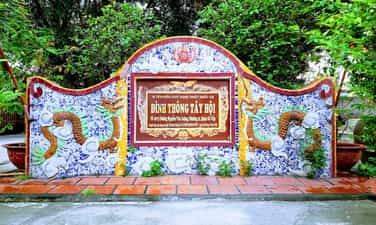
Communal house
Than Than Tay Hoi communal house (Ward 11, Go Vap District, Ho Chi Minh City) has long been famous as the oldest communal house not only in Saigon but also the Southern region. Dinh Thong Tay Hoi was built around 1698, up to now more than 300 years old. The temple worships the customs of the Vietnamese god. The main god worshiped in the communal house, Dong Chinh Vuong and Duc Thanh King, the prince of the son of Ly Thai To. The Tay Hoi communal house, before 1944, was named Hanh Thong Tay village, an ancient communal house in Go Vap district. The communal house was built around 1679, now known as the oldest communal house of the ancient Gia Dinh land and the whole southern land. The Tay Hoi communal house is a communal house with an ancient structure in the South of the 19th century. The communal house still preserves almost intact the structure and construction materials of the ancient communal house. The entire communal area is located on a 5,188m2 area. Due to being encroached by a residential land, there is only about 1,500m2. The communal house turned to the east. The communal house is built in the style of Tam Quan. The yard is wide, there are some trees about 10m high. The architectural ground of the communal house forms two axes in parallel with each other: a long axis (main axis) including martial arts, main hall; A short axis (auxiliary shaft) is the headquarters. This type of architectural ground is very popular for religious architectural works in the South of the 18th - 19th century. The main hall includes: 2 rules of the house coincided in the style of "coincidence of the snail". The roof of the two houses next to each other. All have 48 columns, divided into 8 rows of columns, each with 6 columns. The four columns between the highest are 4.5m; With a diameter of 30 cm (often called "quartet") is the most important and sacred place - where the altar of the gods. The column legs in the main hall are engraved with a prism in the middle. On the roof of the main hall, there is a long -bipedal image of a green ceramic, around the main hall with brick walls. The headquarters is the office of the Board of Directors, the reception place and the sacrifices, with a horizontal size of 12m, 19m long, 4.2m high; There are 56 columns, legs of green stone columns, with 3 "coincidence of the snail"; There are planks for office rooms with the warehouse. The entire communal house roofed with yin and yang tiles, wooden truss sets with wooden tiles, brick -lined base (30 cm x 30 cm). The decoration of the Tay Hoi communal house, the most unique part concentrated at the main hall. Here the trusses and truss are carved with dragon heads and apricot branches. There are 3 bags: Bao Lam in the middle touches the topic of Lan - Ly - Quy - Phung, the two sides of the two sides touch the subject of the form - hemorrhoids. The most unique carvings are the worshiping page, exquisitely carved according to the topic of Mesopotamia Long Trieu Nguyet and Lan - Ly - Quy - Phung. There are also two worship pages, "Chung Linh Luu Tu", two couplets with coconut trunks in the main hall are valuable works of art. In the relics of Dinh Thong Tay Hoi, 37 valuable artifacts. The artifacts are artistic carvings such as Bao Lam, Hoanh Phi, couplets, and worshiping pages all retain the lines and colors of the golden lipstick of ancient artifacts, not spreading on new layers of lipstick as some other common communal houses. With the value of architectural art, history and social, communal house was recognized by the Ministry of Culture and Information as a national cultural and artistic artistic monument in 1998. Source of electronic portal in Go Vap District, Ho Chi Minh City.
Ho Chi Minh City
5029 view
Rating : National relics.
Tomb of Le Van Duyet (Mr. Ba Chieu Mausoleum)
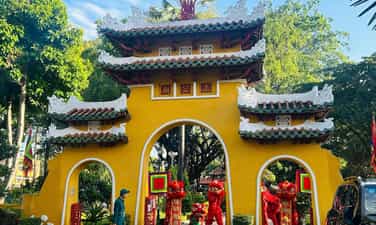
Ta Le Van Duyet was born on September 6, Giap Than year (1764), in Long Hung village, Kien Hung and Dinh Tuong. Ta Le Van Duyet is originally from Bo De village, Chuong Nghia district, Quang Ngai province. In the life of his grandfather, Le Van Hieu, who lived in Hoa Khanh village, Dinh Tuong province. In 1765, his father, Le Van Toai, took his family to live in Rach Gam, Long Hung, My Tho (now Long Hung commune, Chau Thanh district, Tien Giang province). When he was young, he lived with his parents, assistant farmers, in his spare time, he practiced martial arts with friends. He has a smart, agile, healthier person than people, prefers martial arts than literature; I love to play cockfighting and watch bumper singing. At the age of 15, Le Van Duyet soon revealed the will "born in a chaotic life, not using the empty flag of the General, copying the name in the history book is not a man". In his life, he was very lighter, intuitive, rewarding, and strictly punished, taking the people, taking the people as the root, having a sense of combining economy with national defense, expanding trade transports, making the economy both prosperous, united ethnic groups and religions, dedicated to helping people when they encounter victims, so people and unicorn countries are very respectable. There is great merit in the exploitation, expansion and development of the Southern region. In Canh Ty (1780), according to Pho Lord Nguyen Anh was recruited to be the eunuch in the family, then was made as a defender, he twice the price of Lord Nguyen and ran to Phu Quoc and to Siam. Year of Canh Than and Tan Dau (1800 - 1801): He set up many victories, especially the reclection of Qui Nhon (Binh Dinh) and won large at the gate of Thi Nai lagoon tank. In 1802, he was promoted to the title of Cong district (Hang Chanh Nhat Pham), the position of the attorney attorney to describe Binh Tay General. He was twice working as a Governor of Thanh Gia Dinh (periods 1812 - 1816 and 1820 - 1832), Ta Le Van Duyet had great merit to help An Dinh and develop the southern land, especially leaving a bold impression in the hearts of the people of the South, transmitted to life so far, the reforms of opening, economic development, taking care of people's lives and eliminating corruption. After he died, people in the area set up a temple tomb, now called Le Van Duyet Mausoleum, also known as Mr. and Mrs. Chieu's mausoleum. Every year, July 30 to August 1 of the lunar calendar is the anniversary of the anniversary of Duc Thuong to describe the army Le Van Duyet to remember the merit of the Liem official who took good care of the people's lives. Ong Mausoleum 18.501 m² on a high mound, located between four roads: Le Van Duyet, Phan Dang Luu, Trinh Hoai Duc and Vu Tung. Around the mausoleum has a 500m long wall, 1.2 m high, four gates are shown in four directions, built in 1948. The following year, the Tam Quan gate was also built. The gate has great goods floating in the Chinese character, located in the south, opening the Vu Tung street. Before 1975, this gate was once a symbol of the old Saigon-Gia Dinh area. The mausoleum is built on a main road. From the Tam Quan gate in the south through a landscape garden: The beer house where the stone stele recorded the merit of the army Mo Ta Quan and his wife, have a base and flower wall surrounding Temple With these values, on December 6, 1989, the entire Lang area was recognized by the Ministry of Culture as a national cultural and historical monument. Source of websites in Binh Thanh District, Ho Chi Minh City.
Ho Chi Minh City
5225 view
Rating : National relics.
Phu Tho Hoa Tunnels
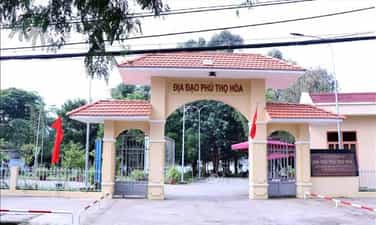
Phu Tho Hoa Tunnel is the first tunnel in the west of Saigon (built in 1947, in front of Cu Chi Tunnel), dug during the years of resistance against the French and was maintained until more than ten years of fighting the US, located between many dense garrisons of the enemy, but the military land has many defensive wars against invading troops (Luy Bang, Bich Bich, Luy Hoa, ") Ninh ”, ...) has contributed to the resounding feats during the resistance war against the foreign invaders of our army and people such as intercepting the enemy for 6 days and nights at Tham Luong Bridge (October 1945), the battle against Can Dau - Binh Long (1948), the battle of Bay Hien Bom bomb warehouse (March 29, 1948), many times at Tan Son Nhat airport (December 1949), attacked Phu Tho bombs (1952) of the enemy in the battle of destroying Phu Tho Hoa station, Pham Van Tung Station (on the night of May 31 morning on June 1, 1954), ... to support the battlefield of Dien Bien Phu, causing resonance in the country and in the world. Today, Phu Tho Hoa Tunnels are a historical monument for people and international friends to visit, learn, discover, study, study the history of resistance against the enemy and be one of the outstanding tourist destinations of Tan Phu District. Address 139 Phu Tho Hoa Street, Phu Tho Hoa Ward, Tan Phu District, Ho Chi Minh City. The first Phu Tho Hoa tunnel is just frog tunnel (just one person underground, the type of dead end tunnel is difficult to escape), then gradually improving into a 2 -compartment train tunnel and continues to develop into an inter -commune tunnel system that lasts over 10 kilometers. The tunnel has 2 floors dug deep underground 3 to 4 meters; There are 3 wide peach tunnels, to be able to sit up to 7 people or contain food and weapons; The tunnel heart is 1 meter high, 0.6 to 0.8 meters wide, nearly 700 meters long, the two sides have many corners in many different directions. Calling the train tunnel because there is 1 part of the train, there is 1 partition, in the middle has 1 hole of 0.5 meters in diameter, just one person passes through (this form is similar to each train car) and so on one after another from one hamlet to another, the layout of this partition to prevent the enemy discovers the tunnel, we go through the next tunnel and then scratch the door, and disguise it to think that this is the same way. How to dig tunnel from 2 points at the beginning, the two nests dug straight to the central point. What is especially interesting is from the two ends how to orient the right to dig to the central point without the time there is no supportive technology to support. This is the answer about his father's extremely creative way to orient the following exactly: The person behind holding the lamp at a certain distance and shining the shadow of the person sitting in front of the wall. The person sitting in front of holding a hoe, hoe into his shadow, when the ball was never straight, the stew was right and the direction. In addition, there is also a coordination to check on the surface of the soil, the people on the ears on the ground, the people below patted the tunnel so that they could hear the significance clearly. Phu Tho Hoa Tunnels are fully located in the land of the people, has been restored and embellished, has been recognized by the Ministry of Culture and Information as a "historical and cultural relic" in Decision No. 1460 -Decision/Culture on June 28, 1996 and was built, embellished, upgraded and clean as Mr. Nguyen Van Linh, General Secretary of the Central Committee of the Communist Party of Vietnam, Ho Chi Minh City Party Committee (Ho Chi Minh City Party Committee (Ho Chi Minh City Party Committee is still in Ho Chi Minh City Party Committee. To restore this monument, to educate the younger generation: “Remake all of these relics not only to praise the past, but also to pass on the spirit of patriotic solidarity, heroic fighting spirit to the generation of young people in our city, our country. Source of website of Tan Phu District, Ho Chi Minh City.
Ho Chi Minh City
4992 view
Rating : National relics.
Giac Lam Pagoda
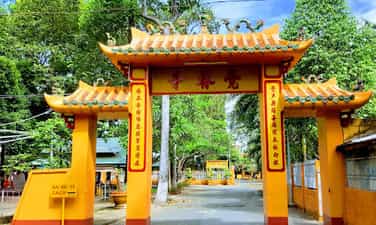
Located at 565 Lac Long Quan Street, Ward 10, Tan Binh District, Ho Chi Minh City. "The pagoda is on Cam Son mound, three miles away from the west of the west ... The tree is as tall as a forest, the flowers bloom like brocade, the morning and clouds of smoke floating around the kumquat, the small tassel terrain is interesting ..." (Trinh Hoai Duc, Gia Dinh Thanh Thong Chi). Giac Lam Pagoda is considered the ancestor of Lam Te sect, Zen master Vien Quang (36th generation) is the first abbot. The pagoda was built in 1744, since then, despite 4 major restorations in 1798 - 1804, 1900 - 1909, 1939 - 1945, 1992 - 1994, but so far the antiques system has been preserved almost intact. Buu Phap Xa Loi Seven-storey worshiping Ngoc Xa Buddha Buddha was given to the traditional Buddhist Church by Venerable Narada from Sri-Lanka, which attracts many tourists. The temple garden has 38 towers to worship monks and the pagoda tower. Walking inside, the main hall nestled humbly under the lush green tree. With the traditional architectural style of the ancient Nam Bo Pagoda, Giac Lam Pagoda consists of three horizontal houses connected to each other including the main hall, lecture hall and boys, the roof of the pagoda is less characteristic, on the top of the roof is the familiar image of "Mesopotama" in Vietnamese culture. Tile roofs, warm yellow brown walls and porcelain motifs are extremely meticulously decorated and skillful. With more than 7,000 decorative plates, Giac Lam Pagoda currently owns a record of the temple with the largest number of decorative plates in Vietnam. The main electricity is decorated with 113 ancient wooden statues of jackfruit wood, 5 bronze statues, 86 Chinese verses are carved extremely vividly, sophisticatedly, showing the admirable talent of the old artisans. The two sets of yellow wooden statues, small sets dating back to the 18th century with simple Buddha costumes, noble eyes, friendly gestures and mouth like preparing smiles, giving visitors a feeling of closeness as being in front of the simple Southern people that we can see somewhere in everyday life. System of blue, diaphragm, reliefs, couplets, tips ... are golden, sophisticated carvings, decorate more flower borders, ki ki ha with rich symbols for the Southern culture and familiar themes in Buddhism such as "Mesopotamic Trieu Nguyet", "Mesopotama Chau", plant topics, bodies belonging to: Tung Hac, Truc Tuoi, Lan Diep, Chrysanthem Bridge ... Some of the nacre snails, the drawers show the Nguyen Dynasty's art style. Over time of historical length, with unique cultural values, Giac Lam Pagoda was ranked by the Ministry of Culture (now the Ministry of Culture, Sports and Tourism) as the National Architectural Architectural Monuments under Decision No. 1288-Decision /Decision on November 16, 1988. Source of websites in Tan Binh District, Ho Chi Minh City.
Ho Chi Minh City
4754 view
Rating : National relics.
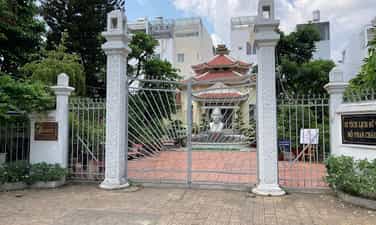
The memorial area of Phan Chau Trinh tomb
Phan Chau Trinh is the earliest social revolutionary revolutionary among the patriotic Confucianists in the early twentieth century. His revolutionary life and career have left many great lessons for today's generation. Phan Chau Trinh, Hieu, was Phan Tay Ho, born on September 9, 1872 in Tien Phuoc district, Tam Ky district, now in Phu Ninh district, Quang Nam province, in a martial arts family of Nguyen Dynasty. His body had participated in Can Vuong movement in the province. In 1892, he went to school and was famous for good study. You studied with him, Huynh Thuc Khang. In 1900, he passed a bachelor's degree. In 1901, Mr. Do Pho Bang, Dong Khoa with Dr. Ngo Duc Ke and Nguyen Sinh Sac. In 1902, he went to the backstage to complement, later became a ceremony. Shortly after Mr. Tu Quan, participating in the salvation activities. Mr. Ket intersect with many patriotic scholars such as Huynh Thuc Khang and Phan Boi Chau. He and his friends went around Vietnam to cheer on the struggle and linking the patriotic and patriotic writers. In 1905 and 1911, Phan Chau Trinh went to Japan and went to France to learn and find the way out of the French rule. Phan Chau Trinh's patriotic house was active and exciting in the Duy Tan movement at the beginning of the twentieth century, he chose the way to fight but mild, nonviolent, considered more urgent democracy and the use of law, ruling rules can sweep feudal books. In 1906, 1919 and 1920, Phan Chau Trinh three times sent a letter asking the French government to change the policy of ruling in Vietnam and Indochina. In 1908, he was captured and exiled by the French colonialists. In the middle of 1910, he was released and returned to her mind in My Tho. In April 1911, he got off the train to France, continuing to fight for the people's rights and democracy rights, and Giong's voice denounced the colonial regime and public opinion. Here, he was arrested for the second time for 10 months, from September 1914 to July 1915. On July 16, 1915, Phan Chau Trinh was declared the case and released. After that, he moved to continue his secret activities in patriotic overseas Vietnamese groups, adapting to new circumstances in France. After 14 years, on June 26, 1925, Phan Chau Trinh arrived at the Fatherland, with the goal and slogan "Khai Dan Tri, Chan Dan, post -people". "Opening people" is: abandoning the way of learning about the chapter of excerpts, opening the national language school, practical scientific knowledge, eliminating lavish customs. "Post -life" is: Economic development, gardening reclamation, establishing a trade association, producing internal goods ... He announced the policy of "first need to develop education, improve the people's qualifications of self -resilience and social and economic development" with the ultimate goal of regaining national independence. Phan Chau Trinh asked the colonial government to amend the current rule policy to help the Vietnamese people gradually approach civilized. He promoted the motto of "self -reliance", mobilized people in the same direction to awaken the people, propagating civil rights. On March 24, 1926, he died, and smiled on his mouth to greet his friend Tam Giao Huynh Thuc Khang and his words "Independence of the Department of Patriarch Nguyen Ai Quoc". The relics of Phan Chau Trinh's grave memorial area carrying the historical and cultural values of the early period of the resistance war against the French before the Communist Party of Vietnam led, contributing to adding more traditional golden revolutionary history of the Vietnamese nation. As a evidence of patriotic education, the pride of the shining revolutionary example of the ancestors for the generations we followed. His tombstone is an elaborate project, recording his identity and career drafted by Huynh Thuc Khang. In addition, the souvenir area also displays the artifacts and autographs in the revolutionary operation of the patriotic family Phan Chau Trinh. With the above valuable values, on December 12, 1994, his resting place was honored to be recognized by the State as a national cultural and historical monument. On March 24 every year, the District Party Committee, the People's Council, the People's Committee, the Fatherland Front Committee and the people of Tan Binh District gathered here solemnly to celebrate the memorial ceremony of the patriotic house, a heavy debt life with the goal of "the population, the people of the qigong, the postpartum". The incense offering ceremony commemorating the death of the patriotic family Phan Chau Trinh became an annual activity of the district. Source of websites in Tan Binh District, Ho Chi Minh City.
Ho Chi Minh City
5128 view
Rating : National relics.
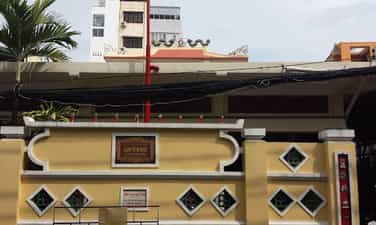
Mausoleum of Vo Di Nguyet
The high mound area from Ba Chieu to Phu Nhuan is the place where many tombs of the Nguyen Dynasty of the Nguyen Dynasty, from the Governor of Gia Dinh Le Van Duyet, Phan Tan Huynh, Deputy Governor Truong Tan Buu to generals such as Vo Tanh and Vo Di Nguy; These people are not born in Gia Dinh, but their career is associated with this land. Vo Di Nguyet with architectural style only for the Great Cong Than is divided into two areas: the temple area in front and the back of the tomb. The tomb is built of an ancient compound and is considered a typical for the art of building tombs for the gods in the South. With the architecture of the front, the back of the room, the surrounding wall and the pillars are the components that shield and protect the grave in the middle. The tomb is built in the shape of a square rectangle around the decoration lines and the image of "dragon leaves" is flying. The entire tomb area is covered with many images and decorated with many unique and vivid motifs: lotus buds, unicorns, dragon, tigers, otters; Tung Loc, Loc Binh, Hoa Dieu, Chrysanthemum ... and many poems recorded his merit and his wife. The temple has since completed the tomb, the current architecture of the temple area is a rebuilding architecture in the restoration in 1972; With the main architecture, the traditional four -pillar house and two rows of east and western houses on both sides. Inside, at the main hall, there was the altar in the middle, inside were the worshiping projects of Vo Di Nguy and his nephew, Vo Di Thai, was promoted to the title of Binh Giang Ba, but the case of Vo Di Nguyet worshiped the article engraved with the golden god. In the main hall also hung the diaphragm, the opposite of the grape word showing the work of Vo Di Nguy. Temple and Mo Vo Di Nguyet are an artistic architectural work related to historical figures of Lord Nguyen. This is a tomb architecture with a majestic and unique nature of the Nguyen Dynasty in the South. The public can see many interesting things about the life and society of people in the past in the old Gia Dinh land. Vo Di Nguyet Lang was ranked by the Ministry of Culture and Information as the National Architectural Architectural Monument under Decision No. 43-Cultivation /Decision on January 7, 1993. Source of electronic portal of Phu Nhuan district, Ho Chi Minh City.
Ho Chi Minh City
4756 view
Rating : National relics.
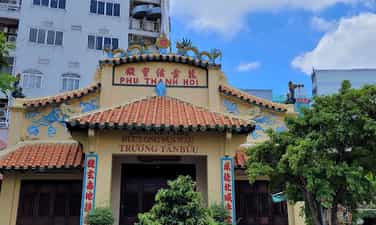
Truong Tan Buu Mausoleum
Truong Tan Buu Mausoleum is the resting place of Long Van Hau Truong Tan Buu, a general of the Nguyen Dynasty. The tomb was built in Phu Thanh hamlet, Phu Nhuan commune, Gia Dinh province, so it was also known as Phu Thanh Mausoleum, the sacrifices of the sacrifice, and looked after the mausoleum named Phu Thanh Association. Truong Tan Buu is one of the five famous generals of Gia Dinh citadel (including Nguyen Van Truong, Nguyen Van Nhan, Le Van Duyet, Nguyen Huynh Duc, Truong Tan Buu). He followed Pho Nguyen Anh since 1787, holding many responsibilities in the army, which was named Long Van Hau. In 1808, King Gia Long reduced the border, changed "Gia Dinh Tran" to "Gia Dinh Thanh" including Binh Thuan, Phien An, Bien Hoa, Dinh Tuong, Vinh Thanh, and Ha Tien. Gia Dinh Thanh's first governor was Nguyen Van Nhan, Deputy Governor, Truong Tan Buu. From here to the end of his life, he held many responsibilities: Gia Dinh Thanh Governor; Bac Thanh Governor; Deputy Governor of Gia Dinh Thanh under the Governor Le Van Duyet; Deputy generals; Trung Quan cum depicting deputy generals; Looking after the construction of the temple; Applying Chau Doc citadel; Digging Vinh Te canal ... He died in 1827, King Minh Mang gave two thousand money and five brocade trees to help work funeral. The description of Le Van Duyet personally considered the burial of Long Van to Truong Tan Buu and asked for self -fill (the land to worship himself) and the grave holder. He died in 1827, King Minh Mang gave two thousand money and five brocade trees to help work as funeral. The description of Le Van Duyet personally considered the burial of Long Van to Truong Tan Buu and asked for self -fill (the land to worship himself) and the grave holder. Truong Tan Buu Mausoleum consists of a tomb and a temple in the area of more than 2300m2 with a fence. Truong Tan Buu Mo is longer than 3m, about 2m wide, 2m high. Built of the umbrella (compounds including lime, paper sand, activated carbon, molasses). Nearly 2m away from the tomb with a wall of a rectangle (called Khuong Thanh). Walls are built of umbrellas and formula (stamped bricks). At the beginning of the tomb, at the end of the tomb was built. On the citadel and army decorated with unicorns, lotus buds, pine -shaped reliefs and cranes, couples. On the right of the tomb is the temple of Truong Tan Buu. The temple includes electricity and main electricity. Electricity is built in the form of a four -pillar house, wooden rafters, roof tile roof (yin and yang tile). The main hall also has a four-pillar house but is built of concrete, brick walls, and corrugated iron roofs. Truong Tan Buu worship was placed in the main hall, the two sides had the altar of Ta Ban and Huu Ban. In 1943, with the contribution of the High Priest Association of Le Van Duyet, Phu Thanh Association restored the temple. In 1959, Phu Thanh Association built a temple on the right of the temple. Truong Tan Buu Mausoleum is a typical work of the tomb architecture in the early 19th century in Gia Dinh, built by Le Van Duyet himself as a resting place for a talented general, with merit and peace in the South, eradicating rashes in the North. Before the August Revolution and in the early days of the Southern Resistance, Truong Tan Buu Mausoleum was the basis of the Phu Nhuan army. Truong Tan Buu Mausoleum was ranked by the Ministry of Culture and Information as the National Architectural Architecture Monuments under Decision No. 101/2004/Decision -The Culture and Information Service dated December 15, 2004. Source of electronic portal of Phu Nhuan district, Ho Chi Minh City.
Ho Chi Minh City
4462 view
Rating : National relics.
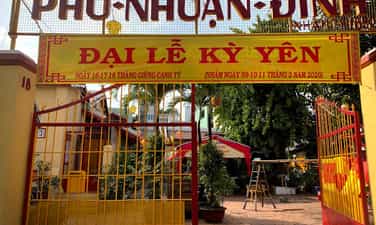
Dinh Phu Nhuan
Phu Nhuan communal house was built around 1818 in Kinh village, Sat Kinh Nhieu Loc, until 1852 was rebuilt in the current location. On November 29, Nham Ty year (January 8, 1853), King Tu Duc gave the tutelary god of the family. The communal house undergo many restoration in 1930, 1966, 1989 and 1998, but still retain the unique architectural features of the 19th century communal house. Temple of "Five Elements Nuong Nuong" on the left. The façade is a floating screen with white tiger. Behind the screen is a trace of Than Nong altar. Overall, the communal house has a reverse shape, there are two axes: the main axis is on the right side (from the inside out), the martial arts house, the martial arts, the main face. The auxiliary axis includes: communal house, Thao Bat house, Tuc house, Thien Tinh yard, kitchen and warehouse. The roof of the communal house is straight with yin and yang tile, on the top is decorated with "long dragon paintings" of ceramic. Inside the communal house there is a set of columns and wooden trusses made of wood, structure in the style of pass. The front is built in the style of the quartet, the square (a two -wing space) with the wooden pillars, wooden trusses, dragon tail stations, built in 1920. The altars are arranged in three rows, between the altar of the god, the two sides are the altar of Ta Ban and Huu Ban. The altar of wooden gods touched the pattern "Mesopotamia of the Moon", on the color of the king, led by the Emperor Tu Duc to the tutelary god of Phu Nhuan in the box. On the altar in the main hall is an ancient ceramic censer, blue enamel and a bronze censer. The main hall has four couplets and three diaphragms are exquisitely carved. Especially, there are couples written in Chinese characters "Ho Quoc Ty Dan" (translated: helping the country to save the people in 1860, and "the national protection of the people" (translated: helping the country to protect the people) in the 1901. Phu Nhuan communal house worships the gods of the Vietnamese worship. The biggest holiday of Phu Nhuan communal house is Ky Yen ceremony, held on January 16, 17 and 18. The main offering of the god is a black pig. January 16 is the main holiday. Phu Nhuan communal house was ranked by the Ministry of Culture and Information as the National Architectural Architecture Monument under Decision No. 3744/Decision -Promotive Information on January 29, 1997. Source of electronic portal of Phu Nhuan district, Ho Chi Minh City.
Ho Chi Minh City
4175 view
Rating : National relics.
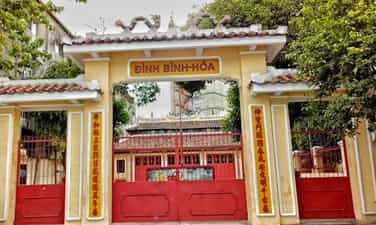
Dinh Binh Hoa
Binh Hoa communal house is located in Ward 12, Binh Thanh District, Ho Chi Minh City. In 1818, Binh Hoa village was established and the communal house was built in that year. In 1853, the Nguyen King was Tu Duc. The communal house was built on the high mound, turned to the east. According to the main axis from the outside to the martial arts, electricity, medium and main electricity. The new martial artist was built in 1972, 20.7m long, 13.49m wide. The rectangular electricity bill is 13.49m long, 9.56m wide, including three chambers of two wings, the house has a normal house, there are four rows of columns, a diameter of 0.35m to 0.40m, 6m high. The rectangular medium is 12.48m long, 9.57m wide. The roof of the roof is three layers of tile, architecture in the style of the gable gable, on the roof of the Long Long Tranh Chau (Mesopotamian Trieu Nguyet). Middle power is in the style of four statues, consisting of four main columns and then developing around. The main rectangle is 11.03m long, 9.57m wide, also built in the style of the quartet, only one roof layer, the wooden bars on the wall of the wall have no cross bar. The house is 16.48m long, 8m wide, in addition to a warehouse and kitchen. Electricity has three altars: in the field, describing you, friends. The altars, churches, diaphragm, sentences are all sophisticatedly carved, the three table surfaces are carved, four corners of the table touch the four dragon heads, the four legs touch the four dragon legs. In particular, on the pure altar of the electric budget, there is a dragon -shaped dragon, the dragon body is stylized with apricot branch. The fringe on the electricity bamboo altar with Mai Do Bat pattern is also very noticeable. In addition, there are patterns of Confucian, Soc, Phuong and Hoa Sen. The family worships four tutelary gods and Nam Hai. The annual yen ceremony is the biggest ceremony from 11 to 14 September of the lunar calendar. The god was worshiped at Binh Hoa communal house, the Imperial Citadel, who was ordained by King Tu Duc in the year of the Ox (1853). In addition to the precious column, in the communal house, there are currently 39 other valuable artifacts. Notably, the 5 wooden altars are exquisitely carved; Two bowls of ancient Saigon ceramic incense, the ordination of King Tu Duc, etc. On January 7, 1993, the communal house was recognized by the Ministry of Culture and Culture as a national art architectural monument under Decision No. 43 of culture /decision. Source of websites Ward 12, Binh Thanh District, Ho Chi Minh City.
Ho Chi Minh City
3987 view
Rating : National relics.
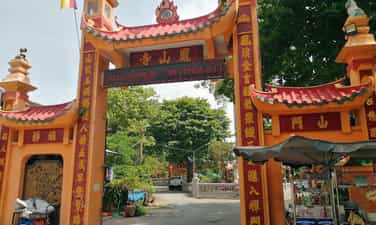
Phung Son Pagoda (Phung Son Communal House)
Phung Son Pagoda, the name of Phung Son Tu, also known as Go Pagoda, is located at 1408 Street 3 February, Ward 2, District 11, Ho Chi Minh City, Vietnam. This ancient temple was ranked as "national historical and cultural relics" on November 16, 1988. Phung Son Pagoda was created by Zen Master Lieu Thong (1754-1840) in the early 19th century, under the reign of Gia Long King on the background of a ancient Chan Lap temple, like Giac Lam pagoda and Cay Mai pagoda, located on a small hill surrounded by Bau Bell pond with lotus. In 1904, the leaf was re -built. And since then, the pagoda has twice the major restoration, that is, the Venerable Hue Minh abbot (1904-1915) and in 1960. In 1963, Venerable Thich Phuoc Quang rebuilt Tam Quan gate, painted by architect Nguyen Ba Lang. Despite being restored several times, the pagoda still follows the ancient architecture with the wooden frame and yin -yang tile roof. Phung Son Pagoda is built in the type of "Quoc" (Chinese characters), over 40 m long, nearly 20 m wide, with a porch running around four sides. Inside the pagoda divided into two distinct areas, the front was the main hall, a biased yard, behind the lecturer. The two sides of the open yard have Dong Lang and Tay Lang, connecting two places. The open yard has rockery, Quan Am and ornamental plants, thanks to this yard, the temple is airy and bright. In the main hall, the columns are made of good wood, for a long time becoming glossy black. The pagoda worships "Money Buddha, Hau To". Buddha's electricity has many old wooden Buddha statues, yellow cards carved with art. A total of about 40 worship statues. Many statues of worshiping by a group of workers from Sa Dec, invited by Venerable Hue Minh to the temple to work in the early years of the 20th century. There are many precious statues such as the Tam Ton Digital, the Five Hien Sage, the Buddha statue, the statue of Tieu Dien ... Phung Son Pagoda is one of the ancient temples, also imprinted with the presence of folk beliefs, such as the main hall of the Holy Son of Holy Son, one of the most popular gods in the South. The trace of the process of living and residing of many ethnic groups in this land is also shown through the image of a small temple worshiping Mr. Ta (Neak Ta) in the temple campus, along the ancestral towers. It is a kind of belief, a popular cultural feature of Khmer residents. As one of the ancient temples, there is a boldness in terms of terrain, architecture, art of sculpting, layout and worship, Phung Son pagoda has contributed to bringing a rich and diverse cultural and artistic value in the development stream of Buddhist culture in the South. Source of electronic portal in District 11, Ho Chi Minh City.
Ho Chi Minh City
4462 view
Rating : National relics.