Relic point Vietnam
Việt Nam
Mo Chi Si Tran Quy Cap
Tran Quy Cap (1870 - 1908), Tu Hang Hang, Thich Phu, Hieu is Thai Xuyen. He was born and raised in a poor farmer's family in Thai La village, Nhi Nhi village, Dien Ban district, Quang Nam province. Tran Quy Cap is one of the three outstanding characters of the Duy Tan movement. He is not only a prominent revolutionary leader but also a talented poet. His poetry carries the breath of the times, the sincere voice of a passionate heart, showing the emotional thought of the scholar class progressing in the early years of the twentieth century. He participated in the Duy Tan movement against the French, then arrested in 1908, although he did not find evidence, the French colonialists still treated the back but the people called it the Mac Tu Huu sentence. Currently, there is still a temple in Dien Khanh town, Dien Khanh district, Khanh Hoa. The family brought Di Chi Si Tran Quy Cap burial in his home town at Go Nhao Cemetery, Nhi Nhi village, Dien Phuoc commune, Dien Ban district in 1925. In 1938, the people raised to rebuild the tomb of the mausoleum The tomb is quite spacious. Experiencing two resistance wars against France and the United States, although the devastating war caused severe damage, descendants and family still took care of the tomb. In 1994, the tomb of the tomb of Tran Quy Cap was rebuilt by Dien Ban district and the family and family of Tran Van village to rebuild according to the old tomb architecture in Khanh Hoa. In 2000, Mo Chi Si Mo Tran Quy Cap was recognized as a national historical and cultural relic. Source of electronic portal of Dien Ban district, Quang Nam province.
Da Nang
4243 view
Rating : National relics.
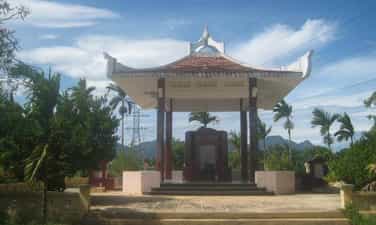
The tomb of the tomb of Hoang Dieu.
The tomb of General Director Hoang Dieu is located in Xuan Dai village, Dien Quang commune, Dien Ban district. Recognized by the Ministry of Culture and Culture as a national historical monument in 1994. Chi Hoang Dieu (1829-1882) came from a Confucian family in Xuan Dai village - Dien Quang commune - Dien Ban district (now Dien Ban town). He was a famous general who learned wide and talented (19 years old passing a bachelor's degree, 24 years old passed the deputy) and was Thanh Liem, righteous and loved the people. On April 25, 1882, the French colonialists attacked Hanoi, in an unequal match, he still committed suicide, but refused to hand over. At that time, he was holding the position of Governor Ha - Ninh. His glorious death was a miraculous example of heroic hero, cheering for all classes and people of the whole country to stand up to fight for independence. His tomb was buried back to his homeland and was restored and embellished twice in 1982 and in 1998. The spacious and airy campus was cared for by his descendants. Source of electronic portal of Dien Ban district, Quang Nam province.
Da Nang
4699 view
Rating : National relics.

Than - Hon Mang - Hon Pinen
The mountain strip of Than, Hon Mang island, Hon Pin is the metamorphic stone site of Kham Duc complex - Mang mountain. The geology here is up to 400 million years old, pushed up from the sea surface through a geological tectonic phase. The dark black stones, shaped like special works of art. In addition, Than - Hon Mang - Hon Pinen also has long, blue, pristine beaches and Thuan An land with many unique cultural features of the coast. Tam Hai area in general, Ban Than - Hon Mang - Hon Dam in particular is the destination with many potential tourism of Nui Thanh. The spectacular, beautiful scenery created by nature is really attractive for those who come to this landscape. In 2017, Ban Than - Hon Mang - Hon Dua was ranked by the provincial People's Committee. Recently, the government and people have paid much attention to protect and effectively exploit the heritage. Earlier, in 2003, Tam Hai commune coordinated with the Center for marine biological conservation to mobilize the people to learn about the value of coral reefs and clean the sea; observing the law in fishing and fishing. At the same time, implementing the project of preserving and sustainable use of Tam Hai coral reef ecosystem; Deploying many activities to promote the landscape of Than - Hon Mang - Hon Pin. On February 24, 2023, the Ministry of Culture, Sports and Tourism issued Decision No. 393 to recognize Than - Hon Mang - Hon Pin is a national monument. Source of the Ministry of Culture, Sports and Tourism.
Da Nang
4535 view
Rating : National relics.

Central historical site of Central Vietnam -OA
OA is a place located at the foot of Hon Ba Mountain, in the territory of Tra Tan commune, Tra My district (now Bac Tra My district). This is a dense mountainous area; In the front, the two rivers and the Nuoc Nuoc rivers create a long crooked beach beach and links the valleys of large and small, high and low inner, creating favor gas, troops, troops and moving, exploiting food, food and medicine on the spot to survive in a strict time, so this place has been selected by the 5th Party Committee of the Revolutionary Base in the years. Resistance against the US to save the country. It was in this base area, the Party Committee and the Military Region 5 Command together outlined the specific strategic way to direct the army and people of Zone 5 to fight the US. This place has held important conferences and congresses, which is a training place for regimental officials, divisions and provinces in the whole area to study the Party's resolutions ... The Southern Revolution won the signing of the Paris Agreement in 1973, proceeding to liberate the South. With these historical values, on August 4, 1992, the Ministry of Culture and Information (now the Ministry of Culture, Sports and Tourism) recognized the OA Water Monument as a national monument. Source of Quang Nam Electronic Information Portal.
Da Nang
4380 view
Rating : National relics.

Bang An Tower
Bang An Tower in Dien An commune, Dien Ban district, located close to 609 road (connecting Vinh Dien with Ai Nghia) is relatively intact. According to the researchers, Bang An tower was built around the tenth century , there is a unique architecture, absolutely unlike any tower, existing today across the country. Overall, Bang An tower is linga (penis), located in the middle of the spacious space. Linga symbolizes Siva, which is used as a place of worship and sacrifice of the Cham people. The tower is built in an octagonal shape, each edge is 4m long, 21m high. In front of the tower there are two stone animals: Lion and elephants. According to Cham cultural researchers, Bang An tower is a high -value monument in terms of architecture, related to religion and beliefs of the Cham people. Therefore, in 1989, Bang An tower was recognized by the Ministry of Culture as a national monument. In 1943, due to the destructive war, the tower was damaged in the lobby, the French engineers restored. But unfortunately did not master the technique, the French built bricks with cement (wide vessels), so it broke the unique architecture of the Cham people (between the bricks without the lake). With a unique architecture, located convenient and beautiful, Bang An tower is an ideal address for tourists to visit at home and abroad. Source of electronic portal of Dien Ban district, Quang Nam province.
Da Nang
4378 view
Rating : National relics.

The relics of Phuoc Tra base area (1973-1975)
Phuoc Tra is now a commune in Hiep Duc district, Quang Nam province. During the anti -American resistance war, this place was selected to place the base of the 5th Party Committee from 1973 to 1975. In order to promptly direct to deal with the enemy's conspiracy and tricks after the Paris Agreement (January 27, 1973), the Party Committee and the Command of Zone 5 decided to move the base from Oa (Tra My). About Phuoc Tra (Hiep Duc). Phuoc Tra is about 15km west of Tan An town, about 4km south of the provincial road, from here to radiate to the delta area with many convenient and fast roads both water and ministry. This is a large base area, including a hall, workplace of leaders and specialized agencies. There was also the 3rd Congress of the Executive Committee of the Party Committee of Zone 5 and many conferences of the Party Committee and the Command of the Zone set up a plan to attack and rebellion in the spring of 1975, in the spirit of of the Resolution of the Central Committee of the Communist Party of Vietnam in January 1975 to liberate the South. Here, the Quang Nam Provincial Museum has collected and displayed some artifacts and images in this base area in the period of 1973-1975. Phuoc Tra base area has been recognized by the Ministry of Culture and Information as a national historical and cultural relic (Decision No. 281/ Decision-Head of March 24, 1993) Source of Quang Nam Electronic Information Portal.
Da Nang
4099 view
Rating : National relics.

Ky Anh Tunnels in the anti -American era
Ky Anh (in Tam Thang commune) is the sandy area outside the Quang Tin province - the head office of the puppet government located in Tam Ky town - only 4-5km away from the flying bird. The North is a weekly base (Thang Binh), the South is An Ha base. In the situation of being surrounded, unfavorable combat terrain, revolutionary armed forces have no safe hiding places. From that fact, Tam Thang Commune Party Committee chose the plan to build a continuous underground tunnel system underground. The plan was started from May 1965 to the end of 1967, the completed basic in 9 villages, each village had an average of 2 km of tunnels, including a meeting, tunnel, warehouse In fact, the ambulance station ... different from Vinh Moc (Vinh Linh) or Cu Chi (Saigon), Ky Anh Tunnels are dug in the sandy area, so they have to dig down to the hard ground (or clay, or land The bond like laterite) will not collapse, meaning that it must have a thickness of over 2m. The most difficult are the sections through streams, lakes and houses. The place where the tunnel is arranged in secret, in addition to the discreet, unexpectedly, there must be people who cling to legal to protect the enemy's realm. Mothers have great merit in this such as: Pham Thi Tong, Le Thi Khuong, Chau Thi Thao, Tran Thi Ngan, Nguyen Thi Tuc, Pham Thi Ngoi, Ho Thi Hien ... Ky Anh Tunnels were born to create a great advantage for The movement of guerrilla wars, contributing to the armed forces to attack the enemy many matches, bring high efficiency, and support political struggles. Since the end of the war (1965-1975), the army and the people of Ky Anh attacked the enemy 1,052 battle, eliminating the battle round of 3,751 enemies, including 55 American names. Ky Anh Tunnels were recognized by the Ministry of Culture and Information as a national historical and cultural relic (Decision No. 985- Decision /Culture dated May 27, 1997) Source of Quang Nam Electronic Information Portal.
Da Nang
4563 view
Rating : National relics.

The tomb of Do Thuc Tinh
Located about 20km southwest of Da Nang center, on Highway 14B, there is a village named La Chau. This place is the homeland of the famous charm of Tu Duc period, Dr. Do Thuc Tinh. The tomb of Thuc Tinh is currently located in Huong Lam village, Hoa Khuong commune, Hoa Vang district. Do Thuc Tinh is the first and only doctor of Hoa Vang district in the feudal period, a patriotic official, an exemplary Confucianist, a celebrity of Quang. When he died, King Tu Duc pursued him as: "Voically martial arts talented General Cong Cong". His identity and career were recorded by the National History of the Nguyen Dynasty in the books of Dai Nam Chinh Chinh Bien and Great Nam Liet Chuyen Bien Chu Liet Truyen -1818 , he asked to return to his mother's hometown, three years later to work again. A Liem, rich in patriotism, loves people. When he returned to his position, he reorganized his life and produced, displayed a tiger trap, repaired the roads, provided tools, cattle, expanded reclamation, and residential tombs. The people of Dien Khanh enjoyed that grace and contemporary people called him "Do Phu" (the father of the Do family). In 1854, there was only a million men who went to the sutta to supervise the historian, but because the people made an application to save, the king changed him to Ham Village, to hold the old position. Soon after, there was a projection of him as an infantry foreigner, but this time the provincial government saw that the tomb of the hamlet was about to finish, please save it. The king again said: "Thuc Tinh is the lifeshi who needs to finish the first class in the district government, for the true market (Song) to still save it to encourage good officials." After finishing, the provincial officials went up, he was promoted to Hong Lo Tu Khanh. Afterwards, he took turns to the functions: Sat Khanh Hoa, Chinh Khanh Hoa's father, and then argued infantry. In August 1858, French ships fired cannons to raid Da Nang. In the fierce blocking of the Vietnamese army, the French army entered the South, and attacked Ha Gia Dinh in February 1859. Cam anger, Do Thuc Tinh immediately offered to the place to chase the invaders. The king praised as a loyalist, affirming, and Sung was wrong. Again for him 30 taels of silver and horses to go to two provinces, Vinh Long and Ha Tien, Tuyen only for the people, and recruited Nghia Dung; After that, will join forces with the governor Truong Van Uyen and Tuan Phu Phan Khac Than to discuss the army. Seeing him do some things, King Tu Duc prepared for him to negate the wall. Here, he would like to summon soldiers, accumulate food, choose a place to set up the station. I would like to hire foreigners (such as the Qing family) in Gia Dinh to make the water and face. The king looked at him and lured: "Thuc Tinh reviewed the situation, thought the strategy ... Although he still waited for the opportunity, could not rush and used it, but because the water worked like that was loyal, (Know) Deep plot. Love your family hard, let promote the lang, (but) the old title "In the middle of the stretcher, it is responsible for heavy responsibility, unfortunately he is sick, died at the Vinh Long army on January 26 Nham Tuat (February 21, 1862). La Chau, Hoa Vang district. In 2007, Mr. Do Thuc Tinh's grave was ranked as a national historical monument under Decision No. 45/2007/Decision -The Culture of Information and Culture of Culture and Information (now the Ministry of Culture, Sports and Du calendar). Source of Da Nang City Electronic Portal.
Da Nang
4418 view
Rating : National relics.

Tien Hien Church of An Hai and Thoai Ngoc Hau
Tien Hien Church of An Hai and Thoai Ngoc Hau (An Hai Tay Ward, Son Tra District) is known not only the church of a large village, with a long history in Da Nang, but this is also In the sacrifice of a famous historical figure of the hometown of An Hai. It is Thoai Ngoc Hau - Nguyen Van Thoai, a famous general in the South in the North, revered by the people of Chau Doc, An Giang as a god. He is from North My An village, Dien Phuoc district, Quang Nam town, now North My An ward, Son Tra district, Da Nang city. The real name is Nguyen Van Thuy, the taboo that changes is a voice. During his childhood, Nguyen Van Thoai and his family migrated to the South of the Lord Nguyen Phuc Khoat (1738-1765), living in Thoi Binh village, on the long islet, now in Vung Liem district, Vinh Long province. At the age of 16 (1777), joining Nguyen Anh Sang Bangkok (Thailand), returning home to lead the army to fight Tay Son, to be Kham Sai Cai Co, and then Kham Sai Trinh Cai Co, was promoted to the Marquis (so he later later. Often called Thoai Ngoc Hau). In 1789, as Deputy Business Administration was promoted to the Thuong Binh Tay Tay General. In 1799, he was sent to work in Vien Vien (Laos). After Nguyen Anh ascended to the throne (1802), he was promoted to the army to look after the Northern citadel, then led the Lang Son. Being assigned to work as a town, then he was appointed as the army to protect the Cao Mien. In 1818, it was supplemented as Vinh Thanh town (now Long Xuyen - Can Tho). Here, he and the local army designed and operated the people of Dong Xuyen canal (in Long Xuyen). This channel after completion is named Thoai Ha. In the first year of Minh Mang (1820), he controlled 80,000 workers working for 5 consecutive years (1820-1824) to dig the canal connecting Chau Doc with Ha Tien, leading the water to the west. This is a big project designed and commanded by him, bringing great results in the exploration of Hau Giang. Nguyen Van Thoai also has a solemn grave in An Hai, Chau Doc, turning the deserted land in the border into a rich and crowded population. Nguyen Van Thoai is a martial arts talent, an excellent diplomatic political activist, (twice being sent as a Cao Mien protection), when he went to the blanket, when he was sent to solve the border problem North (Lang Son), when returning to the southwest border. He is also a business, an economic activist with a strategic vision and a good organization. He died on the 6th of June of the Year of the Ox at the Chau Doc office, the body was buried at the foot of Thoai Son mountain. Remembering his merits and career, the people formed the mausoleum. Thoai Ngoc Hau Lang was recognized by the Ministry of Culture and Information as a national cultural and historical monument. In An Hai ward, Son Tra district, Da Nang city, Thoai Ngoc Hau temple was built very spacious. Tien Hien Church of An Hai and Thoai Ngoc Hau (An Hai Tay Ward, Son Tra District) is known not only the church of a large village, with a long history in Da Nang, but this is also In the sacrifice of a famous historical figure of the hometown of An Hai. It is Thoai Ngoc Hau - Nguyen Van Thoai, a famous general in the South in the North, revered by the people of Chau Doc, An Giang as a god. Tien Hien Church of An Hai and Thoai Ngoc Hau village was ranked national monuments in 2007. The industrial beer of Thoai Ngoc Hau 2m high, 1.2m wide with white stone, face to the west. Thoai Ngoc Hau's bust statue is 1.2 meters high, weighing nearly 1 ton, turning to the east, straight with the right stele. The main hall and post -impregnation of the church is about 160m2, designed and embellished in the ancient communal house. Ngoc Hau altar is located in the main hall center with statues and tablets. Source of Danang City Electronic Portal
Da Nang
4150 view
Rating : National relics.
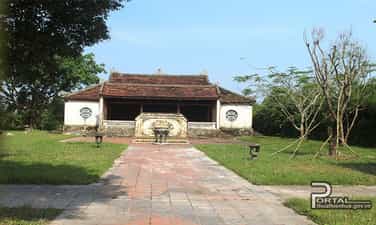
Nguyen Tri Phuong church and mausoleum
Nguyen Tri Phuong's church and mausoleum are located in Chi Long Village, Phong Chuong commune, Phong Dien district, Thua Thien Hue province. From Hue city center, follow National Highway 1A (30km North to Phong Thu commune, Phong Dien district) turn right along Provincial Road 6 about 15km to reach the monument. Nguyen Tri Phuong, real name is Nguyen Van Chuong, alias Ham Trinh, alias Duong Xuyen, born on July 21, Canh Than year (1800), hometown in Duong Long village (Chi Long), Chanh Loc canton, Phong Dien district, province Thua Thien (now Phong Chuong, Phong Dien). He served as a mandarin under the reigns of Kings Minh Mang, Thieu Tri, and Tu Duc, held many important positions in the royal court, was a Minister of the Nguyen Dynasty, and had many contributions to the expansion of Cochinchina and fighting the invading French colonialists. . He was injured during the French army's attack on Hanoi Citadel on November 19, 1873, then went on hunger strike and died on December 20, 1873 (ie the 11th day of the lunar calendar), at the age of 73. King Tu Duc had his body brought back for burial in his hometown and provided materials to build a church with his younger brother Nguyen Duy and son Nguyen Lam, both of whom had meritorious service in fighting the French colonialists. The church relics and Nguyen Tri Phuong's mausoleum were recognized as national relics in Decision No. 575-Decision/Culture and Information dated July 14, 1990 of the Ministry of Culture and Information (now the Ministry of Culture and Information). Culture, Sports and Tourism). Source: Thua Thien Hue Electronic Information Portal.
Hue
5096 view
Rating : National monument.